
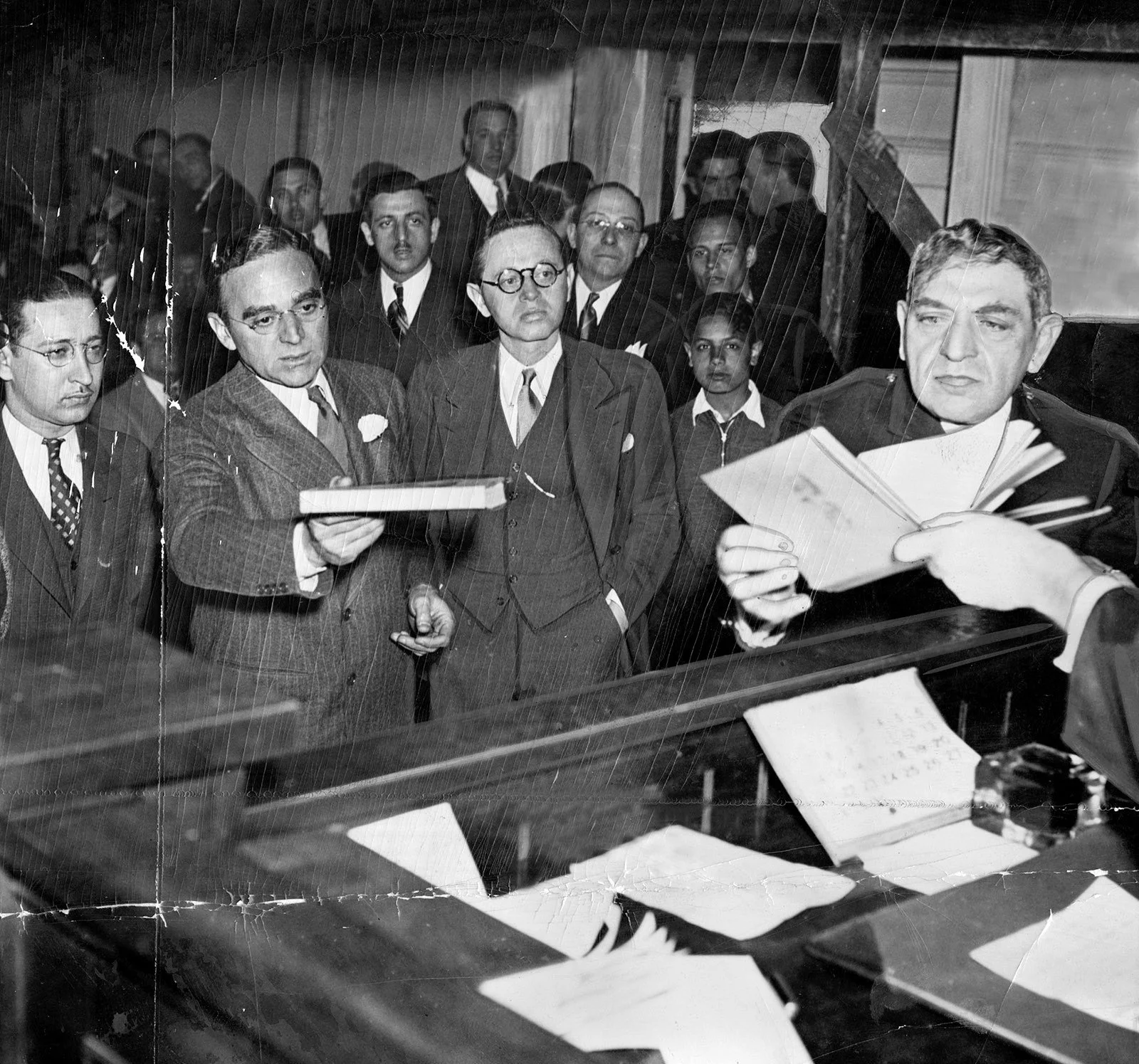
When Books Were Crimes
What happens when a book becomes so dangerous that the law itself is enlisted to silence it? Throughout history, governments have seized books, prosecuted publishers, and imprisoned people for daring to put certain words into print. Sometimes the offense was sex. Sometimes it was politics. Sometimes it was simply telling a truth that those in power could not afford to let others read.
When Books Were A Crime brings together books that found themselves on the wrong side of the law, and the extraordinary stories of the people who risked their freedom to write, publish, sell, or possess them. These objects remind us that censorship is rarely just about what a society refuses to read — it's about who gets to decide what everyone else is allowed to know.
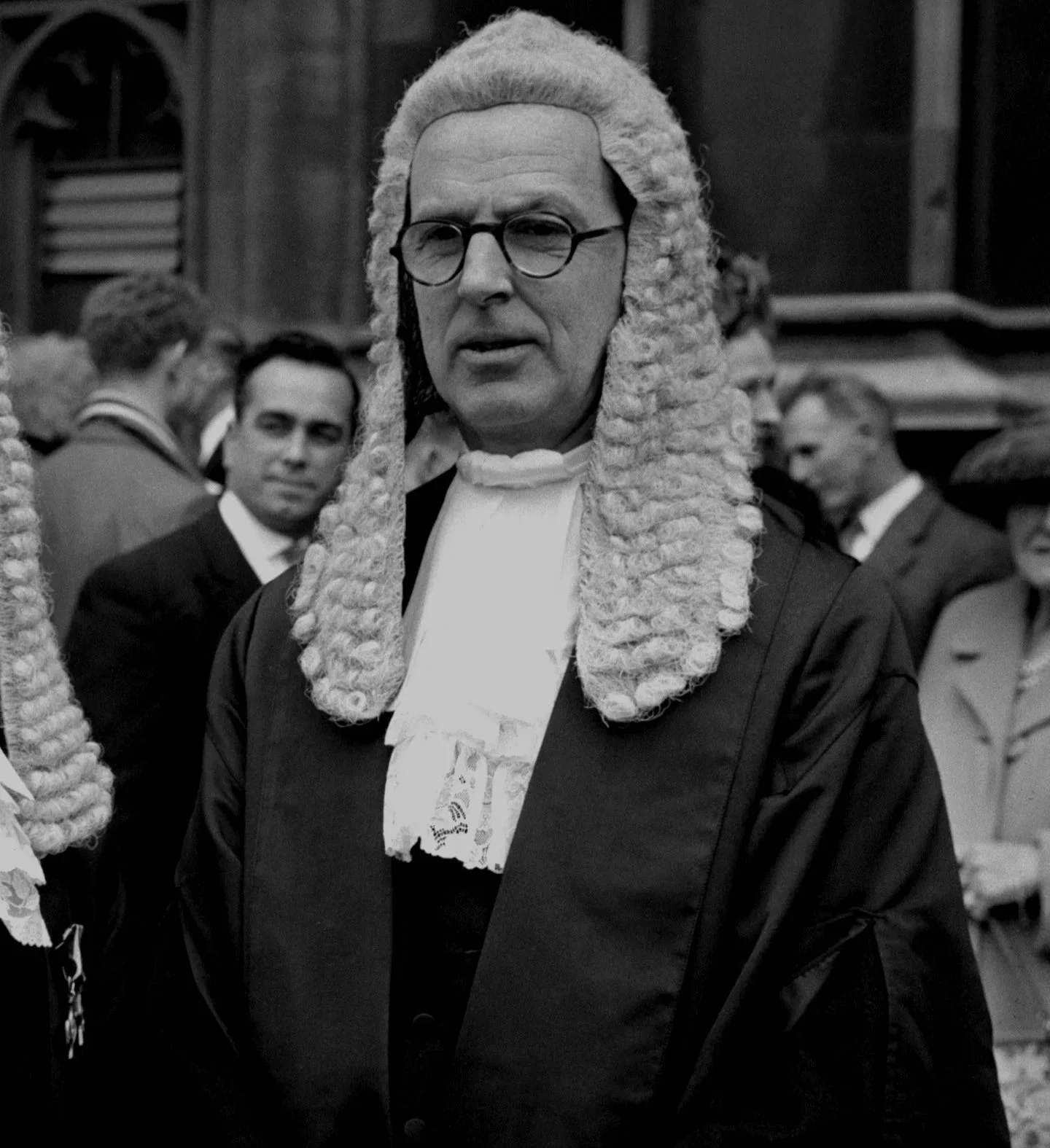
Three Publication-Event Editions of Lady Chatterley’s Lover
D. H. Lawrence
Florence · New York · Harmondsworth · 1928–1960
Three Historically Distinct Editions
Curated Three-Volume Publication-Event Set
The Set:
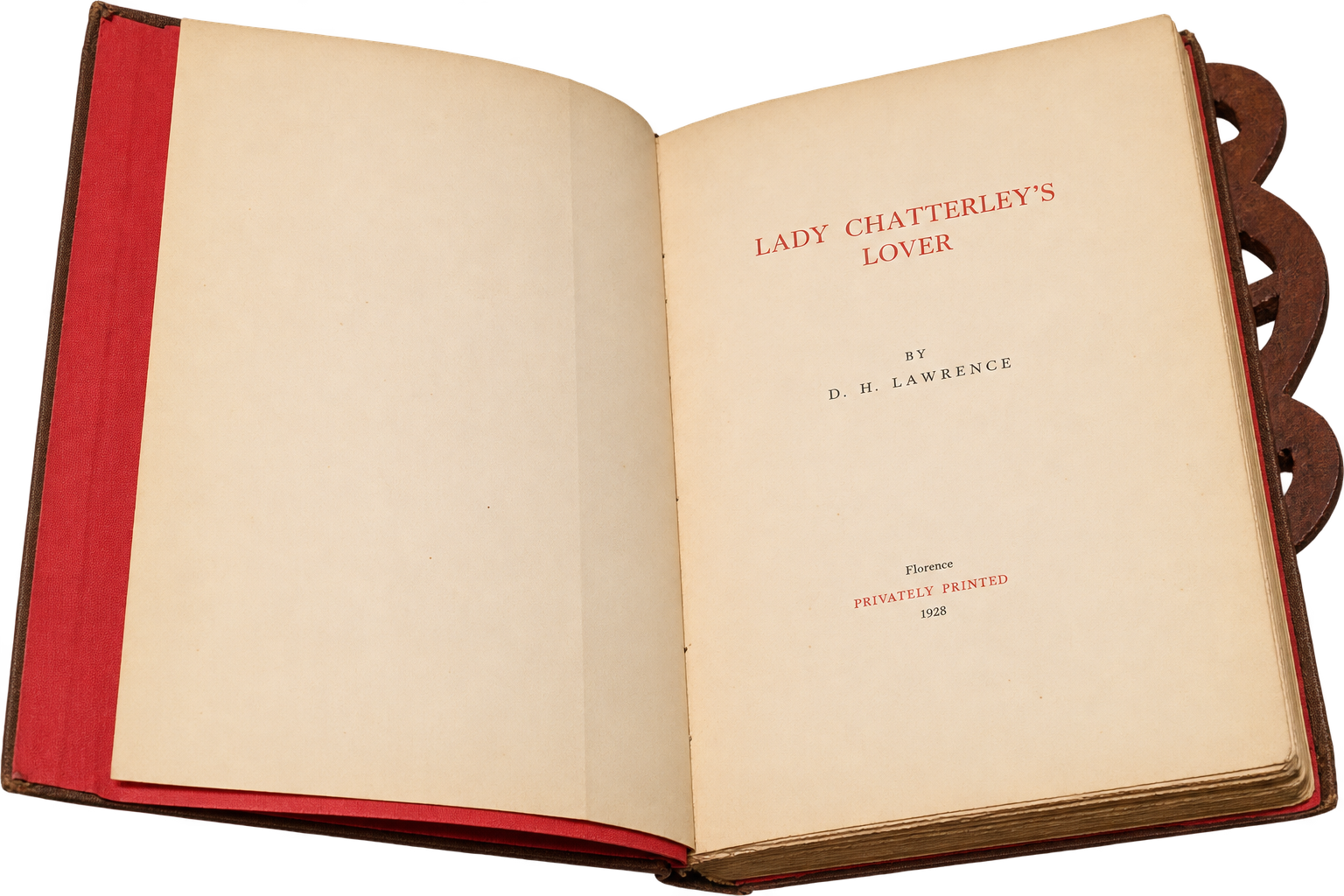
A curated three-volume collection preserving three defining manifestations of D. H. Lawrence’s Lady Chatterley’s Lover: a Contemporary Pirated Florence Issue from 1928, material evidence of the underground market created when legitimate publication of the unexpurgated novel was suppressed; the 1959 Grove Press First American Edition · First Printing, published in direct confrontation with American obscenity restrictions; and the 1960 Penguin First Edition · First Printing, whose mass-market publication became the subject of Britain’s landmark R v. Penguin Books Ltd. obscenity trial. Together, the three books preserve three consequences of censorship across thirty-two years: a forbidden text escaping through unauthorized publication, a publisher deliberately challenging its suppression, and another defeating that suppression in court.
Included Titles:
Lady Chatterley’s Lover — D. H. Lawrence
Privately Printed · Florence · 1928
Contemporary Pirated Florence Issue
Original black moiré-pattern cloth · Red-and-black title page · Red endpapers · 365 pp.Lady Chatterley’s Lover — D. H. Lawrence
Grove Press, Inc. · New York · 1959
First American Edition · First Printing
Complete unexpurgated text · Original publisher’s binding · Original $6.00 dust jacketLady Chatterley’s Lover — D. H. Lawrence
Penguin Books · Harmondsworth · 1960
First Penguin Edition · First Printing
Penguin No. 1484 · Complete unexpurgated text · Original pictorial wrappers · 3/6 price
Condition:
Very Good to Near Fine overall. The 1928 Florence piracy grades Very Good, retaining its original black moiré-pattern cloth, red-and-black title page, and red endpapers. The 1959 Grove Press edition grades Near Fine in a Very Good- original dust jacket. The 1960 Penguin edition grades Very Good in its original pictorial wrappers. All three retain the physical formats in which their respective editions were issued.
Story Of The Set
For more than thirty years, the story of Lady Chatterley’s Lover was also the story of who possessed the power to decide whether other people could read it.
Lawrence privately published his authorized first edition in Florence in 1928 because conventional publication of the complete novel was effectively impossible. But censorship created a paradox: the law could restrict legitimate publication without extinguishing the desire to read the book. Unauthorized editions proliferated to satisfy the demand suppression had driven underground.
The 1928 Florence piracy preserved here is a remarkable artifact of that unintended consequence. It was not authorized by Lawrence, and it is not represented as his first edition. Its importance to this collection lies somewhere else entirely: it physically demonstrates censorship failing to contain a text. The attempt to keep Lady Chatterley’s Lover outside ordinary circulation instead helped create an illicit publishing economy capable of carrying the forbidden book beyond the author's control and beyond the channels censorship could regulate.
Three decades later, Grove Press chose confrontation over evasion. Its 1959 First American Edition openly published the complete novel and became part of the legal battle over whether the United States could continue treating Lawrence’s work as obscene. This was not an edition celebrating a censorship victory already won; it was one of the objects through which that victory was fought.
Penguin pushed the confrontation further in Britain. Its inexpensive 3/6 paperback placed the complete text within reach of an enormous mass readership—and prosecutors responded by putting the publisher on trial under the new Obscene Publications Act. In November 1960, the jury in R v. Penguin Books Ltd. returned a verdict of not guilty.
First the forbidden book escaped the censor. Then publishers confronted the censor. Finally, the censor lost.
Why It’s In The Collection
The Lovers Set belongs in Consigned to Darkness because censorship does not merely suppress books. It changes the way books move through the world.
That is why the 1928 piracy is not a lesser substitute for Lawrence’s authorized first edition within this particular set. An authorized first would be bibliographically more important and substantially more valuable. The piracy may be the more revealing censorship object. It exists because demand for a forbidden text survived the restrictions placed upon its legitimate publication. The censor did not make the book disappear; suppression helped push its circulation underground.
The Grove and Penguin editions preserve what happened when publishers eventually stopped working around those restrictions and confronted them openly. Grove carried the complete novel into the American censorship battle. Penguin put an inexpensive mass-market edition before British readers and was prosecuted for doing so.
Preserved together, the three books therefore document an evolution in the relationship between text and authority: circulation outside the censor’s control, deliberate confrontation with the censor, and legal defeat of the censor.
The set begins with evidence that censorship could not stop the book. It ends with evidence that censorship could no longer stop the publisher.
Collection Categories: Free Expression · Censorship · Anti-Authoritarianism · Political Dissent · Publication-Event Object · Literature · Political History · Obscenity Law & Court History
———
Authentication Evidence
The 1928 Florence volume title page reads “Florence / Privately Printed / 1928.”
Title page is printed in red and black, consistent with the physically examined contemporary pirated Florence issue.
Title-page verso is blank, with no limitation statement, copyright statement, or printer’s imprint present.
Volume retains its original black moiré-pattern cloth and red endpapers.
Volume collates to 365 pages.
Observed bibliographic and physical evidence supports identification as a Contemporary Pirated Florence Issue, 1928; no unsupported Roberts issue designation or priority within the Florence piracies is assigned.
No limitation statement identifying the volume as Lawrence’s authorized privately printed first edition is present.
The 1959 Grove Press volume is identified as the First American Edition · First Printing.
Grove edition contains the complete unexpurgated text.
Original publisher’s binding remains present on the Grove edition.
Original first-state Grove Press dust jacket retains the $6.00 price.
Grove publication points and jacket configuration correspond to the original 1959 American issue.
The 1959 Grove edition represents the American publication that became part of the contemporary legal challenge to restrictions on the unexpurgated novel.
The 1960 Penguin volume is identified as Penguin Books No. 1484.
Penguin copyright page states “First printed 1960,” confirming first-printing status.
Penguin copyright page states “This complete text first published in Great Britain 1960,” establishing the first Penguin publication of the complete text.
Original pictorial wrappers remain present with the original 3/6 price.
Observed bibliographic evidence supports identification as the First Penguin Edition · First Printing of the complete text.
The 1960 Penguin publication was the edition prosecuted in R v. Penguin Books Ltd. under the Obscene Publications Act 1959, resulting in Penguin’s acquittal.
Original publisher-issued formats are retained throughout the three volumes.
No evidence of modern facsimile components, replacement bindings, or reconstructed copies is observed.
The three books are curatorially assembled; no claim is made that they were originally issued or marketed together as a publisher-issued set.
The Lovers Set
Three Publication-Event Editions of Lady Chatterley’s Lover
D. H. Lawrence
Florence · New York · Harmondsworth · 1928–1960
Three Historically Distinct Editions
Curated Three-Volume Publication-Event Set
The authorities tried to keep Lady Chatterley’s Lover out of people’s hands. Instead, they helped create an underground market determined to put it there.
When D. H. Lawrence’s sexually explicit novel became too dangerous for conventional publication, unauthorized publishers stepped in to satisfy the demand censorship could not extinguish. This set traces the extraordinary thirty-year battle that followed through three remarkable objects: a pirated 1928 Florence edition that defied suppression, the 1959 Grove Press edition that openly challenged American obscenity laws, and the inexpensive 1960 Penguin paperback that put the novel within reach of ordinary Britons — and its publisher in the dock. Together, they tell the story of a book that governments tried to suppress, readers refused to surrender, and publishers eventually dared the courts to condemn. First the forbidden book escaped the censor. Then publishers confronted the censor. Finally, the censor lost.
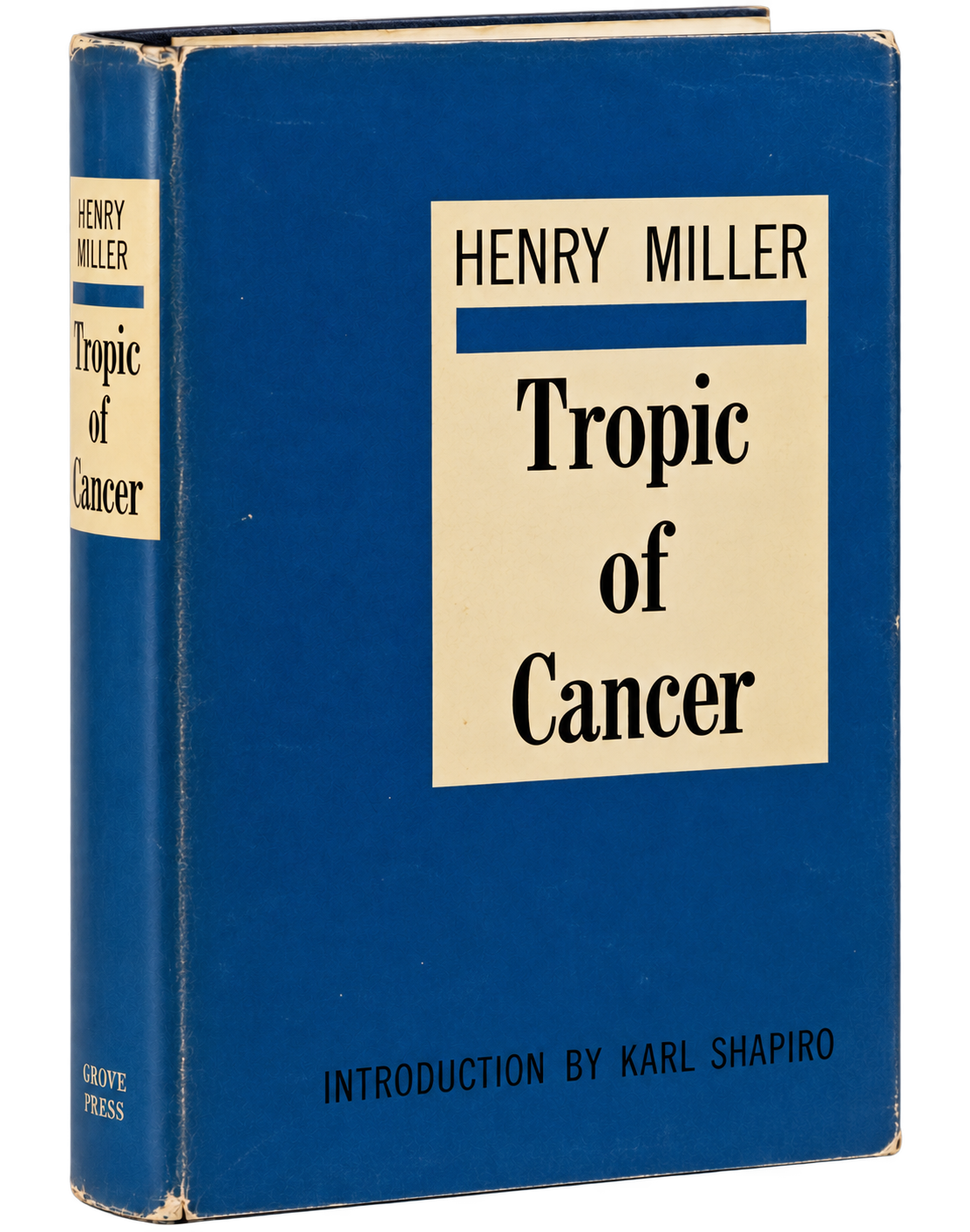
Henry Miller
Grove Press, Inc. · New York · 1961
First US Edition · First Printing
The Book:
The first US edition, first printing of Henry Miller’s Tropic of Cancer, published by Grove Press in 1961—twenty-seven years after the novel’s original 1934 publication in Paris. The copyright page states “First Printing,” and this copy retains its original cloth-backed boards and original unclipped $7.50 dust jacket.
The jacket is the correct first issue, without Roman numerals on the rear panel or letter/number codes on the spine. Those points distinguish the earliest jacket state accompanying Grove’s first American trade printing.
Condition:
Very Good+ in a Very Good original dust jacket. The book remains square and sound, with the original binding and topstain intact. The unclipped $7.50 first-issue jacket shows moderate rubbing, edge wear, and age-related handling but remains complete and presents well.
Story Of The Book
For twenty-seven years, Americans could read Tropic of Cancer only by getting around the law.
Henry Miller first published the novel in Paris in 1934, where its sexually explicit language and rejection of conventional literary morality immediately made American publication effectively impossible. Copies nevertheless entered the United States privately and clandestinely, turning Miller’s novel into contraband long before most Americans could legally buy it.
In 1961, Barney Rosset and Grove Press decided to force the issue. Grove published the complete, unexpurgated novel in the United States and openly invited the confrontation that followed. The reaction was immediate. Booksellers were arrested, copies were seized, and obscenity prosecutions erupted around the country. Grove’s own contemporary press releases document the campaign almost in real time: publication on May 15, a Boston ban by July, and the federal government abandoning its case against the book in August.
The fight continued through dozens of cases until the Supreme Court’s 1964 decision in Grove Press, Inc. v. Gerstein, applying the Court’s evolving obscenity doctrine to overturn a Florida judgment against the novel. What had entered America as forbidden literature became part of the legal transformation of what American publishers and readers were permitted to print, sell, and read.
Grove did not wait for the law to change before publishing Tropic of Cancer. Publishing it helped force the law to change.
Why It’s In The Collection
Tropic of Cancer is one of the clearest publication-event objects in Consigned to Darkness.
The significance of this copy is not simply that it contains a historically censored novel. This is the edition that triggered the American confrontation. Grove knowingly published a book that had been kept out of legitimate American commerce for nearly three decades, then defended its publication as booksellers, prosecutors, judges, and ultimately the Supreme Court fought over whether it could legally circulate.
That makes the 1961 first American printing fundamentally different from a later edition commemorating a censorship victory. When this copy was printed, there was no settled victory. Grove was putting the disputed work into circulation and accepting the legal consequences of doing so. Contemporary reporting from May 1961 records readers rushing to purchase copies precisely because further legal action was anticipated.
The object therefore preserves the moment censorship stopped being merely part of Tropic of Cancer’s history and became a battle over its American future.
For twenty-seven years, America kept Miller’s book outside the law. This is the edition that walked through the door anyway.
Collection Categories: Free Expression · Censorship · Literature · Publication-Event Object · Sexual Expression & Obscenity · Legal History · Obscenity Law & Court History
———
Authentication Evidence
Copyright page states “First Printing,” directly confirming first-printing status.
Title page identifies Grove Press, Inc., New York, consistent with the 1961 first American trade edition.
Original trade-issue publisher’s binding is present.
Original blue topstain is present.
Original dust jacket is retained.
Dust jacket retains the original $7.50 price on the front flap.
Dust jacket lacks Roman numerals on the rear panel, consistent with the first issue.
Dust jacket lacks letter/number codes on the spine, consistent with the first issue.
Introduction by Karl Shapiro and preface by Anaïs Nin are present, consistent with the first American edition.
Collation of xxxiii, 318 pages is consistent with documented first-printing copies.
No book-club binding characteristics are observed.
Copy is the regular trade issue and not one of Grove Press's 100 numbered signed copies.
Observable bibliographic evidence supports identification as the first American trade edition, first printing, in the first-issue dust jacket.
Henry Miller challenged the belief that literature should obey society's standards of respectability.
Combining autobiographical experience with radical literary experimentation, Tropic of Cancer became one of the twentieth century's most frequently banned novels, provoking decades of censorship before its eventual legal vindication transformed American obscenity law. The work's significance extends beyond its literary innovations to the constitutional principles established through the battles fought over its publication. This edition preserves one of modern literature's defining publication-events.
Henry Miller
Grove Press, Inc. · New York · 1961
First US Edition · First Printing
Tropic of Cancer
Henry Miller
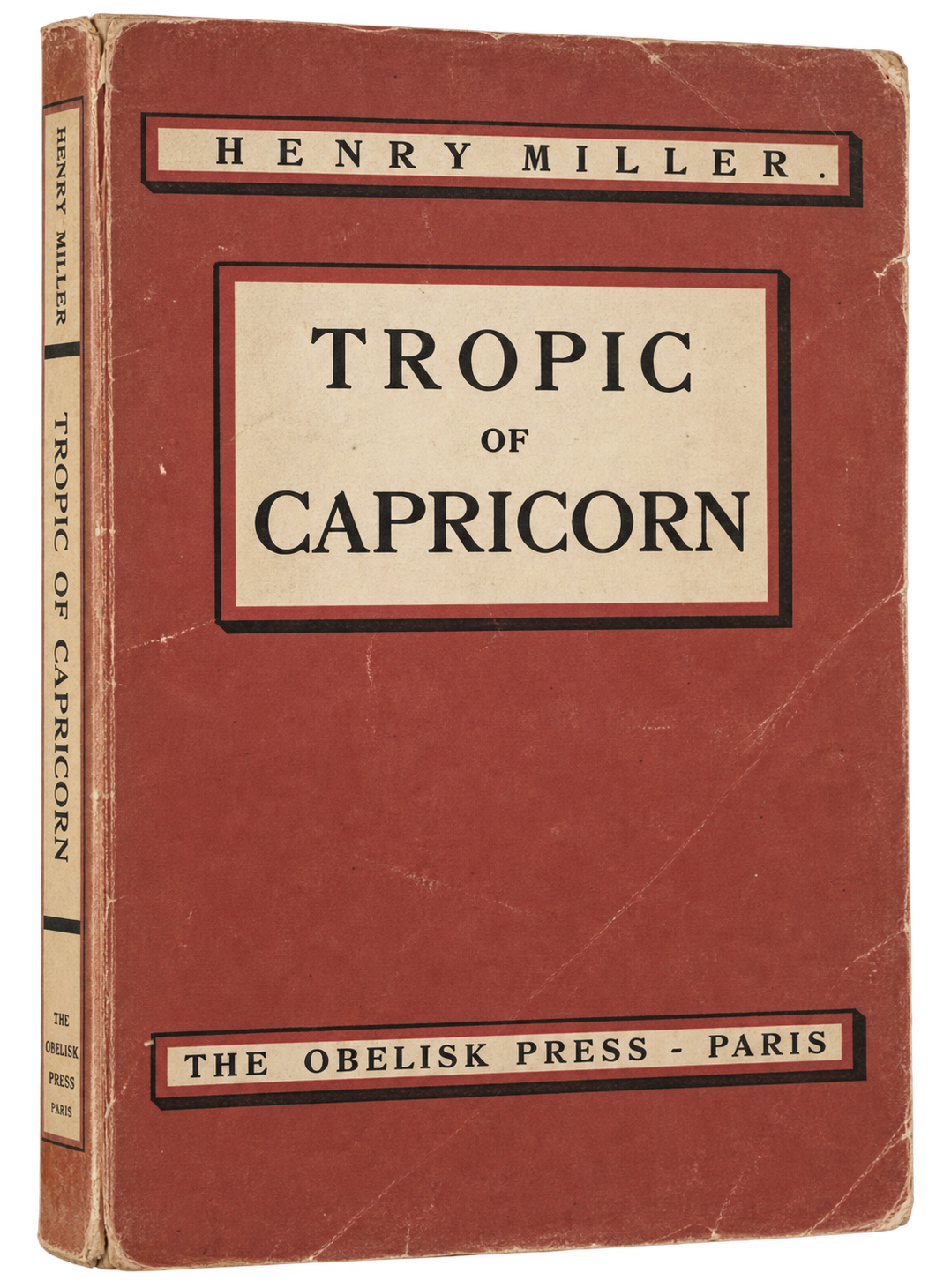
The Obelisk Press · Paris · 1939
First Edition · First Printing
The Book:
The first edition, first printing of Henry Miller’s Tropic of Capricorn, published in Paris by The Obelisk Press in 1939. This copy remains in its original publisher’s printed paper wrappers with the original spine substantially preserved and retains the original tipped-in yellow errata slip found in first-printing copies.
The title page identifies The Obelisk Press at 16 Place Vendôme, Paris, and is dated 1939. The final printed page is dated September 1938 at Villa Seurat, Paris, with the Société Industrielle d’Imprimerie printer’s imprint.
Condition:
Very Good. The original wrappers and spine remain substantially intact, with age-appropriate rubbing, creasing, edge wear, small chips at the spine ends, and localized paper loss to the lower rear wrapper. The interior is complete with moderate age toning and a previous owner’s signature on the preliminary blank leaf. One gathering near the rear has begun to separate at the sewing but remains attached and complete. The wrappers are now protected in removable archival Mylar. No restoration or rebinding is observed.
Story Of The Book
America tried to ban Henry Miller for what he wrote. France published him anyway.
Completed while Miller was living in Paris, Tropic of Capricorn followed Tropic of Cancer as his second major expatriate novel. Drawing on his earlier life in New York, Miller attacked conventional morality, respectable society, work, sexuality, and the assumptions governing what serious literature was permitted to say.
For American readers, however, the issue was not merely literary taste. Miller’s sexually explicit work remained effectively excluded from legitimate publication in the United States, forcing his books into expatriate, imported, and underground channels. The Obelisk Press gave him the publishing freedom that American institutions would not.
That history makes this 1939 first printing fundamentally different from the later Grove editions that eventually became part of the American obscenity battles. This is the novel before legal vindication—before American courts, publishers, and booksellers transformed Miller into a test case for literary freedom.
The censorship story did not begin when America finally published Miller. It began while America was still refusing to.
Why It’s In The Collection
Tropic of Capricorn belongs in Consigned to Darkness because this copy is the original publication-event object itself.
It preserves the novel at the moment when Miller’s work could be published openly in Paris but not legitimately in the United States. The circumstances of its publication therefore embody the censorship history that later made Miller central to twentieth-century debates over obscenity and freedom of expression.
That also gives this copy a particularly strong relationship to the collection’s 1961 Grove Press Tropic of Cancer. The Grove edition records the later American confrontation with censorship; this Obelisk Press first records the earlier world in which an American writer had to publish abroad to reach readers at all.
Later editions tell the story of Miller’s eventual legal acceptance. This one comes from the period when acceptance was still unimaginable.
Collection Categories: Free Expression · Censorship · Literature · Publication-Event Object · Sexual Expression & Obscenity · Legal History · Obscenity Law & Court History
———
Authentication Evidence
Correct title page identifies Tropic of Capricorn by Henry Miller as published by The Obelisk Press, 16 Place Vendôme, Paris.
Title page is dated 1939, consistent with the original publication.
Original publisher’s printed paper wrappers are present and match the characteristic Obelisk Press first-edition design.
Original spine is substantially preserved and remains integral to the publisher’s wrappers.
Original yellow errata slip is present before the title page, consistent with documented first-printing copies.
Final printed page is dated September 1938 at Villa Seurat, Paris, with the Société Industrielle d’Imprimerie printer’s imprint.
Text block, typography, paper stock, and wrapper construction are internally consistent with an original Obelisk Press copy of this edition.
No evidence of rebinding, facsimile wrappers, modern reproduction, or replacement components is observed.
The 1939 Obelisk Press title page, Paris imprint, original publisher’s wrappers, printer’s imprint, and tipped-in errata slip support identification as the first edition, first printing.
No “60 FRS” price is presently discernible on the surviving original spine; accordingly, the 60-franc first-issue state is not claimed for this copy.
Observable bibliographic evidence supports identification as the 1939 Obelisk Press first edition, first printing, with issue state unconfirmed.
Henry Miller
The Obelisk Press · Paris · 1939
First Edition · First Printing
Tropic of Capricorn
America tried to ban Henry Miller for what he wrote. France published him anyway.
Completed while living in Paris and issued by the expatriate Obelisk Press, Tropic of Capricorn continued Miller's assault on literary convention, sexual censorship, and respectable society with a voice that refused apology or restraint. Long prohibited from legal publication in the United States, the novel became part of the broader struggle over whether literature could confront sex, language, and personal freedom without state intervention. This first printing preserves one of the twentieth century's defining works of literary rebellion before American readers were legally permitted to encounter it.
Full Title:Uncle Tom’s Cabin; or, Life Among the Lowly
Harriet Beecher Stowe
John P. Jewett & Company, Boston · 1852
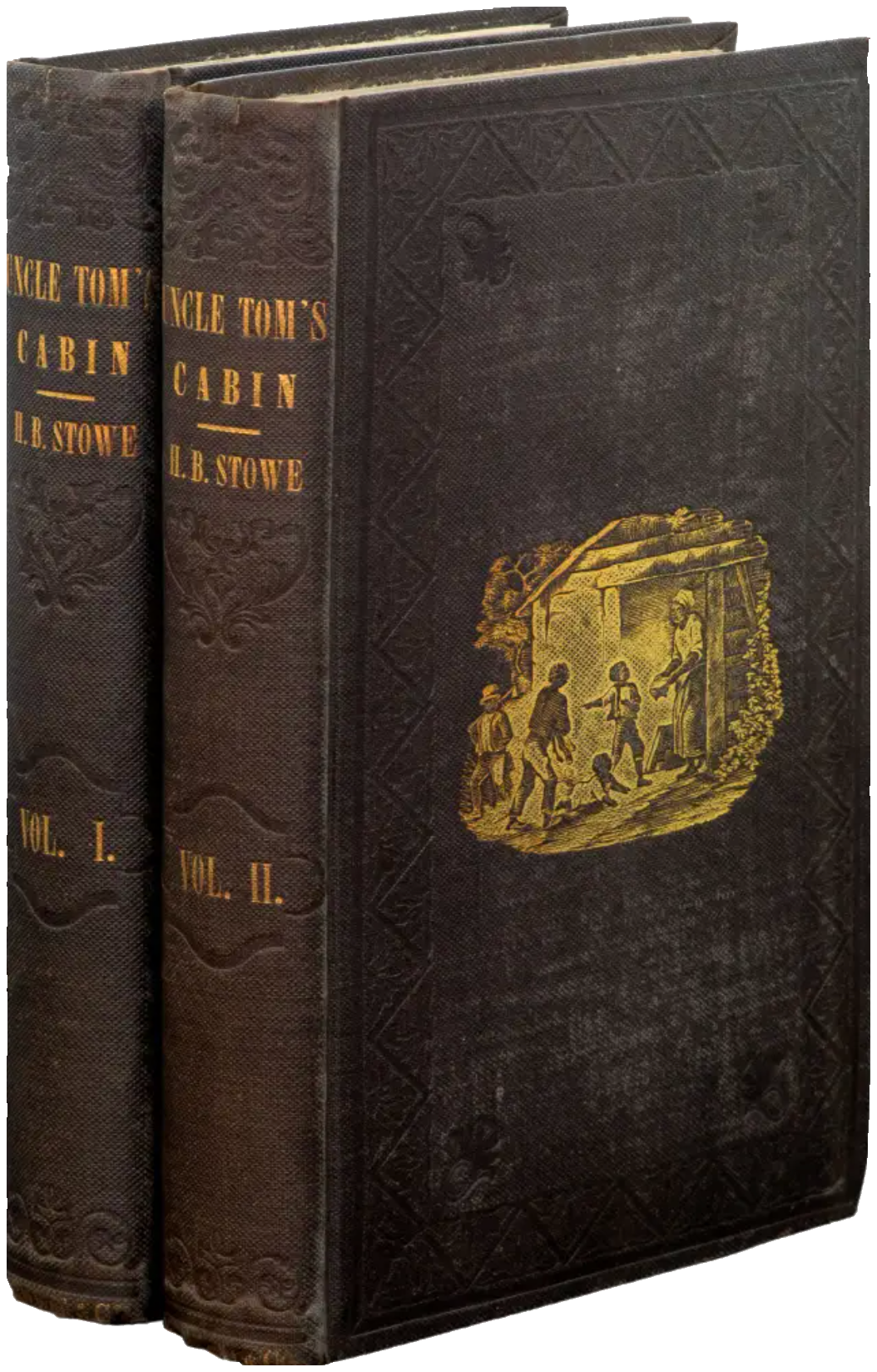
First Edition · Early Printing (“Tenth Thousandths”) · Two Volumes
The Book: First edition, early printing (“Tenth Thousand”) of Harriet Beecher Stowe’s Uncle Tom’s Cabin; or, Life Among the Lowly, complete in two matching volumes. Both volumes carry the correct 1852 John P. Jewett publisher imprint and explicitly state “Tenth Thousandths,” identifying them as part of the extraordinary sequence of early printings produced to meet immediate demand for the novel. Original publisher’s brown cloth bindings with gilt pictorial stamping retained. Publisher, date, edition statements, and printing designations are consistent throughout both volumes, with no evidence of later rebinding or restoration observed.
Condition: Good. Both volumes remain complete and structurally sound in their original publisher’s bindings. The brown cloth exhibits heavy spine wear and areas of cloth loss, moderate corner wear, and other handling consistent with age and use. Interiors show foxing and scattered staining. No ownership writing observed. Despite substantial wear, the matched set survives intact in its original 1852 bindings.
Story Of The Book
Few novels have ever done more to change what a nation was willing to see.
When Harriet Beecher Stowe published Uncle Tom’s Cabin in 1852, slavery was already at the center of American political conflict. Her intervention was to make that enormous institution intimate. Through the lives of enslaved men, women, children, and families, Stowe asked readers to encounter human beings where political arguments had too often allowed them to see property, economics, law, or abstraction.
The response was extraordinary. Demand became so intense that John P. Jewett rapidly issued successive printings designated by the number of thousands produced. This matched “Tenth Thousand” set belongs to that first surge of publication in 1852, when the novel was moving through American culture with extraordinary speed and becoming part of the national struggle over slavery itself.
The reaction also demonstrated how threatening literature could become to established power. Uncle Tom’s Cabin was fiercely condemned across the slaveholding South and treated as dangerous abolitionist literature. In 1857, Maryland minister Samuel Green was sentenced to ten years in prison after authorities discovered Uncle Tom’s Cabin among abolitionist materials in his possession—an extraordinary example of the danger that could accompany possessing and circulating antislavery print.
Stowe did not abolish slavery with a novel. But she demonstrated that literature could alter the moral terrain on which political arguments were fought.
Why It’s In The Collection
Uncle Tom’s Cabin belongs near the historical center of the collection because it demonstrates the extraordinary power of literature to restore humanity where systems of power depend upon denying it.
Slavery required more than laws permitting ownership of human beings. It required an intellectual and moral architecture capable of reducing people to categories—slave, property, labor, capital. Stowe attacked that architecture through narrative. Her characters experience separation, fear, violence, faith, love, parenthood, loss, and hope. Whatever the novel’s limitations and the complicated history of its racial representations, its central political force came from insisting that readers confront the humanity obscured by the institution it opposed.
This particular set matters because it is not a later commemorative edition of a famous nineteenth-century novel. The two volumes were printed in 1852, during the original publishing phenomenon itself. Their “Tenth Thousand” designation places them among the copies produced as unprecedented demand was carrying Stowe’s argument into homes and public debate across the country.
That makes the object more than an early copy of a famous book. It is a surviving participant in one of the most consequential publication events in American history—a physical artifact from the moment a work of fiction became part of the struggle over whether one human being could rightfully own another.
Collection Categories: Civil Rights · Human Rights · Anti-Authoritarianism · Literature · Publication-Event Object
———
Authentication Evidence
• Correct John P. Jewett publisher imprint, confirming first edition
• Copyright pages dated 1852, consistent with first edition
• Both volumes state “Tenth Thousand,” confirming authentic early printing
• Matching two-volume set
• Publisher, date, and edition statements consistent throughout both volumes
• First edition, early printing characteristics consistent throughout
Uncle Tom’s Cabin
Full Title: Uncle Tom’s Cabin; or, Life Among the Lowly
Harriet Beecher Stowe
John P. Jewett & Company, Boston · 1852
First Edition · Early Printing (“Tenth Thousandths”) · Two Volumes
In 1857, a free Black minister in Maryland was sentenced to ten years in prison for possessing a book that dared to suggest human beings should not be owned at all.
That book was Harriet Beecher Stowe’s Uncle Tom’s Cabin, published just five years earlier. By transforming slavery from a political abstraction into the suffering of human beings, Stowe had helped ignite a national reckoning over the institution. Reverend Samuel Green’s prosecution exposed a devastating contradiction at the heart of the American experiment: a nation founded upon liberty was willing to imprison a free man for possessing words that challenged human bondage. This two-volume edition preserves one of the most consequential literary challenges to slavery in American history — a book whose power to change minds was so threatening that those defending slavery sought to make even its possession a crime.
Allen Ginsberg
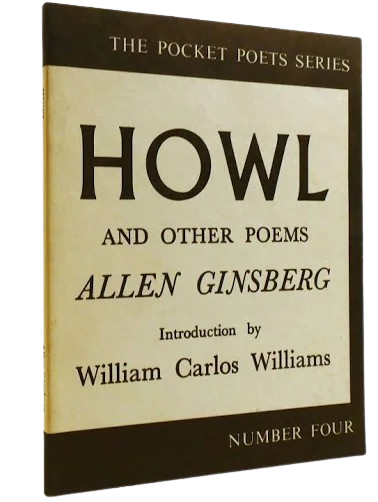
San Francisco: City Lights Books, 1956
First Edition · Third Printing
The Book:
The first edition, third printing of Allen Ginsberg’s Howl and Other Poems, issued as Number Four in Lawrence Ferlinghetti’s Pocket Poets Series. The rear wrapper explicitly states “Third Printing” and retains the original 75-cent price. This printing is especially significant because it was the first printing of Howl manufactured in the United States. The first two printings had been produced in England by Villiers; after U.S. Customs seized copies of the second printing on import, City Lights shifted production domestically, placing the next printing beyond that particular point of government control. This third printing also differs visibly from the first two in lacking the separate white paper wraparound label, with the title information incorporated directly into the cover design.
Condition:
Near Fine+. An exceptionally bright example in the original publisher’s wrappers, with only minimal handling wear. The staple binding remains tight, the interior is clean, and the original 75-cent price and “Third Printing” designation remain clearly present on the rear wrapper. No rebinding, restoration, facsimile wrappers, or ex-library markings are evident.
Story Of The Book
Allen Ginsberg wrote the poem. Lawrence Ferlinghetti decided the government would not decide whether readers could have it.
When City Lights published Howl and Other Poems, Ginsberg’s language was sexually explicit, politically disillusioned, psychologically raw, and deliberately hostile to the boundaries respectable American culture placed around literature.
The authorities responded by trying to stop the book.
The first two printings were manufactured in England. When copies of the second printing entered the United States, Customs seized them as obscene. Ferlinghetti and City Lights then faced the prospect that the government could use the border itself as a censorship tool.
So City Lights changed the book.
Not the poem.
The manufacture.
The third printing was produced in the United States.
That is what makes this copy such a strong publication-event object. It was not merely printed while Howl was controversial. Its physical production changed because the government had interfered with the book’s circulation.
Ferlinghetti’s response was practical and defiant: if Customs could stop imported copies, the next copies would not be imported.
The obscenity prosecution continued, and Judge Clayton Horn would not rule until October 1957. This third printing therefore belongs to the unresolved middle of the fight — after government suppression had begun, but before the courts had declared Howl protected literature.
When the government used the border to stop Howl, City Lights moved the printing inside the border.
Why It’s In The Collection
Howl and Other Poems is one of the clearest examples in Consigned to Darkness of a book whose physical form records the struggle over whether it could exist.
A later printing can preserve Ginsberg’s poem.
This printing preserves the publisher’s response to censorship.
That distinction is why the collection deliberately sought the third printing. It was the first domestic printing produced after Customs had seized the English-printed second printing, making the object itself part of City Lights’ effort to keep Howl in circulation despite government interference.
Its bibliographical features reinforce that history. The rear wrapper identifies it as the third printing, while the absence of the separate white wraparound label used on the first two printings provides an additional visible point of identification. The inventory already treats the copy as a publication-event object rather than merely an early impression, and that is the right way to understand it.
This is not simply a copy of a famous poem from the censorship era.
It is a copy produced because censorship had already begun to shape how the book had to be made.
The government tried to stop Howl at the border. City Lights answered by printing it at home.
Collection Categories: Free Expression · Censorship · Obscenity Law & Court History · Beat Generation · Literature · Poetry · Anti-Authoritarianism · Publication-Event Object
———
Authentication Evidence
• Title page reads Howl and Other Poems by Allen Ginsberg, published by The Pocket Poets Series, Number Four, City Lights Books, San Francisco, consistent with the original first edition.
• This copy belongs to the original 1956 City Lights first edition, which remained in continuous production through successive printings without constituting a new edition.
• Rear wrapper is explicitly printed "Third Printing," identifying this as the authentic third printing of the first edition.
• Library of Congress Catalog Card Number 56-8587 appears on the publication page, consistent with authentic early printings.
• Original publisher's wrappers, typography, layout, and Pocket Poets Series design match documented third-printing copies.
• Original 75-cent price remains on the rear wrapper.
• No evidence of rebinding, facsimile wrappers, ex-library provenance, or restoration observed.
• The observed bibliographic evidence is consistent with an authentic first edition, third printing.
Howl & Other Poems
Allen Ginsberg
San Francisco: City Lights Books, 1956
First Edition · Third Printing
Allen Ginsberg's poem became famous because it was prosecuted. Its freedom became famous because it survived.
This third printing was issued immediately after Judge Clayton Horn's landmark 1957 obscenity ruling declared Howl protected by the First Amendment. Rather than representing only the continued publication of a celebrated poem, it embodies the moment American courts affirmed that challenging language, unconventional sexuality, and artistic experimentation could not be suppressed simply because they offended prevailing standards of morality. Published in the immediate aftermath of the trial, this printing transformed a once-confiscated book into a symbol of constitutional protection for literature, carrying the victory directly into readers' hands. It preserves not only one of the defining publication-events in the history of American free expression but also the first moment that Howl could circulate under the protection of a historic legal victory.
Ralph Ginzburg, Editor and Publisher
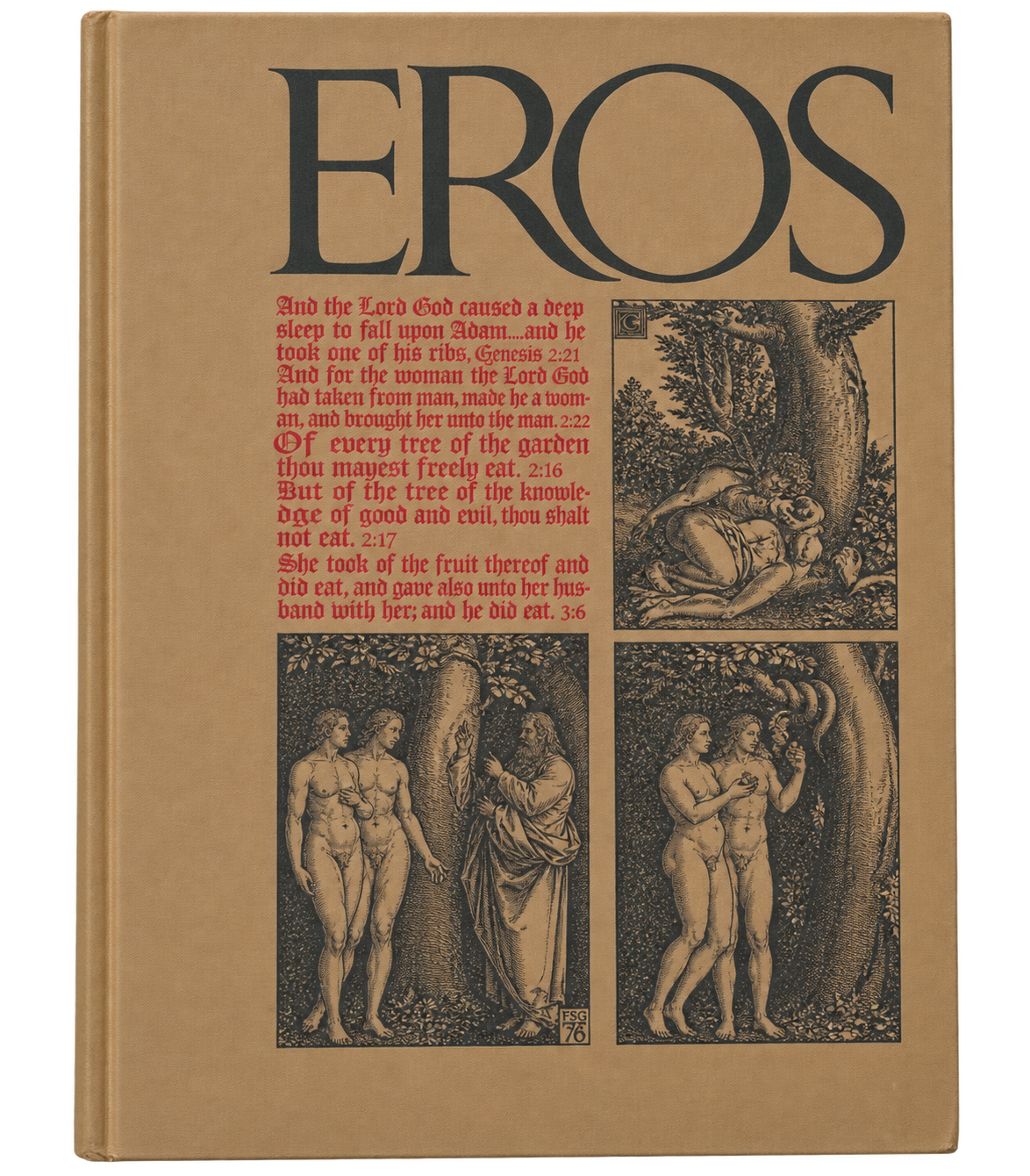
New York: EROS Magazine, Inc., 1962
First Editions · First Printings · Two-Volume Assembled Set (Nos. 1 & 4)
The Book:
An assembled publication-event set preserving the first and final issues of EROS: Volume 1, Number 1 (Spring 1962) and Volume 1, Number 4 (Winter 1962). Edited and published by Ralph Ginzburg and designed under the direction of Herb Lubalin, EROS was an unusually lavish quarterly devoted to the literary, artistic, historical, psychological, and cultural exploration of eroticism. Both volumes are original first editions and first printings in their publisher-issued printed hardcover bindings; EROS was issued without separate dust jackets. Only four issues of the magazine were ever published.
Condition:
Very Good+ overall. Volume 1, Number 1 is Very Good+, with clean boards, bright typography and interiors, and light exterior handling wear. Volume 1, Number 4 is Very Good, with moderate cover toning and localized abrasion to the lower spine edge but a clean, complete interior. Both bindings remain structurally sound and present attractively together.
Story Of The Book
Ralph Ginzburg wanted to prove that eroticism belonged in the same room as literature, art, history, and ideas. So he built a magazine beautiful enough to make the argument before anyone read a word.
EROS appeared in 1962 as something deliberately difficult to dismiss as pornography.
It was a hardcover quarterly. Its production was extravagant. Under Herb Lubalin’s design direction, photography, typography, visual art, historical documents, literature, and social criticism were assembled with the seriousness and physical elegance normally reserved for prestigious cultural publications.
That was part of the point.
Ginzburg rejected the boundary separating “respectable” culture from subjects that polite publishing considered forbidden. EROS placed sexuality beside art, scholarship, history, and literature and asked readers to treat erotic experience as part of civilization rather than something existing outside it.
The contributors and subjects reinforced that ambition. Across its brief run, EROS drew together contemporary writers, photographers, historical texts, and visual culture; the final issue alone included work associated with Nat Hentoff, Garry Winogrand, Aristophanes, and Ray Bradbury.
But EROS lasted only one year.
Four quarterly issues appeared between Spring and Winter 1962. The experiment ended, while Ginzburg went on to publish Fact and Avant Garde and became increasingly entangled in the legal battles over obscenity that would define his place in American publishing history.
That makes these two volumes particularly effective together.
The Spring issue captures the proposition:
Eroticism deserves to be treated seriously.
The Winter issue captures the end of the experiment.
Between them lies the complete lifespan of one of the most audacious publishing projects of its era.
Why It’s In The Collection
EROS belongs in Consigned to Darkness because censorship often begins long before the government bans anything.
It begins with categories.
Serious or obscene.
Art or pornography.
Literature or indecency.
Culture or something that must remain outside it.
Ginzburg challenged those categories by refusing to make the kind of publication people expected erotic material to inhabit. The physical form of EROS was therefore inseparable from its editorial argument. Its hardcover bindings, sophisticated design, ambitious contributors, photography, historical material, and literary content asserted that the subject itself did not determine whether a publication deserved intellectual respect.
The collection deliberately assembled Nos. 1 and 4 rather than treating them as unrelated issues. Together they preserve the beginning and conclusion of the magazine: the inaugural volume that announced Ginzburg’s editorial philosophy and the final volume that closed the four-issue experiment.
That arc also makes EROS an important precursor within the collection’s broader history of American obscenity and free expression. It records Ginzburg before the later legal controversies surrounding his publishing career came to define him—when his first argument was being made not principally in a courtroom, but through editorial judgment, typography, photography, literature, and the extraordinary physical object he placed in readers’ hands.
Before Ralph Ginzburg fought over what the law would permit Americans to read, EROS challenged the culture to reconsider what it was willing to call respectable.
Collection Categories: Free Expression · Censorship · Obscenity Law & Court History · Publication-Event Object · Literature · Sexuality & Culture · Magazine & Periodical History · Pornography
———
Authentication Evidence
• Volume 1, Number 1 title page identifies EROS — Spring 1962 — Volume One, Number One, edited and published by Ralph Ginzburg.
• Volume 1, Number 4 title page identifies EROS — Winter 1962 — Volume One, Number Four, likewise edited by Ralph Ginzburg.
• Both issues retain the original publisher's printed hardcover bindings characteristic of EROS.
• Publication data identifies EROS Magazine, Inc. with 1962 copyright information consistent with the original issues.
• Typography, layout, and graphic design correspond to Herb Lubalin's original production.
• Contents correspond exactly to the documented tables of contents for both issues, including Nat Hentoff, Garry Winogrand, Aristophanes, and Ray Bradbury in No. 4, and the inaugural issue's original contents in No. 1.
• Contemporary bibliographic descriptions confirm that EROS was issued as hardcover magazines without separate dust jackets.
• Edition evidence: Both issues are original first editions of their respective quarterly publications issued during 1962.
• Printing evidence: Each quarterly issue constitutes its original first printing as published by EROS Magazine, Inc.; no later printings of these individual issue states are indicated.
EROS (Nos. 1 & 4)
Ralph Ginzburg, Editor and Publisher
New York: EROS Magazine, Inc., 1962
First Editions · First Printings · Two-Volume Assembled Set (Nos. 1 & 4)
Before Ralph Ginzburg became America's most famous publisher prosecuted for obscenity, he attempted something far more ambitious: to persuade the public that eroticism deserved the same intellectual, artistic, and literary treatment as any other serious subject.
Published in 1962, EROS rejected the distinction between high culture and forbidden culture by placing Renaissance art beside contemporary photography, literature beside sexuality, and scholarship beside subjects routinely excluded from respectable publishing. The magazine's extraordinary production values reinforced its argument that erotic expression belonged within civilization rather than outside it. Although EROS survived only four issues before financial pressures and the legal controversies surrounding Ginzburg's later publications ended the experiment, it became one of the defining publication-events in the modern history of obscenity, censorship, and American publishing. This assembled set preserves both the inaugural issue that announced Ginzburg's editorial vision and the final issue completing the magazine's brief but influential existence.
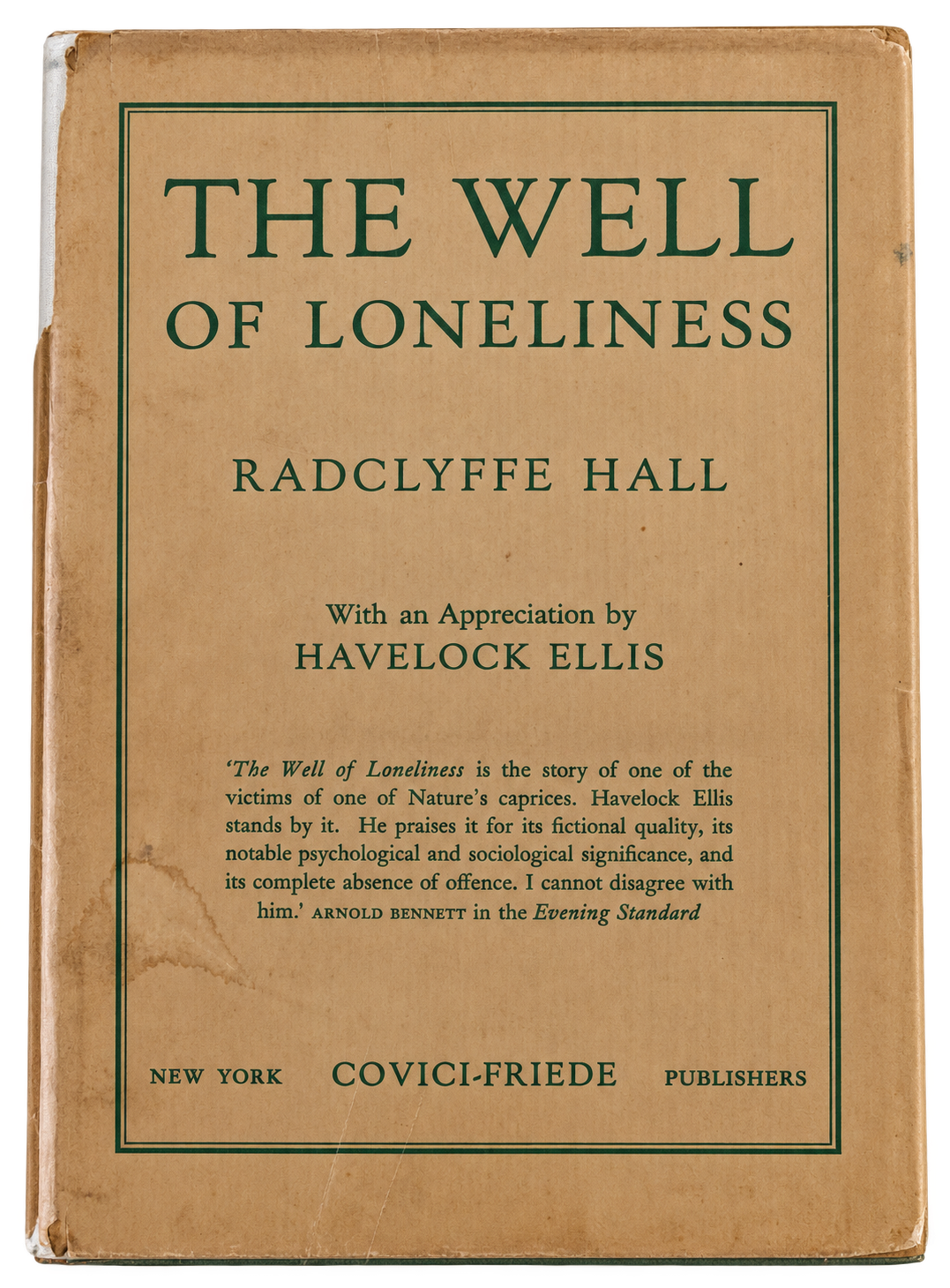
Radclyffe Hall
New York: Covici-Friede Publishers, 1929
First American Edition · Ninth Printing
The Book:
The first American edition, ninth printing of Radclyffe Hall’s The Well of Loneliness, issued in May 1929, while the novel remained at the center of one of the twentieth century’s defining censorship controversies. The copyright page records printings through “Ninth Printing, May, 1929,” confirming the state. This copy retains its original green publisher’s cloth, its original first-state American dust jacket priced at $5.00, and the original publisher’s promotional bookmark/advertising insert.
For most rare books, an earlier printing is automatically more desirable.
For this collection, that logic is reversed.
The ninth printing is the version Consigned to Darkness values most because it is not merely an early appearance of the text. It is a defendant printing: a copy produced while The Well of Loneliness was still actively being fought over in courts, newspapers, bookstores, and public culture. The first printing records the book’s arrival. The ninth printing records the censorship battle failing to stop it.
Condition:
Very Good+ in a Good dust jacket. The book itself is well preserved in its original green cloth. The jacket shows moderate toning, significant edge wear, and notable loss at the upper spine, with additional chipping and wear along the edges. The original publisher’s promotional bookmark is retained. No rebinding, facsimile jacket, or replacement components are evident.
Story Of The Book
Radclyffe Hall did not merely publish a novel. She challenged the belief that certain lives should remain invisible.
First published in 1928, The Well of Loneliness became one of the most consequential literary works in the history of LGBTQ+ representation and censorship.
Hall treated lesbian identity seriously, sympathetically, and as part of a fully human life. That alone was enough to make the book politically explosive.
The novel quickly became the subject of obscenity prosecutions and public campaigns seeking to suppress it, transforming The Well of Loneliness into a test of whether literature portraying lesbian life deserved legal and cultural legitimacy. The controversy became inseparable from the book itself.
This copy belongs to that active period.
By May 1929, the American edition had already reached its ninth printing. That repeated demand matters because the book was not simply surviving controversy. It was continuing to circulate through it.
Readers kept buying it.
Booksellers kept stocking it.
The publisher kept printing it.
That is why this ninth printing matters more to Consigned to Darkness than an earlier printing normally would.
In conventional rare-book collecting, primacy usually dominates. The first printing is the trophy copy because it is the earliest. But this collection is not organized around primacy alone. It is organized around historical participation.
The ninth printing participated in the censorship event.
It was produced after suppression had already become part of the book’s public life, while the legal and cultural fight was still unfolding and while continued demand was proving that the controversy had failed to erase the work.
The first printing tells us when the book appeared. The ninth tells us that attempts to silence it did not work.
Why It’s In The Collection
The Well of Loneliness belongs in Consigned to Darkness because the struggle over who is allowed to appear in literature is also a struggle over who is permitted to appear in public life.
The collection’s copy is intentionally not the earliest possible printing.
It is the defendant printing.
That distinction is central to why the object is here.
This ninth printing was issued during the height of the controversy surrounding the novel, when repeated printings reflected sustained public demand despite organized attempts to suppress the book. The inventory explicitly treats the copy as an active censorship-era manifestation rather than merely a later impression.
The original $5.00 dust jacket and publisher’s promotional bookmark make the object even more compelling. They preserve not only Hall’s text, but the commercial apparatus through which Covici-Friede continued to market and circulate the novel while the controversy was still active.
That is the story this collection values most.
Not simply the moment a controversial book was born, but the moment suppression tried and failed to stop it from reaching readers.
In the traditional rare-book market, an earlier printing would usually outrank this one.
In Consigned to Darkness, this is the printing with the better story.
Because this copy does not merely represent publication.
It represents persistence under pressure.
They tried to make lesbian life unprintable. The ninth printing is evidence that readers kept asking for the book anyway.
Collection Categories: LGBTQ+ History · Free Expression · Censorship · Obscenity Law & Court History · Anti-Authoritarianism · Literature
———
Authentication Evidence
• Covici-Friede title page dated 1929, confirming the first American edition.
• Copyright page lists printings through "Ninth Printing, May, 1929," confirming ninth-printing state.
• Original publisher's green cloth binding present.
• Original first-state American dust jacket retained with $5.00 price.
• Original promotional bookmark/advertising insert retained.
• Covici-Friede imprint, typography, and binding consistent throughout.
• No evidence of rebinding, facsimile jacket, or replacement components observed.
• First American edition, ninth-printing characteristics consistent throughout.
The Well of Loneliness
Radclyffe Hall
New York: Covici-Friede Publishers, 1929
First American Edition · Ninth Printing
Radclyffe Hall did not merely publish a novel. She challenged the belief that certain lives should remain invisible.
Following its publication in 1928, The Well of Loneliness became one of the twentieth century's defining censorship controversies, provoking obscenity prosecutions and international debate over whether literature portraying lesbian identity deserved legal protection. This early printing preserves the period in which the novel's continued circulation itself remained an act of resistance against censorship, documenting the years when readers, publishers, and booksellers refused to allow legal suppression to erase one of the first serious literary portrayals of lesbian life. It remains one of the foundational publication-event objects in the intertwined histories of LGBTQ+ representation and literary freedom.
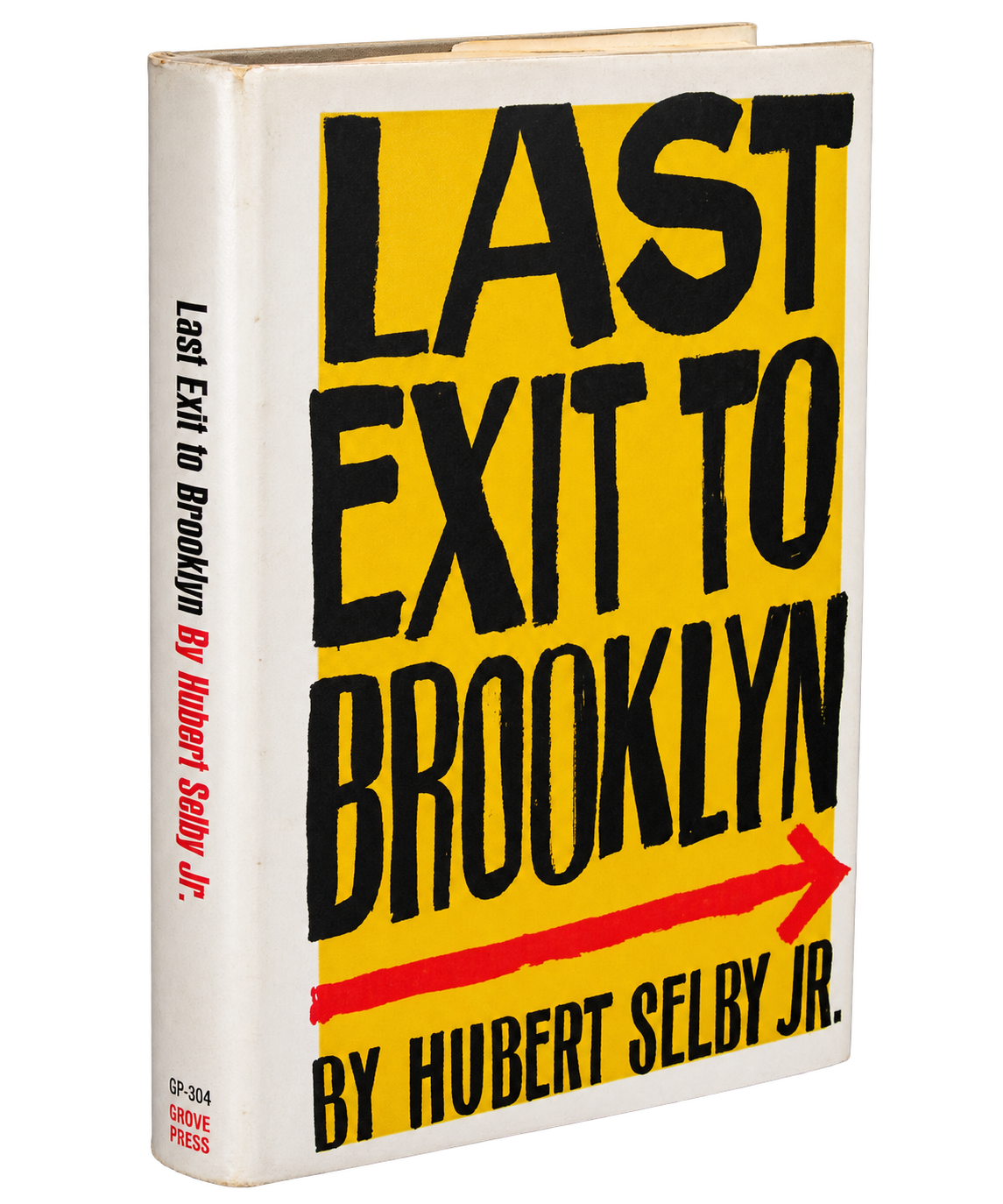
Hubert Selby Jr.
Grove Press, Inc. · New York · 1964
First Edition · Third Printing
The Book:
The first edition, third printing of Hubert Selby Jr.’s Last Exit to Brooklyn, published by Grove Press in 1964. The copyright page explicitly states “Third Printing,” identifying this copy as an early impression of the original American edition. Original black cloth spine over textured red paper-covered boards with red spine lettering, retaining the original unclipped dust jacket priced $5.00 and bearing Grove Press code GP-304.
Condition:
Near Fine+ book in a Near Fine dust jacket. The boards remain exceptionally clean and vivid, with deep black spine cloth, bright lettering, and a tight, square binding. The interior is notably fresh apart from a previous-owner inscription in blue ink on the front free endpaper. The original jacket remains exceptionally bright and unfaded, with a short closed tear descending from the upper edge of the front panel, negligible extremity wear, and no significant chipping or paper loss. Protected in an archival polyester cover.
Story Of The Book
Hubert Selby Jr. wrote about people respectable society preferred not to see—and used language respectable literature was not supposed to print.
Published by Grove Press in 1964, Last Exit to Brooklyn plunged readers into working-class Brooklyn through interconnected stories of poverty, addiction, prostitution, queer life, labor conflict, violence, and desperation. Selby refused to soften either his characters or their world for the comfort of his audience.
That refusal soon turned the novel into a test of literary freedom.
When Calder & Boyars prepared the book for British publication in 1966, its publishers knew prosecution was possible. The novel was eventually found obscene following a highly publicized trial, placing its publishers in direct conflict with British obscenity law. In 1968, the Court of Appeal overturned the conviction.
The controversy was ultimately about more than offensive language. It asked whether depicting lives considered ugly, sexual, violent, or socially unacceptable could itself place serious literature beyond the protection of the law.
Selby’s answer had already been printed.
Why It’s In The Collection
Last Exit to Brooklyn belongs in Consigned to Darkness because censorship often begins with a judgment about which experiences society considers worthy of expression.
Selby wrote about people at the margins without making them respectable first. Grove Press—already central to major American battles over literary censorship—published that work without sanitizing it. The British prosecution that followed demonstrated how quickly discomfort with subject matter and language could become a legal argument over whether the book should circulate at all.
This copy predates that prosecution. Its significance lies in preserving Last Exit to Brooklyn during its original 1964 American publication, before the novel became an international censorship cause célèbre. This first edition (third printing) copy preserves the novel as it circulated during its original year of publication, before the legal controversy that would become inseparable from its history.
Selby refused to make marginalized lives more comfortable to look at. The censorship battle that followed asked whether readers should be permitted to look at them at all.
Collection Categories: Free Expression · Censorship · Obscenity Law & Court History · LGBTQ+ History · Urban Poverty · Social Justice · Literature
———
Authentication Evidence
Title page identifies Last Exit to Brooklyn by Hubert Selby Jr. and bears the Grove Press, Inc., New York publisher imprint.
Copyright page records copyright dates of 1957, 1960, 1961, and 1964 by Hubert Selby Jr., consistent with the work’s original 1964 Grove Press publication.
Copyright page explicitly states “Third Printing,” directly establishing this copy’s printing state.
No later-edition statement, revised-edition designation, new-edition notice, or different publisher imprint appears on the title or copyright pages.
The explicit “Third Printing” statement identifies this copy as a later impression within the original Grove Press edition rather than a separate later edition.
Original publisher’s binding of black cloth spine over textured red paper-covered boards with red spine lettering is present and corresponds to documented early Grove Press hardcover copies.
Original unclipped dust jacket is present and retains the printed $5.00 publisher’s price.
Dust jacket bears the Grove Press code GP-304, consistent with documented copies of the original Grove Press hardcover issue.
The previous-owner inscription in blue ink on the front free endpaper is non-authorial; no author signature or presentation inscription is present.
No evidence of book-club manufacture, ex-library provenance, rebinding, or facsimile dust jacket is observed.
Taken together, the explicit printing statement, original Grove Press imprint, publisher’s binding, and original priced GP-304 dust jacket support identification as an authentic 1964 Grove Press First Edition · Third Printing.
Last Exit to Brooklyn
Hubert Selby Jr.
Grove Press, Inc. · New York · 1964
First Edition · Third Printing
Hubert Selby Jr. refused to look away from lives that respectable society preferred not to see.
Depicting poverty, violence, addiction, sexuality, and social despair with unprecedented honesty, Last Exit to Brooklyn provoked obscenity prosecutions on both sides of the Atlantic while challenging prevailing assumptions about what literature could legitimately portray. This early censorship-era printing preserves the novel during the period in which courts, publishers, and readers were still contesting its right to exist in print, making the object itself part of the continuing struggle over artistic freedom. Its survival reminds us that literature often changes society not because it comforts readers, but because it refuses to protect them from uncomfortable truths.
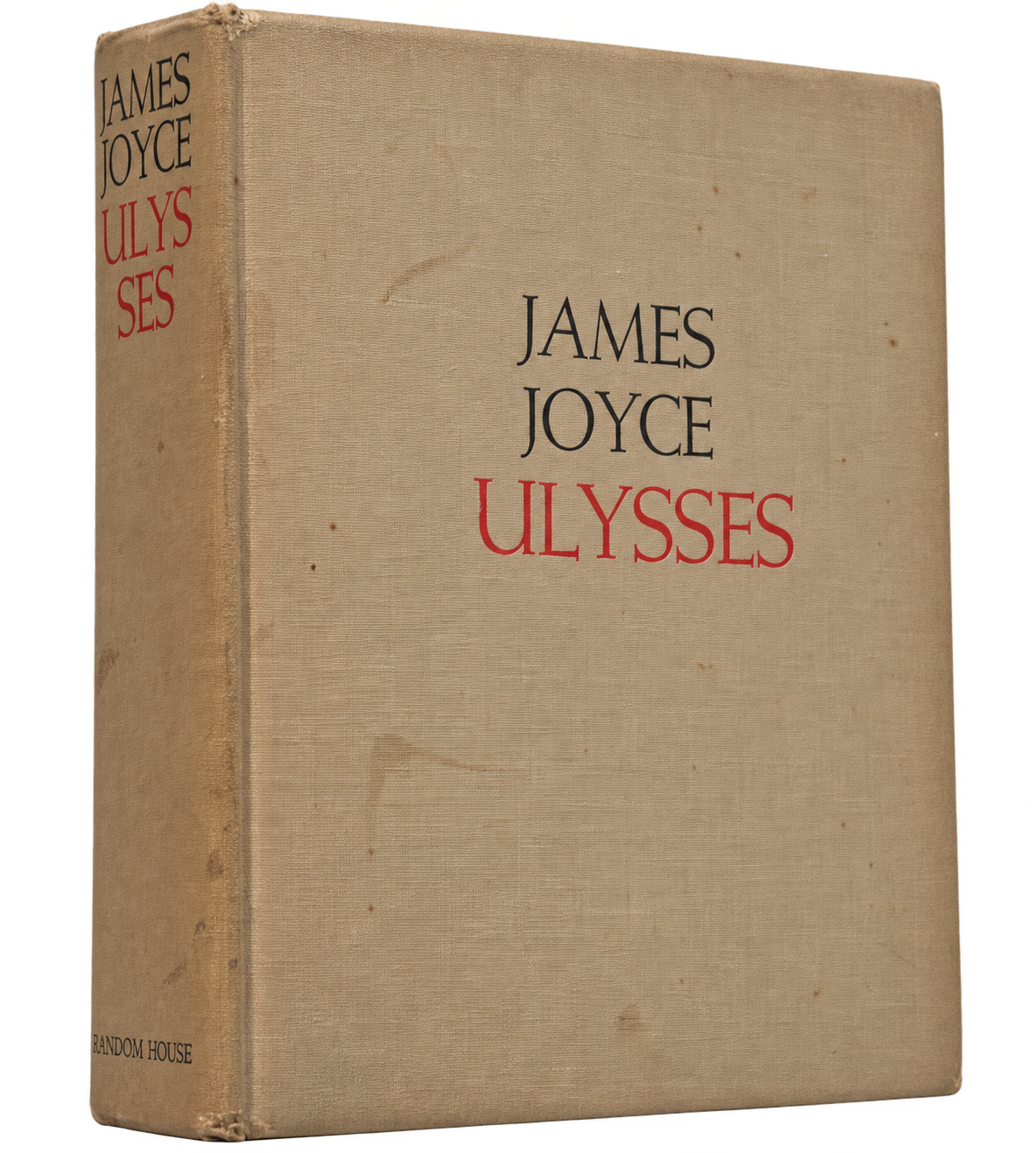
James Joyce
New York: Random House, 1934
First American Edition · First Printing
The Book:
The true first American edition, first printing of James Joyce’s Ulysses, published by Random House in 1934. The copyright page explicitly states “FIRST AMERICAN EDITION, PUBLISHED BY RANDOM HOUSE, NEW YORK, 1934,” with no indication of later printings or subsequent impressions. The copy retains its original cream cloth binding stamped in black and red, designed by Ernst Reichl. The original dust jacket is no longer present.
Condition:
Very Good. The binding remains square and structurally sound, with moderate soiling and scattered foxing to the cream cloth and light rubbing at the extremities. The interior is clean with light, expected age toning. No ownership inscriptions, bookplates, ex-library markings, rebinding, or restoration are documented.
Story Of The Book
For years, Americans could read about Ulysses. They could not legally buy it.
James Joyce’s novel had already transformed modern literature by the time Random House published this edition in 1934. But in the United States, its reputation had been shaped as much by censorship as by literary innovation. Earlier attempts to circulate the work had run into obscenity law, making Ulysses not merely a difficult novel but a prohibited one.
That changed with Judge John M. Woolsey’s landmark federal decision permitting the book’s legal publication in the United States. Random House’s 1934 edition was the physical consequence of that victory: the moment a work that had effectively existed as contraband entered ordinary American commercial publication. The inventory therefore treats this copy not simply as an important modernist first, but as one of the collection’s defining publication-event objects.
That distinction is central to why this edition matters. The earlier Paris editions preserve the novel’s original publication history. This first American edition preserves something different: the moment American censorship failed to keep the book outside the legal marketplace.
The significance of this copy is not simply that Americans could finally read Ulysses. It is that the law had finally lost the power to stop them from buying it.
Why It’s In The Collection
Ulysses belongs in Consigned to Darkness because this edition preserves one of the clearest examples of a court decision directly changing what literature could legally circulate.
The collection acquired the 1934 Random House first American edition specifically for that reason. Rather than functioning merely as a celebrated literary object, it documents the expansion of free expression through the courts: a prohibited novel becoming a lawful commercial book as the result of a landmark legal challenge.
That makes the object especially powerful within the collection’s broader censorship holdings. Some books here record suppression while it is occurring. Others record publishers resisting it. Ulysses records the next stage: the moment censorship was defeated and the newly protected work physically entered the market.
The missing dust jacket limits the copy’s conventional collector appeal, but it does not diminish the central historical fact preserved by the book itself. Underneath the absent jacket remains the authentic first American printing—the edition through which one of the twentieth century’s most important novels became legally available in the United States.
For nearly a generation, American law treated Ulysses as something readers should not have. This is the edition that marks the moment they finally could.
Collection Categories: Free Expression · Censorship · Literature · Anti-Authoritarianism · Modernism · Obscenity Law & Court History
———
Authentication Evidence
• Title page identifies James Joyce, Ulysses, published by Random House, New York.
• First Edition Evidence: Copyright page states "FIRST AMERICAN EDITION, PUBLISHED BY RANDOM HOUSE, NEW YORK, 1934," the definitive first-edition statement for the Random House issue.
• First Printing Evidence: The copyright page bears the original first American edition statement with no indication of later printings or subsequent impressions, consistent with the true first printing.
• Copyright page carries the original 1934 Random House copyright alongside the earlier serial copyrights held by Margaret Caroline Anderson.
• Original publisher's cream cloth binding with black and red lettering matches the known first American issue designed by Ernst Reichl.
• No evidence of rebinding, book-club manufacture, ex-library provenance, or facsimile production observed.
• The observed bibliographic evidence is fully consistent with an authentic First American Edition, First Printing.
James Joyce transformed the modern novel. Governments responded by attempting to keep readers from experiencing it.
Long prohibited under obscenity laws in the United States and Britain, Ulysses became the center of one of the defining legal battles over literary censorship in the twentieth century. This American edition represents the triumph of the judicial decision that restored the novel to lawful publication and permanently altered the relationship between literature and the First Amendment. It preserves one of the most consequential publication-events in the history of modern publishing.
James Joyce
New York: Random House, 1934
First American Edition · First Printing
Ulysses
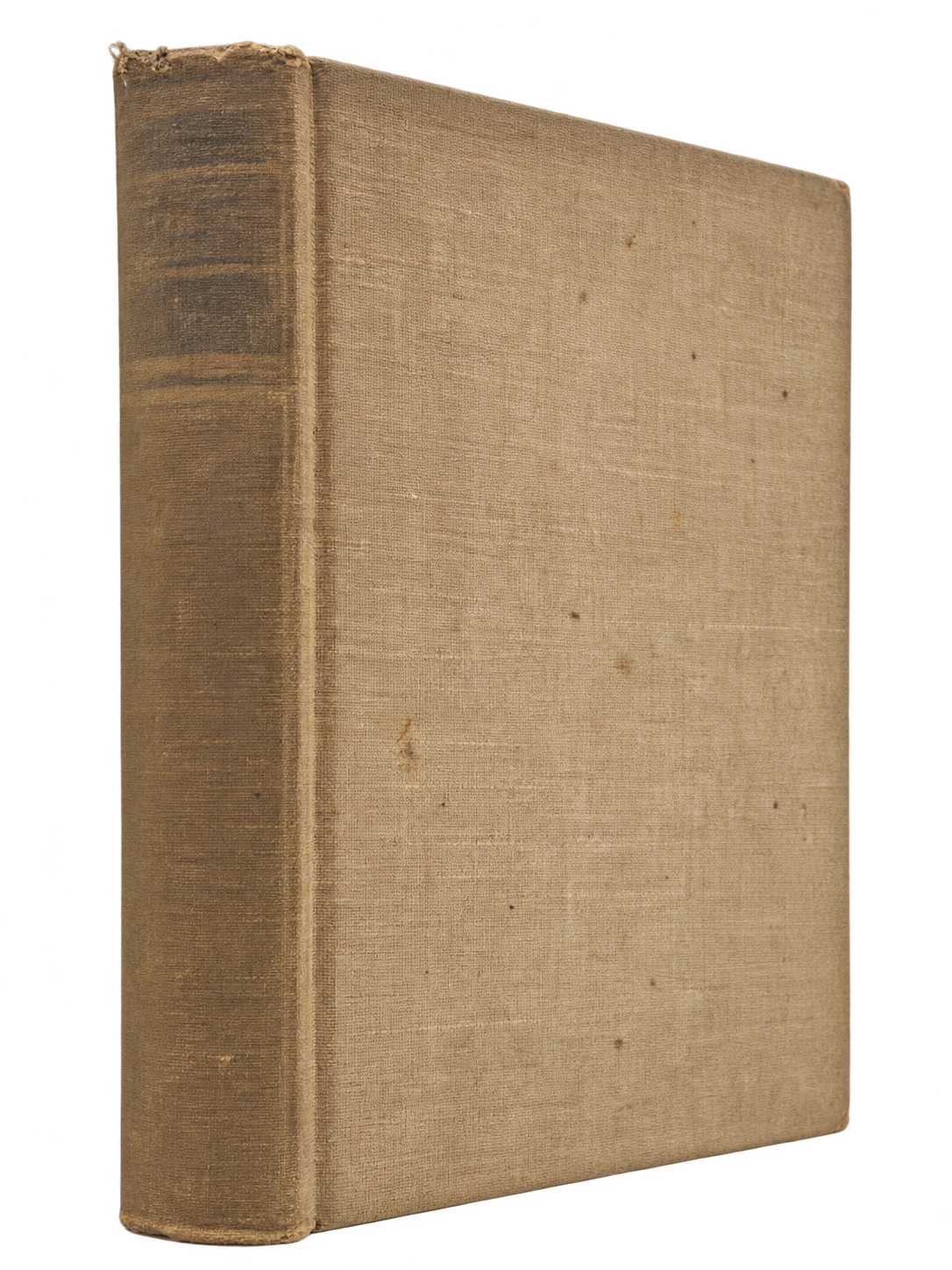
James Hanley
Boriswood Limited · London · 1931
First Edition · First Printing
Signed Limited Complete Edition · No. 3 of 145
The Book:
The First Edition · First Printing of James Hanley’s Boy, in the extraordinarily scarce signed limited issue preserving the novel’s complete, unexpurgated text. Boriswood restricted this complete edition to 145 numbered copies printed on English handmade paper, signed by Hanley, and issued privately to subscribers, with fifteen additional copies reserved for presentation. The limitation page explicitly identifies it as “the only Complete Edition of BOY.” This is Copy No. 3, signed by James Hanley as part of the original issue. The contemporaneous edition offered to the broader public was substantially expurgated.
Condition:
Very Good. Original light-brown buckram binding remains structurally sound and complete, with widespread irregular darkening, mottled staining and spotting, particularly across the upper portions of the boards, together with spine darkening and light extremity wear. The handmade-paper interior is substantially cleaner and well preserved, with the title page, publication statement, limitation page, Hanley signature, and complete text intact. Original untrimmed/deckled edges retained. The clear protective covering is later preservation material and is not an original dust jacket.
Story Of The Book
Before Boy was prosecuted for obscenity, before its publisher was dragged into court, and before most readers could encounter Hanley’s novel without pieces missing, 145 subscribers were allowed to read it complete.
Published in 1931, Boy follows a working-class adolescent who escapes an abusive home only to encounter exploitation, sexual violence, disease, and death at sea. Its brutality presented Boriswood with a problem: how could the novel be published under Britain’s obscenity regime without exposing the press to prosecution?
The answer was to publish two versions of the same book.
The public received an expurgated text. But 145 subscribers received this: the complete novel, privately issued on handmade paper, individually numbered and signed by Hanley. This copy is No. 3.
The strategy ultimately failed. When a later inexpensive edition brought Boy before a much larger readership, Boriswood was prosecuted for obscene libel and pleaded guilty.
The public edition preserves what Boriswood believed it could safely print. This edition preserves what it believed had to be kept private.
Why It’s In The Collection
Boy belongs in Consigned to Darkness because the censorship story is physically built into the book itself.
This is not a later edition of a novel that happened to become controversial. Its handmade paper, signature, limitation, private subscriber distribution, and complete text were all components of a publishing strategy designed to protect Hanley’s work while restricting who could obtain it.
That makes this copy unusually revealing. Censorship did not simply determine whether Boy could be sold. It divided the novel into two physical forms: one text for the public and another for the privileged few permitted to read what Hanley actually wrote.
As No. 3 of 145 signed subscriber copies, this volume survives from the other side of that divide.
It preserves the complete Boy before censorship decided what everyone else was allowed to read.
Collection Categories: Censorship · Free Expression · Publication-Event Object · Sexuality & Obscenity · Working-Class Literature · Human Rights · Anti-Authoritarianism · Literature
———
Authentication Evidence
Title page identifies the work as Boy by James Hanley and bears the Boriswood Limited · London imprint.
Publication statement explicitly reads “First published in 1931.”
Publication statement identifies Gemmond Press, Harrington Road, London, as printer for Boriswood Limited.
Limitation page explicitly identifies this issue as “the only Complete Edition of BOY.”
Limitation page states that the complete edition was restricted to 145 copies on English hand-made paper, numbered and signed by the author and issued privately to subscribers only.
Limitation page separately records 15 additional copies printed for presentation, distinguishing them from the 145 numbered subscriber copies.
Present copy is hand-numbered “3.”
James Hanley’s handwritten signature appears directly beneath the limitation statement in the position designated by the publisher.
Hanley’s signature is therefore integral to the original issue rather than a later-added autograph.
Original light-brown buckram binding remains present.
Original English handmade-paper text block remains present with characteristic untrimmed/deckled edges.
Physical construction corresponds to the documented signed limited complete issue.
Complete unexpurgated text remains present.
No evidence of a substituted limitation leaf, facsimile signature, modern reproduction, later-edition title page, or rebinding is observed.
The 1931 publication statement and limitation leaf establish this as the First Edition · First Printing of the signed limited Complete Edition.
Observable physical and bibliographic evidence authenticates this copy as No. 3 of 145 numbered and signed subscriber copies of the 1931 Complete Edition of Boy.
Boy
James Hanley
Boriswood Limited · London · 1931
First Edition · First Printing
Signed Limited Complete Edition · No. 3 of 145
Before Boy was prosecuted for obscenity, before its publisher was dragged into court, and before most British readers could encounter Hanley’s novel without pieces missing, 145 people were allowed to read it complete.
Published in 1931, Boy follows a working-class adolescent who escapes an abusive home only to encounter exploitation, sexual violence, disease, and death at sea. Its uncompromising brutality made the novel dangerous to publish openly in interwar Britain. Boriswood’s solution created two versions of the same book: an expurgated edition for public circulation and just 145 numbered, signed copies of the complete text, printed on handmade paper and issued privately to subscribers.
This is No. 3 of those 145 copies, signed by James Hanley.
The distinction makes this more than a scarce literary first. It is physical evidence of how publishers navigated Britain’s obscenity regime: the uncompromised text survived behind the protection of scarcity and private circulation while ordinary readers received something altered. When Boy later became the subject of an infamous obscenity prosecution, that divide between what could be published privately and what could safely reach the public became part of the book’s history. This copy survives from the privileged side of that divide—the complete Boy before censorship determined what everyone else was permitted to read.