
 Image 1 of 3
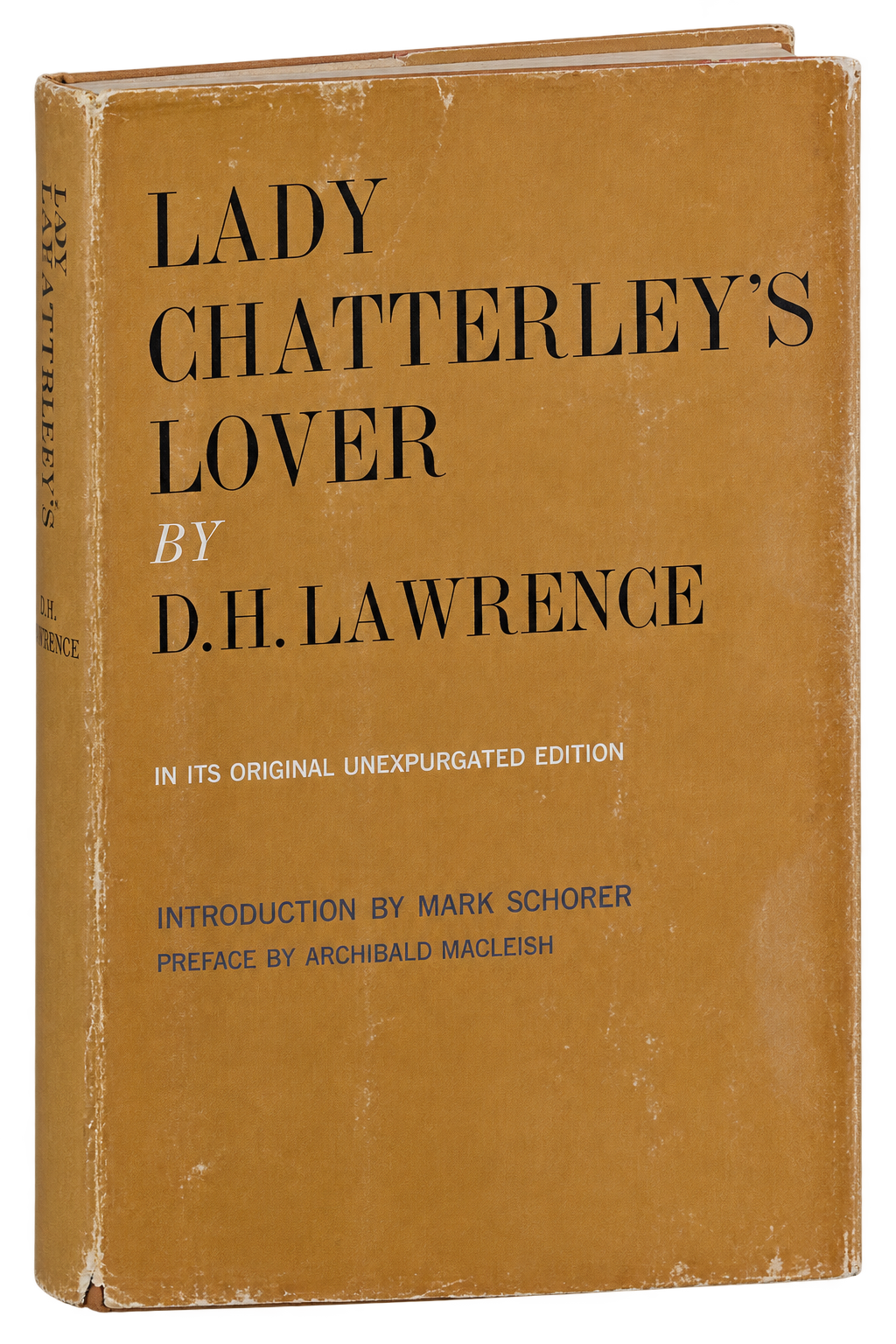 Image 2 of 3
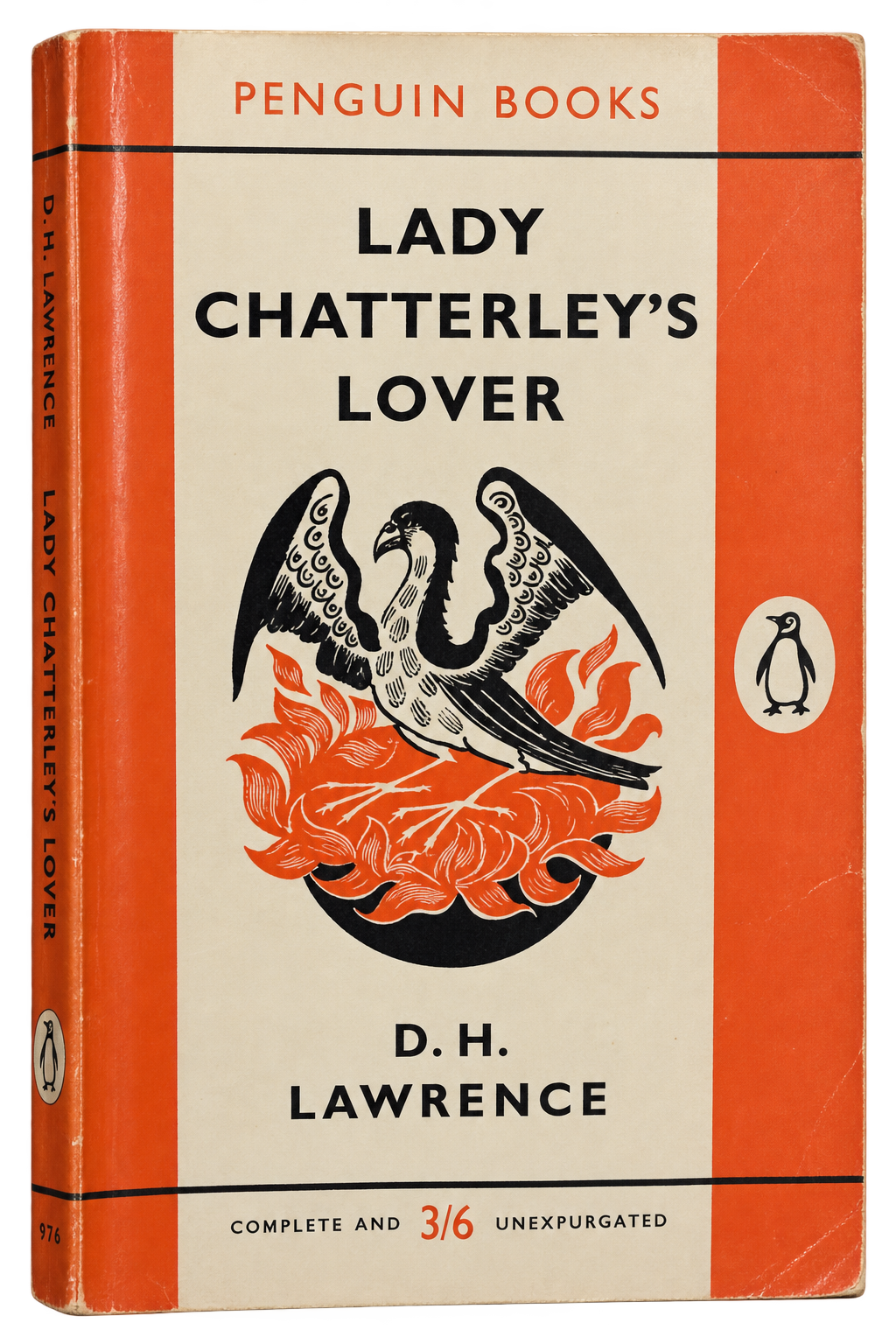 Image 3 of 3
The Lovers Set — D. H. Lawrence
Three Publication-Event Editions of Lady Chatterley’s Lover
D. H. Lawrence
Florence · New York · Harmondsworth · 1928–1960
Three Historically Distinct Editions
Curated Three-Volume Publication-Event Set
The Set:
A curated three-volume collection preserving three defining manifestations of D. H. Lawrence’s Lady Chatterley’s Lover: a Contemporary Pirated Florence Issue from 1928, material evidence of the underground market created when legitimate publication of the unexpurgated novel was suppressed; the 1959 Grove Press First American Edition · First Printing, published in direct confrontation with American obscenity restrictions; and the 1960 Penguin First Edition · First Printing, whose mass-market publication became the subject of Britain’s landmark R v. Penguin Books Ltd. obscenity trial. Together, the three books preserve three consequences of censorship across thirty-two years: a forbidden text escaping through unauthorized publication, a publisher deliberately challenging its suppression, and another defeating that suppression in court.
Included Titles:
Lady Chatterley’s Lover — D. H. Lawrence
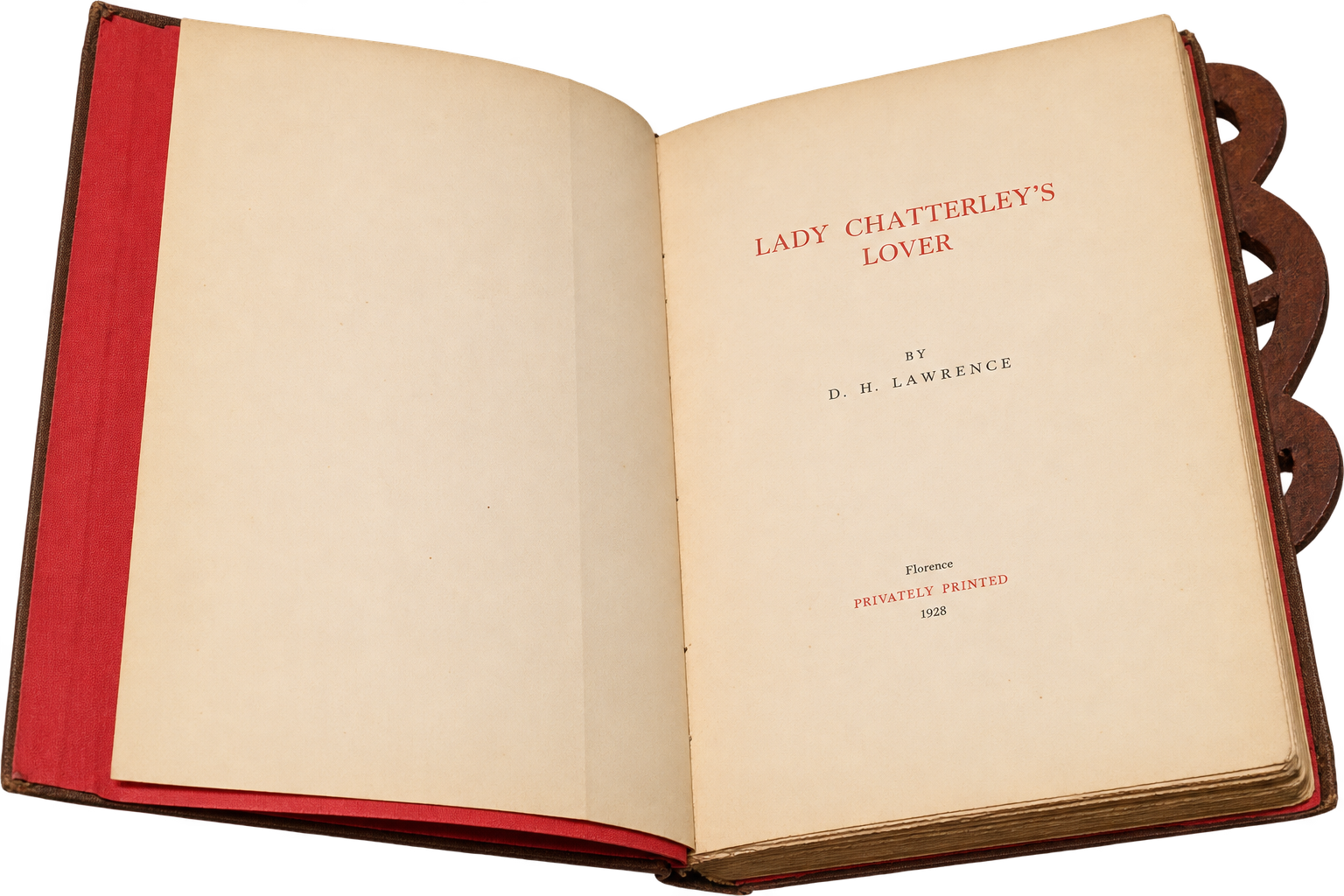
Privately Printed · Florence · 1928
Contemporary Pirated Florence Issue
Original black moiré-pattern cloth · Red-and-black title page · Red endpapers · 365 pp.Lady Chatterley’s Lover — D. H. Lawrence
Grove Press, Inc. · New York · 1959
First American Edition · First Printing
Complete unexpurgated text · Original publisher’s binding · Original $6.00 dust jacketLady Chatterley’s Lover — D. H. Lawrence
Penguin Books · Harmondsworth · 1960
First Penguin Edition · First Printing
Penguin No. 1484 · Complete unexpurgated text · Original pictorial wrappers · 3/6 price
Condition:
Very Good to Near Fine overall. The 1928 Florence piracy grades Very Good, retaining its original black moiré-pattern cloth, red-and-black title page, and red endpapers. The 1959 Grove Press edition grades Near Fine in a Very Good- original dust jacket. The 1960 Penguin edition grades Very Good in its original pictorial wrappers. All three retain the physical formats in which their respective editions were issued.
Story Of The Set
For more than thirty years, the story of Lady Chatterley’s Lover was also the story of who possessed the power to decide whether other people could read it.
Lawrence privately published his authorized first edition in Florence in 1928 because conventional publication of the complete novel was effectively impossible. But censorship created a paradox: the law could restrict legitimate publication without extinguishing the desire to read the book. Unauthorized editions proliferated to satisfy the demand suppression had driven underground.
The 1928 Florence piracy preserved here is a remarkable artifact of that unintended consequence. It was not authorized by Lawrence, and it is not represented as his first edition. Its importance to this collection lies somewhere else entirely: it physically demonstrates censorship failing to contain a text. The attempt to keep Lady Chatterley’s Lover outside ordinary circulation instead helped create an illicit publishing economy capable of carrying the forbidden book beyond the author's control and beyond the channels censorship could regulate.
Three decades later, Grove Press chose confrontation over evasion. Its 1959 First American Edition openly published the complete novel and became part of the legal battle over whether the United States could continue treating Lawrence’s work as obscene. This was not an edition celebrating a censorship victory already won; it was one of the objects through which that victory was fought.
Penguin pushed the confrontation further in Britain. Its inexpensive 3/6 paperback placed the complete text within reach of an enormous mass readership—and prosecutors responded by putting the publisher on trial under the new Obscene Publications Act. In November 1960, the jury in R v. Penguin Books Ltd. returned a verdict of not guilty.
First the forbidden book escaped the censor. Then publishers confronted the censor. Finally, the censor lost.
Why It’s In The Collection
The Lovers Set belongs in Consigned to Darkness because censorship does not merely suppress books. It changes the way books move through the world.
That is why the 1928 piracy is not a lesser substitute for Lawrence’s authorized first edition within this particular set. An authorized first would be bibliographically more important and substantially more valuable. The piracy may be the more revealing censorship object. It exists because demand for a forbidden text survived the restrictions placed upon its legitimate publication. The censor did not make the book disappear; suppression helped push its circulation underground.
The Grove and Penguin editions preserve what happened when publishers eventually stopped working around those restrictions and confronted them openly. Grove carried the complete novel into the American censorship battle. Penguin put an inexpensive mass-market edition before British readers and was prosecuted for doing so.
Preserved together, the three books therefore document an evolution in the relationship between text and authority: circulation outside the censor’s control, deliberate confrontation with the censor, and legal defeat of the censor.
The set begins with evidence that censorship could not stop the book. It ends with evidence that censorship could no longer stop the publisher.
Collection Categories: Free Expression · Censorship · Anti-Authoritarianism · Political Dissent · Publication-Event Object · Literature · Political History · Obscenity Law & Court History
———
Authentication Evidence
The 1928 Florence volume title page reads “Florence / Privately Printed / 1928.”
Title page is printed in red and black, consistent with the physically examined contemporary pirated Florence issue.
Title-page verso is blank, with no limitation statement, copyright statement, or printer’s imprint present.
Volume retains its original black moiré-pattern cloth and red endpapers.
Volume collates to 365 pages.
Observed bibliographic and physical evidence supports identification as a Contemporary Pirated Florence Issue, 1928; no unsupported Roberts issue designation or priority within the Florence piracies is assigned.
No limitation statement identifying the volume as Lawrence’s authorized privately printed first edition is present.
The 1959 Grove Press volume is identified as the First American Edition · First Printing.
Grove edition contains the complete unexpurgated text.
Original publisher’s binding remains present on the Grove edition.
Original first-state Grove Press dust jacket retains the $6.00 price.
Grove publication points and jacket configuration correspond to the original 1959 American issue.
The 1959 Grove edition represents the American publication that became part of the contemporary legal challenge to restrictions on the unexpurgated novel.
The 1960 Penguin volume is identified as Penguin Books No. 1484.
Penguin copyright page states “First printed 1960,” confirming first-printing status.
Penguin copyright page states “This complete text first published in Great Britain 1960,” establishing the first Penguin publication of the complete text.
Original pictorial wrappers remain present with the original 3/6 price.
Observed bibliographic evidence supports identification as the First Penguin Edition · First Printing of the complete text.
The 1960 Penguin publication was the edition prosecuted in R v. Penguin Books Ltd. under the Obscene Publications Act 1959, resulting in Penguin’s acquittal.
Original publisher-issued formats are retained throughout the three volumes.
No evidence of modern facsimile components, replacement bindings, or reconstructed copies is observed.
The three books are curatorially assembled; no claim is made that they were originally issued or marketed together as a publisher-issued set.