
 Image 1 of 1
Last Exit to Brooklyn — Hubert Selby Jr.
Hubert Selby Jr.
Grove Press, Inc. · New York · 1964
First Edition · Third Printing
The Book:
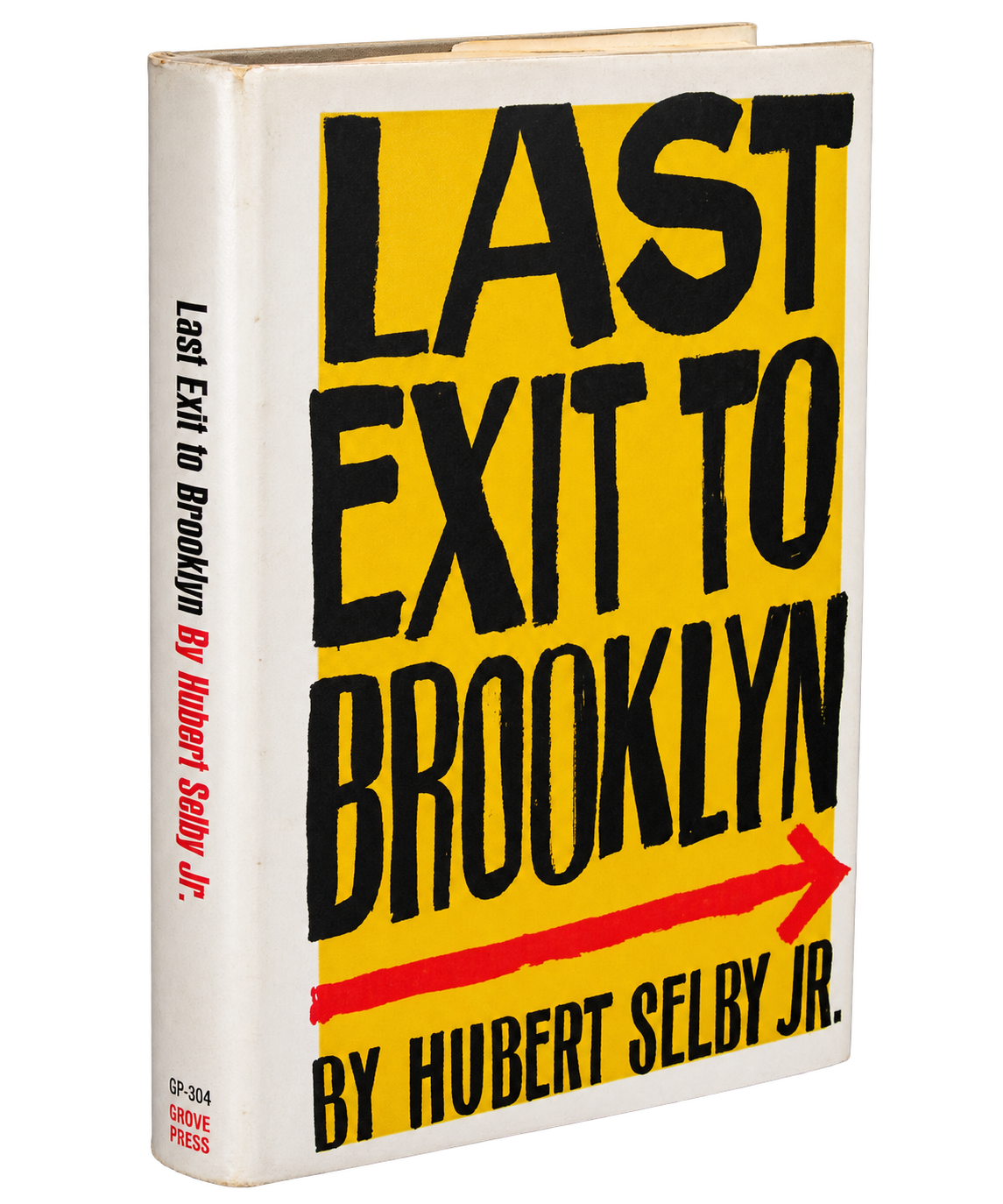
The first edition, third printing of Hubert Selby Jr.’s Last Exit to Brooklyn, published by Grove Press in 1964. The copyright page explicitly states “Third Printing,” identifying this copy as an early impression of the original American edition. Original black cloth spine over textured red paper-covered boards with red spine lettering, retaining the original unclipped dust jacket priced $5.00 and bearing Grove Press code GP-304.
Condition:
Near Fine+ book in a Near Fine dust jacket. The boards remain exceptionally clean and vivid, with deep black spine cloth, bright lettering, and a tight, square binding. The interior is notably fresh apart from a previous-owner inscription in blue ink on the front free endpaper. The original jacket remains exceptionally bright and unfaded, with a short closed tear descending from the upper edge of the front panel, negligible extremity wear, and no significant chipping or paper loss. Protected in an archival polyester cover.
Story Of The Book
Hubert Selby Jr. wrote about people respectable society preferred not to see—and used language respectable literature was not supposed to print.
Published by Grove Press in 1964, Last Exit to Brooklyn plunged readers into working-class Brooklyn through interconnected stories of poverty, addiction, prostitution, queer life, labor conflict, violence, and desperation. Selby refused to soften either his characters or their world for the comfort of his audience.
That refusal soon turned the novel into a test of literary freedom.
When Calder & Boyars prepared the book for British publication in 1966, its publishers knew prosecution was possible. The novel was eventually found obscene following a highly publicized trial, placing its publishers in direct conflict with British obscenity law. In 1968, the Court of Appeal overturned the conviction.
The controversy was ultimately about more than offensive language. It asked whether depicting lives considered ugly, sexual, violent, or socially unacceptable could itself place serious literature beyond the protection of the law.
Selby’s answer had already been printed.
Why It’s In The Collection
Last Exit to Brooklyn belongs in Consigned to Darkness because censorship often begins with a judgment about which experiences society considers worthy of expression.
Selby wrote about people at the margins without making them respectable first. Grove Press—already central to major American battles over literary censorship—published that work without sanitizing it. The British prosecution that followed demonstrated how quickly discomfort with subject matter and language could become a legal argument over whether the book should circulate at all.
This copy predates that prosecution. Its significance lies in preserving Last Exit to Brooklyn during its original 1964 American publication, before the novel became an international censorship cause célèbre. This first edition (third printing) copy preserves the novel as it circulated during its original year of publication, before the legal controversy that would become inseparable from its history.
Selby refused to make marginalized lives more comfortable to look at. The censorship battle that followed asked whether readers should be permitted to look at them at all.
Collection Categories: Free Expression · Censorship · Obscenity Law & Court History · LGBTQ+ History · Urban Poverty · Social Justice · Literature
———
Authentication Evidence
Title page identifies Last Exit to Brooklyn by Hubert Selby Jr. and bears the Grove Press, Inc., New York publisher imprint.
Copyright page records copyright dates of 1957, 1960, 1961, and 1964 by Hubert Selby Jr., consistent with the work’s original 1964 Grove Press publication.
Copyright page explicitly states “Third Printing,” directly establishing this copy’s printing state.
No later-edition statement, revised-edition designation, new-edition notice, or different publisher imprint appears on the title or copyright pages.
The explicit “Third Printing” statement identifies this copy as a later impression within the original Grove Press edition rather than a separate later edition.
Original publisher’s binding of black cloth spine over textured red paper-covered boards with red spine lettering is present and corresponds to documented early Grove Press hardcover copies.
Original unclipped dust jacket is present and retains the printed $5.00 publisher’s price.
Dust jacket bears the Grove Press code GP-304, consistent with documented copies of the original Grove Press hardcover issue.
The previous-owner inscription in blue ink on the front free endpaper is non-authorial; no author signature or presentation inscription is present.
No evidence of book-club manufacture, ex-library provenance, rebinding, or facsimile dust jacket is observed.
Taken together, the explicit printing statement, original Grove Press imprint, publisher’s binding, and original priced GP-304 dust jacket support identification as an authentic 1964 Grove Press First Edition · Third Printing.