

When People Were A Crime
Loving the wrong person, expressing the wrong desire, or simply living openly has made countless people criminals in the eyes of the law. For some, that persecution belongs to the past. For millions of others, it remains a present-day reality.
When People Were A Crime brings together books that challenged those laws, documented their human consequences, and helped change what it means to live freely.
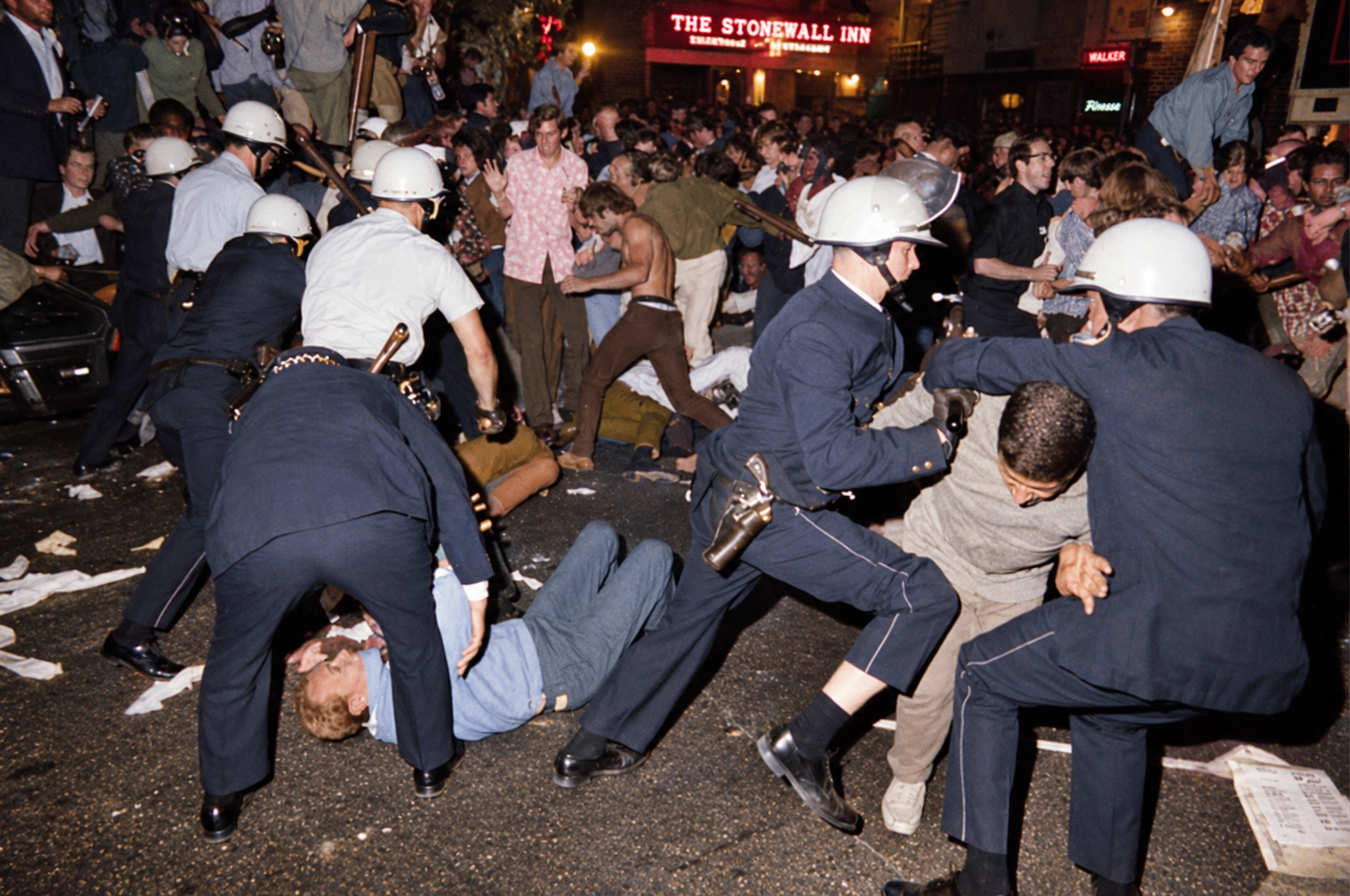

E. M. Forster
New York: W. W. Norton & Company, Inc., 1971
First American Edition · First Printing
The Book:
The first American edition, first printing of E. M. Forster’s long-suppressed novel Maurice. The copyright page carries the complete number line 1 2 3 4 5 6 7 8 9 0, confirming the first printing. This copy retains its original black cloth binding with gilt spine lettering, original yellow top-edge stain, and original unclipped dust jacket priced at $6.95. No book-club indicators, later printing statements, remainder marks, rebinding, or restoration are evident.
Condition:
Near Fine in a Near Fine dust jacket. The binding is square and tight, the gilt remains bright, the original yellow top-edge stain is intact, and the interior is clean and free of ownership markings. The dust jacket retains excellent color and presentation with only trivial handling wear and is protected in an archival polyester sleeve.
Story Of The Book
E. M. Forster finished Maurice in 1914. Then he waited more than half a century for the world to catch up.
Written between 1913 and 1914 and revised over the decades that followed, Maurice tells the story of love between men without resolving that love through punishment, disgrace, or death. Forster instead allowed his protagonist the possibility of an honest and fulfilled life.
That choice made publication extraordinarily difficult.
Forster believed that a novel so direct and ultimately affirmative about homosexual love could not safely appear under the legal and social conditions of his lifetime. Rather than compromise the story or alter its ending to make it acceptable, he withheld it. The manuscript remained unpublished until after his death in 1970.
That makes the history of Maurice inseparable from the history of silence.
It was not an unfinished manuscript rediscovered by chance. It was a completed work deliberately kept out of public view because its author understood what publication might cost him.
When the book finally appeared in 1971, it entered a world radically different from the one in which Forster had written it. What had once been effectively unpublishable could now be placed openly into readers’ hands.
The novel waited fifty-seven years not because Forster was unsure of what he had written, but because the world was not yet willing to read it.
Why It’s In The Collection
Maurice is one of the collection’s clearest examples of censorship operating without a censor.
No government officially banned the manuscript. No court ordered it destroyed. No police seized the first edition.
Forster censored himself because the legal and social environment made publication too dangerous.
That distinction matters. Power does not always need to prohibit speech explicitly if people already understand the consequences of speaking.
The collection acquired this first American edition because it preserves the moment that calculation finally changed. A manuscript deliberately withheld for more than half a century entered public circulation essentially as the work Forster had intended, restoring to literature one of its earliest major affirmative portrayals of same-sex love. The inventory identifies it as a cornerstone publication-event object precisely because the delayed publication itself is part of the book’s meaning.
Read in that context, Maurice is not merely an important LGBTQ+ novel.
It is physical evidence of the distance between having something to say and living in a society where saying it feels possible.
Forster did not change the ending to fit his world. He waited for the world to change enough to receive it.
Collection Categories: Publication-Event Object · LGBTQ+ History · Free Expression · Literature · Anti-Authoritarianism
———
Authentication Evidence
• Correct title page reading Maurice by E. M. Forster.
• Title page identifies W. W. Norton & Company, Inc., New York, consistent with the first American edition.
• Copyright page states Copyright © 1971 by The Trustees of the Late E. M. Forster, matching the year of first publication after Forster's death.
• Copyright page carries a complete number line 1 2 3 4 5 6 7 8 9 0, confirming the first printing under Norton's numbering practice.
• Library of Congress Catalog Card Number 76-170181 is present and consistent with the first American edition.
• Original black cloth publisher's binding with gilt spine lettering remains present.
• Original unclipped dust jacket retains the printed $6.95 price.
• Jacket design, typography, publisher imprint, and spine styling correspond to documented first-printing examples.
• Original yellow top-edge stain remains present.
• No book-club indicators, later printing statements, remainder marks, or evidence of rebinding or restoration are observed.
• The observable bibliographic evidence supports identification as the first American edition, first printing.
Maurice
E. M. Forster finished Maurice in 1914. He then hid it for more than half a century.
Forster knew exactly what publication would cost him. A novel portraying romantic love between two men not as tragedy, vice, or punishment but as the possibility of an honest and fulfilled life would almost certainly have destroyed his literary career in Edwardian England. Instead of compromising the ending or disguising the relationship, he chose silence. Only after his death in 1970 did the manuscript finally reach the public, preserving the work exactly as he intended. This first American edition records one of literature's most remarkable acts of delayed publication—a novel that waited fifty-seven years not because it was unfinished, but because the world was.
E. M. Forster
W. W. Norton & Company · New York · 1971
First American Edition · First Printing

Tennessee Williams
New Directions · New York · 1955
First Edition · First Printing
The Book:
The First Edition · First Printing of Tennessee Williams’s Pulitzer Prize-winning Cat on a Hot Tin Roof, one of the defining works of postwar American theater. A drama of sexuality, masculinity, repression, and the destructive power of lives built around truths that cannot be spoken, the first edition is especially revealing: it preserves Williams’s original Act III alongside the revised version performed on Broadway, allowing readers to see the playwright’s vision beside the compromise that reached the stage. Octavo; xiv, 197 pp., with a full-page photograph of Jo Mielziner’s original Broadway stage setting. Original publisher’s cloth and unclipped $3.00 dust jacket designed by Alvin Lustig retained.
Condition:
Very Good book in a Near Fine original dust jacket. Publisher’s cloth remains sound with moderate age toning to the endpapers and a previous owner’s gift inscription on the front free endpaper. The original unclipped $3.00 jacket remains bright and highly presentable, showing moderate edge wear, light rubbing, and several small chips. No restoration or institutional markings observed.
Story Of The Book
Everyone in Cat on a Hot Tin Roof is talking. Almost no one can say what actually matters.
At the center is Brick Pollitt, a former athlete retreating into alcohol after the death of his closest friend, Skipper. Around him, the Pollitt family fights over inheritance, marriage, masculinity, desire, and appearances. Beneath everything lies a question the play deliberately refuses to resolve neatly: what did Brick feel for Skipper, and why is that possibility so unbearable to him?
In 1955, Williams wrote within a culture that made same-sex desire extraordinarily difficult to address openly on the American stage. So the play circles its deepest truths through accusation, denial, coded language, and silence.
Even its ending became contested. Director Elia Kazan pressed Williams to revise Act III for the Broadway production. Williams reluctantly did—but when New Directions published the play, he included both his original Act III and the Broadway revision, along with his explanation of the changes.
The first edition therefore preserves something the performance could not: the play Williams wrote and the play Broadway asked him to change.
Why It’s In The Collection
Cat on a Hot Tin Roof belongs in Consigned to Darkness because silence can become a form of social control even when no censor is present.
Williams understood that power can operate through shame, family expectation, compulsory masculinity, respectability, and the pressure to deny what a culture refuses to name. Brick’s tragedy is not simply that he cannot speak honestly. It is that honesty has been made dangerous.
This first printing makes that tension physical. By preserving both versions of Act III, it records the negotiation between artistic intention and cultural acceptability inside the book itself.
Williams put repression onstage—and then preserved the evidence of what the stage asked him to change.
Collection Categories: Literature · Drama · Sexuality & Culture · LGBTQ+ History · Cultural Criticism · Social Conformity · Free Expression · Anti-Authoritarianism
———
Authentication Evidence
Title page identifies the work as Cat on a Hot Tin Roof by Tennessee Williams.
Publisher is correctly identified as New Directions · New York · 1955.
Copyright-page verso lacks the later-added credit acknowledging the preface’s previous appearance in The New York Times, a diagnostic point of the true first printing.
Page xii lacks the later-added credits to Jo Mielziner and Lucinda Ballard, a diagnostic point of the true first printing.
These textual points correspond to the first-issue characteristics described in George W. Crandell’s Tennessee Williams: A Descriptive Bibliography.
Volume collates to xiv, 197 pages.
Volume includes Williams’s original Act III and the revised Act III used for the Broadway production.
A full-page black-and-white photograph of Jo Mielziner’s Broadway stage setting appears before “Notes for the Designer.”
Original publisher’s cloth binding remains present and is consistent with documented first-printing copies.
Original Alvin Lustig-designed dust jacket remains present.
Dust jacket is unclipped and retains the $3.00 publisher’s price.
Front flap lacks any statement of later printings at the foot, consistent with the first-printing jacket.
Jacket design, typography, price, and publisher information are consistent with documented first-issue jackets.
Previous owner’s gift inscription remains present on the front free endpaper.
No evidence of book-club manufacture, ex-library ownership, remainder marking, rebinding, facsimile dust jacket, or replacement components is observed.
Observable physical and bibliographic evidence supports identification as the 1955 First Edition · First Printing · First Issue, in the original unclipped $3.00 dust jacket.
Cat on a Hot Tin Roof
Tennessee Williams
New Directions · New York · 1955
First Edition · First Printing
In 1955, the most radioactive thing that Tennessee Williams could've expressed on stage wasn't "faggots are dangerous," it's that the "faggots" never existed—the notion that those monstrous things society consigned to darkness are, in fact, also human beings.
Williams never announces the play's deepest truth. The play circles it, retreats from it, and forces its audience to confront the obscene silence that "respectable America" had built around desire, estrangement, masculinity, and identity. This first edition preserves a moment when one of America's greatest playwrights challenged a culture that preferred silence to humanity, suggesting that the greatest obscenity was the lie that some people deserved to exist unseen and estranged from themselves. Williams' weapon of choice wasn't obscenity. It was an obscenely hidden truth.
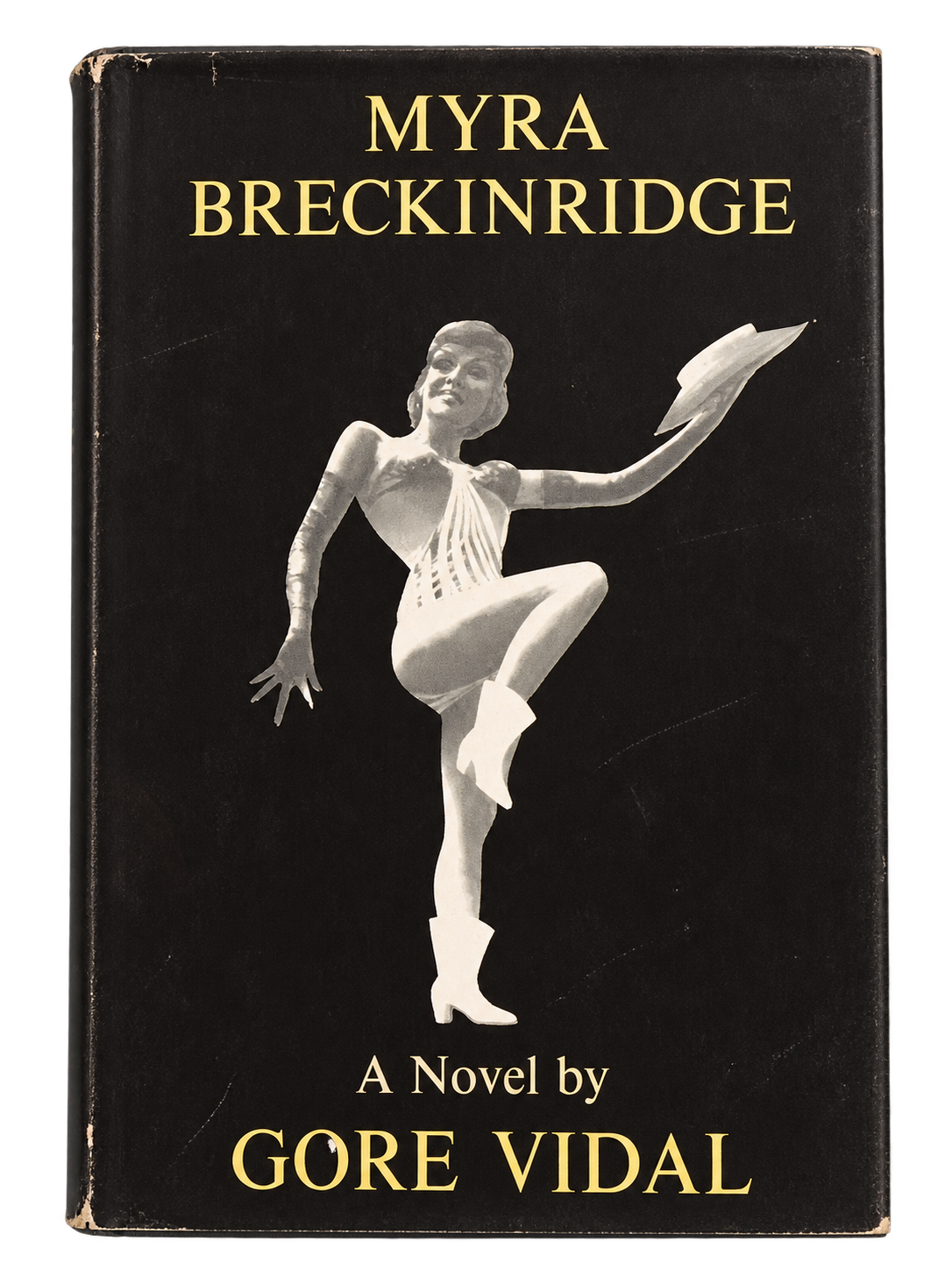
Gore Vidal
Little, Brown and Company · Boston · 1968
First Edition · First Printing
The Book:
The true first edition, first printing of Gore Vidal’s Myra Breckinridge, published by Little, Brown in 1968. One of Vidal’s most provocative novels, Myra used outrageous satire, sexual inversion, Hollywood mythology, and deliberate attacks on conventional masculinity and femininity to place questions of gender and sexual identity before a mass American readership. This copy retains its original black publisher’s cloth and original unclipped $5.95 dust jacket.
Condition:
Near Fine book in a Near Fine original dust jacket. The black cloth remains exceptionally clean with bright gilt spine lettering, sharp corners, a square binding, and a clean interior free of ownership markings, foxing, restoration, or structural defects. The original jacket remains exceptionally bright and glossy, showing only light rubbing, minor edge wear, and tiny chips at the upper extremities.
Story Of The Book
Gore Vidal did not politely question America’s ideas about sex and gender. He turned them into a farce and dared the culture to recognize itself.
Published in 1968, Myra Breckinridge arrived in an America already fighting over sexual liberation, feminism, homosexuality, masculinity, censorship, and the authority of traditional social norms. Vidal pushed those arguments into deliberately outrageous territory. Myra—who arrives in Hollywood after transitioning from the identity of Myron Breckinridge—becomes Vidal’s vehicle for dismantling supposedly fixed distinctions between male and female, masculine and feminine, respectable and obscene.
The result was confrontational even by the standards of the late 1960s. Vidal mixed gender transformation with explicit sexuality, Hollywood satire, camp, and attacks on conventional American manhood. The novel became a bestseller as critics and readers argued over whether it was brilliant, obscene, liberating, offensive, or some combination of all four.
Its historical importance does not depend upon treating Myra as a straightforward representation of transgender life by contemporary standards. What matters is that a major American novelist made the instability of gender and sexual identity impossible for mainstream literary culture to ignore.
Why It’s In The Collection
Myra Breckinridge belongs in Consigned to Darkness because some books expand the boundaries of expression by refusing to behave respectably inside them.
Vidal took subjects that mainstream American culture still struggled even to name openly and made them the organizing principles of a major commercial novel. Rather than asking permission to discuss gender, sexuality, and identity seriously, he weaponized satire and provocation against the assumptions surrounding them.
This first printing preserves that confrontation at its point of entry into American culture—not after Myra had become a period artifact, cult novel, or subject of later debates about gender, but when readers first had to decide what to make of it.
The scandal was part of the argument: identities treated as fixed could be unsettled, conventions treated as natural could be mocked, and subjects considered unfit for polite literature could become bestsellers.
Collection Categories: LGBTQ+ History · Free Expression · Literature · Cultural Criticism · Publication-Event Object · Sexuality & Culture
———
Authentication Evidence
Title page identifies the work as Myra Breckinridge by Gore Vidal.
Title page identifies Little, Brown and Company, Boston and Toronto as publisher.
Copyright page carries the original 1968 copyright.
Copyright page explicitly states “FIRST EDITION,” directly establishing first-edition status.
No subsequent-printing statement appears; Little, Brown’s first-edition statement and absence of later-printing identification are consistent with first-printing status.
Original black publisher’s cloth with gilt spine lettering and blind-stamped publisher’s device remains present and is consistent with the first issue.
Original dust jacket remains present.
Original dust jacket is unclipped and retains the $5.95 publisher’s price, consistent with the first issue.
No evidence of book-club manufacture, remainder marking, ex-library ownership, rebinding, facsimile dust jacket, or replacement components is observed.
Observable bibliographic evidence supports identification as the 1968 First Edition · First Printing.
Gore Vidal
Little, Brown and Company · Boston · 1968
First Edition · First Printing
Myra Breckinridge
One novel didn't merely challenge America's ideas about gender and sexuality—it mocked them.
When Gore Vidal published Myra Breckinridge in 1968, he shattered conventions surrounding sex, gender, and identity with a satire unlike anything American readers had encountered. Appearing at the height of the cultural upheavals of the late 1960s, the novel transformed questions that had long remained unspoken into public controversy, provoking outrage, admiration, and fierce debate in equal measure. This first edition preserves one of the earliest major American novels to place transgender identity and sexual politics at the center of literary culture.

Full Title:And the Band Played On: Politics, People, and the AIDS Epidemic
Randy Shilts
St. Martin’s Press · New York · 1987
First Edition · First Printing
The Book:
The first edition, first printing of Randy Shilts’s And the Band Played On, published by St. Martin’s Press in 1987 while the AIDS epidemic remained an ongoing national crisis. Drawing on years of reporting, Shilts reconstructed the medical, political, scientific, and human history of the epidemic’s early years and the institutional failures that accompanied it. The complete number line ending in 1 establishes first-printing status; the original unclipped dust jacket retains its $24.95 price. xxiii, 630 pp. Original quarter green cloth over cream paper-covered boards.
Condition:
Very Good+ book in a Very Good+ dust jacket. The binding remains square and sound with a clean text block and bright interior. The green cloth spine shows mild rubbing with partially dulled gilt lettering. Localized adhesive residue and surface disturbance are present on the front free endpaper and facing pastedown from the apparent removal of previously attached material. The original jacket remains bright and complete with light edge wear and minor crumpling at the spine ends. No ownership inscriptions, restoration, or structural defects are observed.
Story Of The Book
The AIDS epidemic was a medical catastrophe. Randy Shilts argued that the scale of the catastrophe was also a failure of institutions.
As a reporter for the San Francisco Chronicle, Shilts had covered AIDS since the earliest years of the crisis. By 1987, tens of thousands of Americans had already been diagnosed, many thousands had died, and entire communities—especially gay men in cities like San Francisco and New York—were living through sustained loss, fear, stigma, and uncertainty.
And the Band Played On attempted to reconstruct how that happened.
Across more than 600 pages, Shilts followed doctors, scientists, activists, patients, politicians, journalists, and government agencies as they confronted—or failed to confront—a disease whose consequences were becoming increasingly impossible to ignore. His reporting exposed bureaucratic delay, political indifference, scientific rivalry, media hesitation, and the stigma surrounding a disease initially associated overwhelmingly with gay men.
But the book’s force comes from never allowing those institutional failures to become abstract. Every delay had a human cost: partners watching partners die, friends becoming caregivers, families facing illness they barely understood, and communities losing people faster than public institutions were willing to respond.
Political decisions and scientific disputes unfold alongside individual lives, giving the book the urgency of reporting rather than retrospective history.
The question running through the book is devastatingly simple: how many people died while institutions with the power to act found reasons not to?
Why It’s In The Collection
And the Band Played On belongs in Consigned to Darkness because silence can become an exercise of power even when no censor orders it.
The institutions Shilts investigated controlled resources that mattered enormously during a public-health emergency: government funding, scientific information, medical authority, political attention, and access to mass media. His reporting documented what could happen when prejudice, bureaucracy, professional rivalry, and political calculation interfered with the willingness to use those resources.
The human stakes were enormous. People were not waiting for an abstract policy dispute to resolve itself. They were getting sick, losing partners and friends, organizing their own care networks, fighting for recognition, and dying while institutions debated jurisdiction, funding, language, and responsibility.
This particular edition is especially important because it is not a later history looking backward at the AIDS crisis. Published in 1987, the book entered the argument while the epidemic was still killing thousands of Americans every year. Its first printing was itself an intervention—an investigation demanding that readers confront what institutions had done, failed to do, and allowed to happen.
The book subsequently became a major reference point in how the early AIDS epidemic was understood, but this copy preserves the moment before that legacy was secure: when Shilts’s investigation first entered public life as an accusation that could no longer easily be ignored.
Collection Categories: Investigative Journalism · Human Rights · LGBTQ+ History · Political History · Free Expression
———
Authentication Evidence
Title page identifies And the Band Played On: Politics, People, and the AIDS Epidemic by Randy Shilts.
Title page identifies St. Martin’s Press, New York, as publisher.
Copyright page records Copyright © 1987 by Randy Shilts.
Copyright page contains the complete number line 10 9 8 7 6 5 4 3 2 1, directly establishing First Printing status.
No later-edition or revised-edition statement appears in the observed publication information.
Independent contemporary publication records identify the St. Martin’s Press hardcover as published in 1987 at 630 pages and $24.95, with a reported 50,000-copy first printing.
ISBN 0-312-00994-1 corresponds to independent bibliographic records of the original 1987 St. Martin’s Press hardcover edition.
Original publisher’s quarter green cloth over cream paper-covered boards is present.
Original unclipped dust jacket is present and retains the printed $24.95 publisher’s price.
Documented first-edition copies independently confirm the quarter-green-cloth/cream-boards binding and $24.95 priced jacket.
No evidence of book-club manufacture, later printing, rebinding, facsimile dust jacket, or restoration is observed.
Taken together, the complete first-printing number line, original 1987 St. Martin’s Press imprint, publisher’s binding, and original priced dust jacket support identification as an authentic 1987 First Edition · First Printing.
Full Title: And the Band Played On: Politics, People, and the AIDS Epidemic
Randy Shilts
St. Martin’s Press · New York · 1987
First Edition · First Printing
And the Band Played On
What if the deadliest epidemic of a generation spread not because no one knew, but because too many people chose not to act?
Published while the AIDS crisis was still unfolding, Randy Shilts' And the Band Played On exposed the political indifference, bureaucratic failures, scientific rivalries, and social prejudice that allowed thousands of preventable deaths. More than a history of a disease, it became a public indictment of institutions that valued reputation, ideology, and expediency over human lives. This first edition preserves the publication that permanently changed how America understood the AIDS epidemic and the cost of official silence.
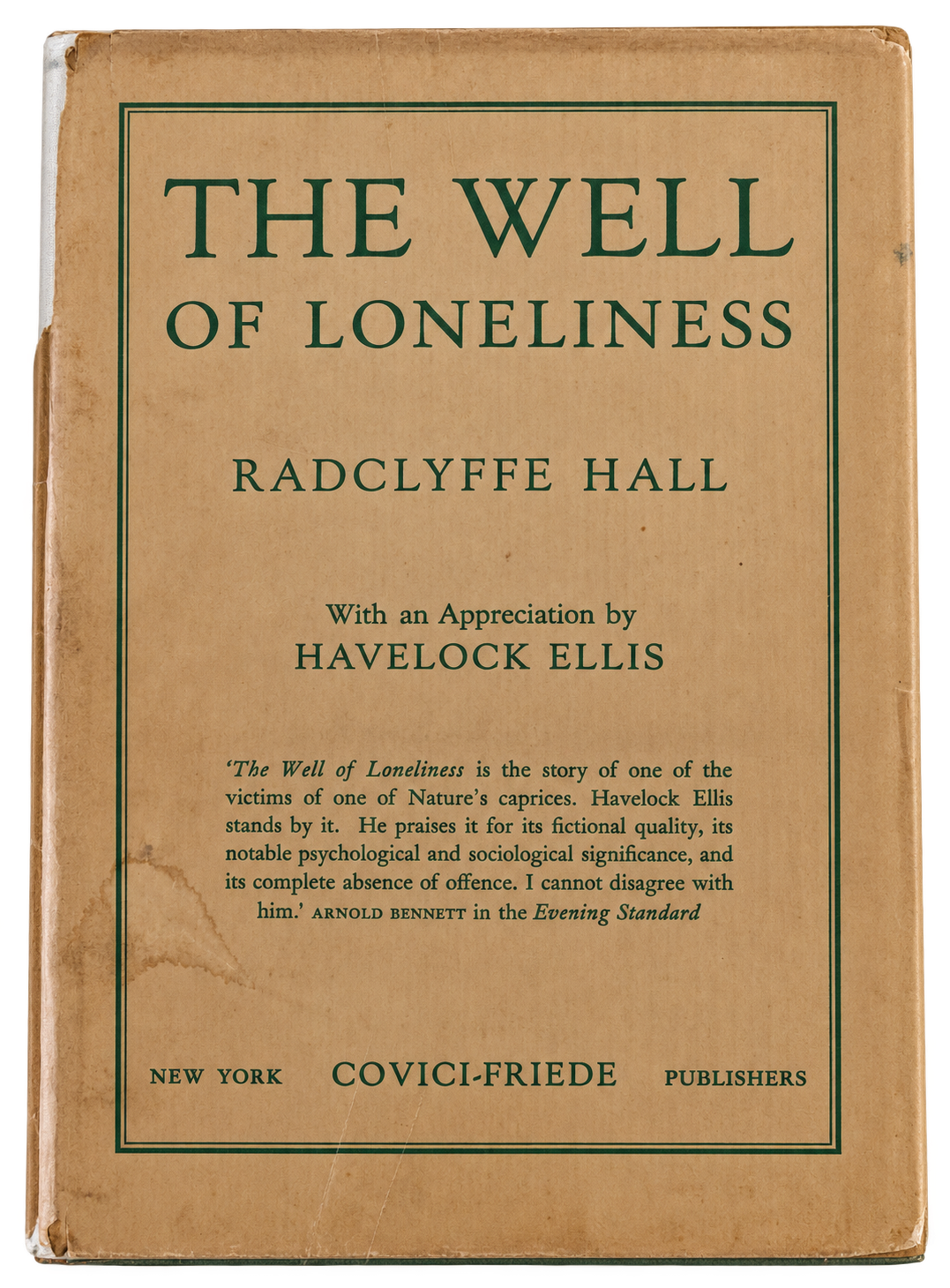
Radclyffe Hall
New York: Covici-Friede Publishers, 1929
First American Edition · Ninth Printing
The Book:
The first American edition, ninth printing of Radclyffe Hall’s The Well of Loneliness, issued in May 1929, while the novel remained at the center of one of the twentieth century’s defining censorship controversies. The copyright page records printings through “Ninth Printing, May, 1929,” confirming the state. This copy retains its original green publisher’s cloth, its original first-state American dust jacket priced at $5.00, and the original publisher’s promotional bookmark/advertising insert.
For most rare books, an earlier printing is automatically more desirable.
For this collection, that logic is reversed.
The ninth printing is the version Consigned to Darkness values most because it is not merely an early appearance of the text. It is a defendant printing: a copy produced while The Well of Loneliness was still actively being fought over in courts, newspapers, bookstores, and public culture. The first printing records the book’s arrival. The ninth printing records the censorship battle failing to stop it.
Condition:
Very Good+ in a Good dust jacket. The book itself is well preserved in its original green cloth. The jacket shows moderate toning, significant edge wear, and notable loss at the upper spine, with additional chipping and wear along the edges. The original publisher’s promotional bookmark is retained. No rebinding, facsimile jacket, or replacement components are evident.
Story Of The Book
Radclyffe Hall did not merely publish a novel. She challenged the belief that certain lives should remain invisible.
First published in 1928, The Well of Loneliness became one of the most consequential literary works in the history of LGBTQ+ representation and censorship.
Hall treated lesbian identity seriously, sympathetically, and as part of a fully human life. That alone was enough to make the book politically explosive.
The novel quickly became the subject of obscenity prosecutions and public campaigns seeking to suppress it, transforming The Well of Loneliness into a test of whether literature portraying lesbian life deserved legal and cultural legitimacy. The controversy became inseparable from the book itself.
This copy belongs to that active period.
By May 1929, the American edition had already reached its ninth printing. That repeated demand matters because the book was not simply surviving controversy. It was continuing to circulate through it.
Readers kept buying it.
Booksellers kept stocking it.
The publisher kept printing it.
That is why this ninth printing matters more to Consigned to Darkness than an earlier printing normally would.
In conventional rare-book collecting, primacy usually dominates. The first printing is the trophy copy because it is the earliest. But this collection is not organized around primacy alone. It is organized around historical participation.
The ninth printing participated in the censorship event.
It was produced after suppression had already become part of the book’s public life, while the legal and cultural fight was still unfolding and while continued demand was proving that the controversy had failed to erase the work.
The first printing tells us when the book appeared. The ninth tells us that attempts to silence it did not work.
Why It’s In The Collection
The Well of Loneliness belongs in Consigned to Darkness because the struggle over who is allowed to appear in literature is also a struggle over who is permitted to appear in public life.
The collection’s copy is intentionally not the earliest possible printing.
It is the defendant printing.
That distinction is central to why the object is here.
This ninth printing was issued during the height of the controversy surrounding the novel, when repeated printings reflected sustained public demand despite organized attempts to suppress the book. The inventory explicitly treats the copy as an active censorship-era manifestation rather than merely a later impression.
The original $5.00 dust jacket and publisher’s promotional bookmark make the object even more compelling. They preserve not only Hall’s text, but the commercial apparatus through which Covici-Friede continued to market and circulate the novel while the controversy was still active.
That is the story this collection values most.
Not simply the moment a controversial book was born, but the moment suppression tried and failed to stop it from reaching readers.
In the traditional rare-book market, an earlier printing would usually outrank this one.
In Consigned to Darkness, this is the printing with the better story.
Because this copy does not merely represent publication.
It represents persistence under pressure.
They tried to make lesbian life unprintable. The ninth printing is evidence that readers kept asking for the book anyway.
Collection Categories: LGBTQ+ History · Free Expression · Censorship · Obscenity Law & Court History · Anti-Authoritarianism · Literature
———
Authentication Evidence
• Covici-Friede title page dated 1929, confirming the first American edition.
• Copyright page lists printings through "Ninth Printing, May, 1929," confirming ninth-printing state.
• Original publisher's green cloth binding present.
• Original first-state American dust jacket retained with $5.00 price.
• Original promotional bookmark/advertising insert retained.
• Covici-Friede imprint, typography, and binding consistent throughout.
• No evidence of rebinding, facsimile jacket, or replacement components observed.
• First American edition, ninth-printing characteristics consistent throughout.
Radclyffe Hall
Covici-Friede Publishers · New York · 1929
First American Edition · Ninth Printing
The Well of Loneliness
Radclyffe Hall did not merely publish a novel. She challenged the belief that certain lives should remain invisible.
Following its publication in 1928, The Well of Loneliness became one of the twentieth century's defining censorship controversies, provoking obscenity prosecutions and international debate over whether literature portraying lesbian identity deserved legal protection. This first edition, ninth printing preserves the period in which the novel's continued circulation itself remained an act of resistance against censorship, documenting the years when readers, publishers, and booksellers refused to allow legal suppression to erase one of the first serious literary portrayals of lesbian life. It remains one of the foundational publication-event objects in the intertwined histories of LGBTQ+ representation and literary freedom.

Full Title:Reports from the Holocaust: The Making of an AIDS Activist
Larry Kramer
New York: St. Martin’s Press, 1989
First Edition · First Printing
The Book:
The true first edition, first printing of Larry Kramer’s Reports from the Holocaust: The Making of an AIDS Activist, published by St. Martin’s Press in 1989. The copyright page explicitly states “First Edition” and carries the complete number line 10 9 8 7 6 5 4 3 2 1, directly confirming first-printing status. This copy retains its original black cloth binding with silver spine lettering and its original unclipped dust jacket priced at $18.95. No evidence of book-club manufacture, remainder marking, rebinding, or later printing is present.
Condition:
Near Fine+ in a Near Fine dust jacket. The binding is exceptionally square and clean, with bright silver spine lettering, sharp corners, and an unmarked interior showing only light natural toning to the text-block edges. The original jacket retains strong color and typography, with only light superficial rubbing and minor wear at the spine head. No ownership markings, foxing, restoration, or structural defects are documented.
Story Of The Book
When governments hesitated and much of the public looked away, Larry Kramer decided silence itself had become dangerous.
Published in 1989, Reports from the Holocaust gathers the speeches, essays, journalism, public letters, and activist writings Kramer produced throughout the first decade of the AIDS epidemic. The book appeared while the crisis was still ongoing, before the epidemic had become something that could be narrated safely from historical distance. Kramer was writing from inside an emergency and using publication as one of the tools through which he hoped to change its course.
That immediacy is what gives the book its power. Kramer’s writing documents anger at governmental inaction, frustration with the pace of medical response, conflict within gay institutions, demands for public accountability, and the urgent effort to force AIDS into national political consciousness. His role in Gay Men’s Health Crisis, ACT UP, and the broader movement placed him at the center of the struggle over whether the epidemic would be treated as a private tragedy or a public crisis requiring institutional action.
The title is deliberately confrontational. Kramer used the language of catastrophe because he believed the scale of death, neglect, and indifference demanded a moral vocabulary strong enough to break through complacency. Whatever one thinks of the comparison implied by the title, the book preserves the rhetorical intensity of a movement fighting for recognition while people were still dying around it.
This first edition therefore does not document AIDS activism after victory. It preserves activism before the outcome was known—when protest, writing, organizing, and public confrontation were still attempts to force institutions to respond.
Kramer was not documenting history from a distance. He was trying to make history move faster than the epidemic.
Why It’s In The Collection
Reports from the Holocaust belongs in Consigned to Darkness because it is a textbook publication-event object: a book produced from within an active movement, carrying the movement’s arguments into public circulation while the crisis itself remained unresolved.
The collection values witness literature most when the witness is also acting upon the world being described. Kramer is not merely recording illness, loss, and institutional failure. He is arguing, accusing, organizing, persuading, and demanding action. The book therefore sits at the intersection of witness, dissent, free expression, political activism, and human rights.
It also forms an important counterpart to And the Band Played On. That book documents the epidemic through investigative reporting; Reports from the Holocaust preserves it from inside the activist movement itself. The inventory specifically identifies this volume as preserving the speeches, essays, and public interventions through which Kramer sought to force governmental accountability, accelerate medical response, and reshape public understanding during the crisis rather than after it.
That distinction matters to the collection. One object reconstructs what institutions did. The other preserves the voice of someone trying, in real time, to make them do more.
This copy strengthens that story because it is the true first edition, first printing, retaining its original $18.95 jacket and surviving in unusually strong condition. It preserves not a later retrospective selection, but the original 1989 publication through which Kramer’s activist writings entered book form while AIDS remained one of the most urgent unresolved public-health and civil-rights crises in America.
Some books bear witness to suffering. This one bears witness while demanding that somebody do something about it.
Collection Categories: Witness Literature · LGBTQ+ History · Human Rights · Political Movements · Investigative Journalism · Free Expression
———
Authentication Evidence
• Title page identifies the work as Reports from the Holocaust: The Making of an AIDS Activist by Larry Kramer.
• Copyright page explicitly states "First Edition."
• Copyright page bears a complete number line 10 9 8 7 6 5 4 3 2 1, directly establishing first-printing status.
• Copyright page records the original 1989 St. Martin's Press publication.
• Original dust jacket is present and retains the correct $18.95 price.
• Jacket design, typography, endorsements, ISBN (0-312-02634-X), and publisher information are consistent with the first issue.
• Original black cloth binding with silver spine lettering is present and consistent with the first issue.
• No evidence of book club manufacture, remainder marking, rebinding, or later printing is observed.
• Edition evidence: The copyright page explicitly identifies this as the First Edition.
• Printing evidence: The complete number line ending in 1 directly establishes this copy as the first printing of the first edition.
Full Title: Reports from the Holocaust: The Making of an AIDS Activist
Larry Kramer
St. Martin’s Press · New York · 1989
First Edition · First Printing
Reports from the Holocaust
When governments hesitated and much of the public looked away, Larry Kramer refused to let silence become another cause of death.
Gathering the speeches, essays, letters, and manifestos that helped define the first decade of the AIDS epidemic, Reports from the Holocaust preserves the voice of one of America's most uncompromising activists while the crisis itself remained unresolved. Kramer was not documenting history from a distance—he was attempting to change it in real time. This first edition captures one of the defining documentary records of AIDS activism before the epidemic had reached its conclusion, preserving the anger, urgency, and moral clarity that transformed protest into one of the twentieth century's most consequential public-health movements.

Gore Vidal
E. P. Dutton & Company, Inc. · New York · 1948
First Edition · First Printing
The Book:
The true first edition, first printing of Gore Vidal’s The City and the Pillar, published by E. P. Dutton in 1948. Vidal’s third novel placed an ordinary young American man’s homosexuality at the center of serious mainstream fiction at a moment when gay characters were commonly confined to pathology, caricature, coded implication, or moral warning. Importantly, this first printing preserves Vidal’s original 1948 text and original ending, both substantially changed when he rewrote the novel for its 1965 revised edition. This copy retains its original black publisher’s cloth and collates to 314 pages. The original dust jacket is not present.
Condition:
Very Good. Original black publisher’s cloth with gilt spine lettering and blind-stamped Dutton device on the front board. Binding remains square and structurally sound, with moderate surface rubbing and shelf abrasion, more pronounced abrasion along the lower front-board edge, softened corners, and substantially faded gilt spine lettering. Interior remains clean with light age toning. A Paul Elder & Co., San Francisco bookseller label is affixed to the front pastedown. No ownership inscriptions, foxing, restoration, or structural defects observed. Lacking the original dust jacket.
Story Of The Book
In 1948, Gore Vidal made a choice that changed his career: he wrote about homosexuality without treating homosexuality itself as the tragedy.
Jim Willard was deliberately recognizable—a young, athletic, conventionally masculine American whose desire for another man did not make him a medical curiosity or a creature existing outside ordinary life. Vidal used him to challenge prevailing assumptions about homosexuality years before the modern gay-rights movement gave those arguments a mass political vocabulary.
The response demonstrated how radical that choice remained. The City and the Pillar became a bestseller, but its frank treatment of homosexuality produced a literary scandal. The New York Times refused advertising for the novel, and Vidal later described being effectively shut out of important reviewing outlets for years afterward.
But the book preserved here tells an additional story that later copies often cannot. In 1965, Vidal returned to The City and the Pillar and substantially rewrote it. He tightened and altered the text and radically changed its conclusion: in the original 1948 version preserved here, Jim kills Bob; in the revised version, Vidal replaced that ending with a different and still violent encounter.
This first printing therefore preserves more than the novel’s first appearance. It preserves the version that caused the original confrontation—the book as American readers actually encountered it in 1948, before Vidal reconsidered and rewrote it seventeen years later.
Why It’s In The Collection
The City and the Pillar belongs in Consigned to Darkness because representation becomes an act of dissent when a culture has decided certain lives should remain unrepresented.
Vidal placed homosexual desire inside the life of a recognizably ordinary American man and asked readers to encounter him as a protagonist rather than a diagnosis or abstraction. Published more than twenty years before Stonewall, the novel forced gay identity into mainstream literary discussion at considerable professional cost to its author.
The fact that Vidal later rewrote the book makes this particular edition especially important. Later editions can preserve Vidal’s mature reconsideration of the novel. This first printing preserves the original intervention. Its text, its original ending, and the controversy that followed belong specifically to the cultural world of 1948.
Even this copy carries a small trace of that original circulation history: its front pastedown retains the label of Paul Elder & Co., the long-running San Francisco bookseller and publisher. The label does not tell us who originally owned the book or precisely when it was sold, but it places this physical copy within San Francisco’s mid-century book trade.
The book was later rewritten. The confrontation cannot be. This is the version that caused it.
Collection Categories: LGBTQ+ History · Free Expression · Censorship · Literature · Publication-Event Object · Cultural Criticism · Sexuality & Culture
———
Authentication Evidence
Title page identifies the work as The City and the Pillar by Gore Vidal.
Title page gives the correct E. P. Dutton & Company, Inc., New York, 1948 imprint.
Copyright page states “Copyright, 1948, by E. P. Dutton & Co., Inc.”, matching the title-page date and documented original edition.
Copyright page explicitly states “FIRST EDITION.”
No subsequent-printing statement appears in the volume; the explicit “FIRST EDITION” statement and absence of later-printing identification support first-printing status.
Volume collates to 314 pages, consistent with the documented 1948 Dutton edition.
Original black publisher’s cloth remains present, with gilt spine lettering and the blind-stamped Dutton device near the lower front board.
Contents divide the novel into “Part I — The City” and “Part II — The Pillar of Salt,” beginning on pages 11 and 209 respectively, consistent with the original edition.
This copy preserves Vidal’s original 1948 text and original ending, predating the substantial rewriting published by Dutton as The City and the Pillar Revised in 1965.
The 1965 edition was explicitly published as a revised edition and substantially altered the text and conclusion, distinguishing this 1948 publication bibliographically and textually from the version underlying most later editions.
Original Paul Elder & Co., San Francisco bookseller label remains affixed to the front pastedown, providing evidence of this copy’s historical circulation through the San Francisco book trade.
Typography, paper, title-page border, copyright-page design, cloth construction, and natural age characteristics are internally consistent with the original 1948 publication.
No evidence of later publisher attribution, revised-edition language, modern reproduction, facsimile leaves, book-club manufacture, or rebinding is observed.
Original dust jacket is not present.
Observable bibliographic evidence supports identification as the 1948 First Edition · First Printing, preserving the original unrevised text.
Gore Vidal
E. P. Dutton & Company, Inc. · New York · 1948
First Edition · First Printing
The City and the Pillar
American literature could acknowledge homosexuality in 1948—but usually only as scandal, pathology, or punishment. Gore Vidal refused those boundaries.
The City and the Pillar placed an ordinary young gay man at the center of a mainstream American novel and treated his desire not as an exotic aberration, but as part of a recognizable human life. The book’s original ending remained shaped by the tragic conventions of its era, yet its candor forced homosexuality into literary visibility years before the modern gay-rights movement. This first printing preserves the moment Vidal challenged American fiction to admit that gay people did not merely haunt society’s margins: they possessed interior lives worthy of becoming the novel itself.