
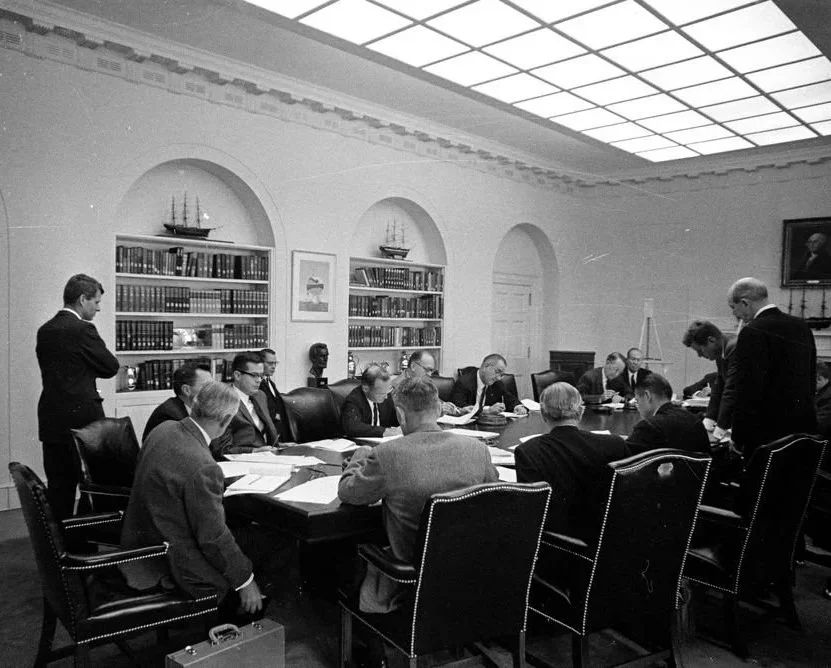
Powerful Words, Dangerous Minds
Not every challenge to power leads to freedom, and not every powerful idea deserves admiration.
To resist authoritarianism, we must preserve and confront not only the voices that opposed it, but also the words that helped build, justify, and sustain it. These objects reveal how ideas moved people, shaped movements, and changed history — sometimes for the better, but often for the worse.
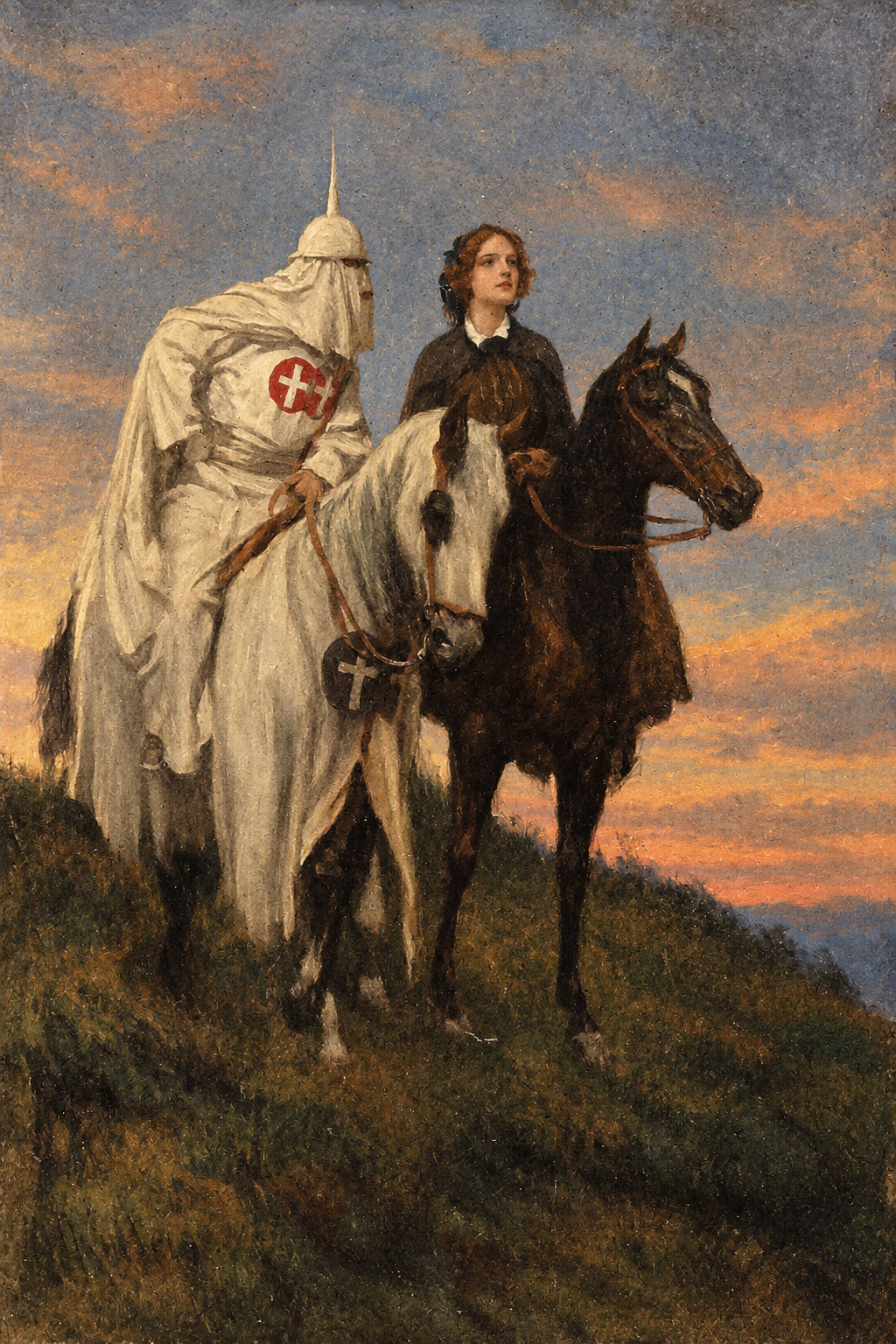

Full Title: The Dixon Trilogy — The Rise & Fall of the Klan in America
Thomas Dixon Jr.
Doubleday, Page & Company · New York · 1902–1907
First Editions · First Printings
Curated Three-Volume Publication-Event Set
The Set:
A curated assemblage of the three original first-edition, first-printing novels comprising Thomas Dixon Jr.'s Trilogy of Reconstruction: The Leopard's Spots (1902), The Clansman (1905), and The Traitor (1907). All three retain their original publisher's red cloth bindings and illustrations. Intentionally assembled from individually acquired copies, the set preserves the complete original publication sequence of one of the most consequential white supremacist literary projects in American history.
Included Titles:
The Leopard's Spots: A Romance of the White Man's Burden — 1865–1900 — Thomas Dixon Jr.
Doubleday, Page & Company · New York · 1902
First Edition · First Printing
Original red cloth with white-stamped floral decoration · Illustrated by C. D. Williams · Very GoodThe Clansman: An Historical Romance of the Ku Klux Klan — Thomas Dixon Jr.
Doubleday, Page & Company · New York · 1905
First Edition · First Printing
Original red cloth with white-stamped lettering · Illustrated by Arthur I. Keller · Good+The Traitor: A Story of the Fall of the Invisible Empire — Thomas Dixon Jr.
Doubleday, Page & Company · New York · 1907
First Edition · First Printing
Original red cloth with gilt front-board lettering · Illustrated by C. D. Williams · Very Good
Condition:
Very Good overall, with one Good+ volume. All three books retain their original publisher's red cloth bindings and remain structurally sound. No original dust jackets are present.
The Leopard's Spots (1902) grades Very Good, with moderate rubbing, spine-lettering wear, minor extremity wear, localized rear-board abrasion, and light interior age toning. Binding sound.
The Clansman (1905) grades Good+, with moderate rubbing, scattered soiling and discoloration, significant spine-end fraying and localized cloth loss, particularly at the foot. Interior exhibits age toning and scattered foxing. Binding generally sound.
The Traitor (1907) grades Very Good, with moderate rubbing, surface marks, light soiling, and extremity wear. Interior generally clean with age toning and occasional spotting. Binding sound, with no restoration observed.
Story Of The Set
Thomas Dixon Jr. wrote three novels that helped turn the Ku Klux Klan into heroes. Their influence would reach far beyond the printed page.
Between 1902 and 1907, Dixon published The Leopard's Spots, The Clansman, and The Traitor, constructing a fictional history of Reconstruction in which white supremacist violence became heroic resistance and Black political freedom became a threat to Southern civilization.
The trilogy was a deliberate counterattack against Harriet Beecher Stowe's Uncle Tom's Cabin. Where Stowe had used fiction to expose the cruelty of slavery, Dixon turned storytelling toward the defense of racial hierarchy.
The Leopard's Spots introduced his vision. The Clansman glorified the Klan's rise. The Traitor depicted its corruption and dissolution, while preserving Dixon's idealized account of its original purpose.
Then the story escaped the page. In 1915, D. W. Griffith adapted The Clansman into The Birth of a Nation, a cinematic phenomenon that helped inspire the revival of the Ku Klux Klan.
Dixon's trilogy had imagined the Klan as heroes. American popular culture helped bring that mythology back to life.
Why It's In The Collection
The Dixon Trilogy belongs in Consigned to Darkness because some of history's most consequential printed objects didn't challenge oppressive power. They helped persuade people to embrace it.
Dixon understood that fiction could shape what a society believed about itself. His novels turned racial terror into heroism, transformed historical distortion into popular entertainment, and gave white supremacy a story readers could believe in.
That makes the trilogy's relationship to the collection's 1852 edition of Uncle Tom's Cabin especially revealing. Stowe and Dixon used the same literary weapon toward profoundly opposing ends. One helped challenge the institution of slavery. The other sought to undermine the moral and political legacy of emancipation.
These three first printings preserve Dixon's complete Reconstruction trilogy in its original publication sequence, rather than through later reprints or collected editions. They document the printed beginnings of a mythology whose consequences extended far beyond literature.
Stowe used fiction to help Americans see the humanity of people they had enslaved. Dixon used fiction to help Americans see heroes in the men who terrorized them.
Collection Categories: Counter-Thesis Object · Publication-Event Object · Political History · Political Movements · Literature · Curated Set
Authentication Evidence
The set comprises all three novels identified by Dixon as his complete Trilogy of Reconstruction: The Leopard's Spots (1902), The Clansman (1905), and The Traitor (1907).
All three volumes retain their original Doubleday, Page & Company publisher imprints and original publisher's red cloth bindings.
The Leopard's Spots title page identifies Doubleday, Page & Co., 1902; its copyright page states “Published, March 1, 1902.”
The Leopard's Spots retains its original white-stamped floral binding, C. D. Williams illustrations, tissue-guarded frontispiece, and historical note dated May 9, 1902.
No later-printing statement or revised-edition designation appears in the examined Leopard's Spots publication matter.
The Clansman title page identifies Doubleday, Page & Company, New York, 1905, and credits Arthur I. Keller as illustrator.
The Clansman copyright page states “Copyright, 1905 / By Thomas Dixon, Jr.”
The Clansman retains its original white-stamped decorated binding, Arthur I. Keller illustrations, and terminal publisher advertisements for The Leopard's Spots and The One Woman.
The Clansman concludes on numbered page 374, consistent with the documented original edition.
Its bibliographic configuration agrees with an original-edition copy cataloged by ABAA-affiliated dealer Second Story Books.
No later-printing statement, revised publisher imprint, or photoplay material was identified in The Clansman.
The Traitor title page identifies Doubleday, Page & Company, New York, 1907, and credits C. D. Williams as illustrator.
The Traitor copyright page explicitly states “Published, July, 1907.”
The Traitor retains its original gilt-decorated red cloth, illustrated frontispiece, and original publication characteristics.
The Traitor includes Dixon's prefatory statement identifying the three novels as his complete Reconstruction trilogy.
No subsequent-printing statements, later publisher imprints, facsimile components, or modern reproductions were identified in the examined volumes.
The three volumes were acquired individually and curatorially assembled; no claim is made that they were originally issued together as a publisher-produced set.
Combined bibliographic evidence supports identification of all three volumes as First Editions · First Printings. Exclusive first-impression diagnostic points have not been established for every volume.
The Dixon Trilogy
Full Title: The Dixon Trilogy — The Rise & Fall of the Klan in America
Thomas Dixon Jr.
Doubleday, Page & Company · New York · 1902–1907
First Editions · First Printings
Curated Three-Volume Publication-Event Set
Thomas Dixon Jr. wrote three novels that helped turn the Ku Klux Klan into heroes in the eyes of millions of Americans. He made racial terror look like patriotism, oppression look like duty, and historical lies look like truth.
Between 1902 and 1907, Dixon rewrote Reconstruction as a heroic struggle to defend Southern civilization from Black emancipation. His trilogy was a deliberate counterattack against Harriet Beecher Stowe's Uncle Tom's Cabin, which had helped awaken America's conscience to the horrors of slavery half a century earlier. Where Stowe used fiction to humanize the enslaved, Dixon used it to glorify the men who terrorized them.
And the consequences escaped the page. Dixon's The Clansman became the literary foundation for The Birth of a Nation (1915), the cinematic phenomenon that helped inspire the Ku Klux Klan's revival.
These three first printings preserve a chilling demonstration of literature's power: Stowe helped America see humanity where it had denied it. Dixon helped America see heroes where it should have recognized terror.
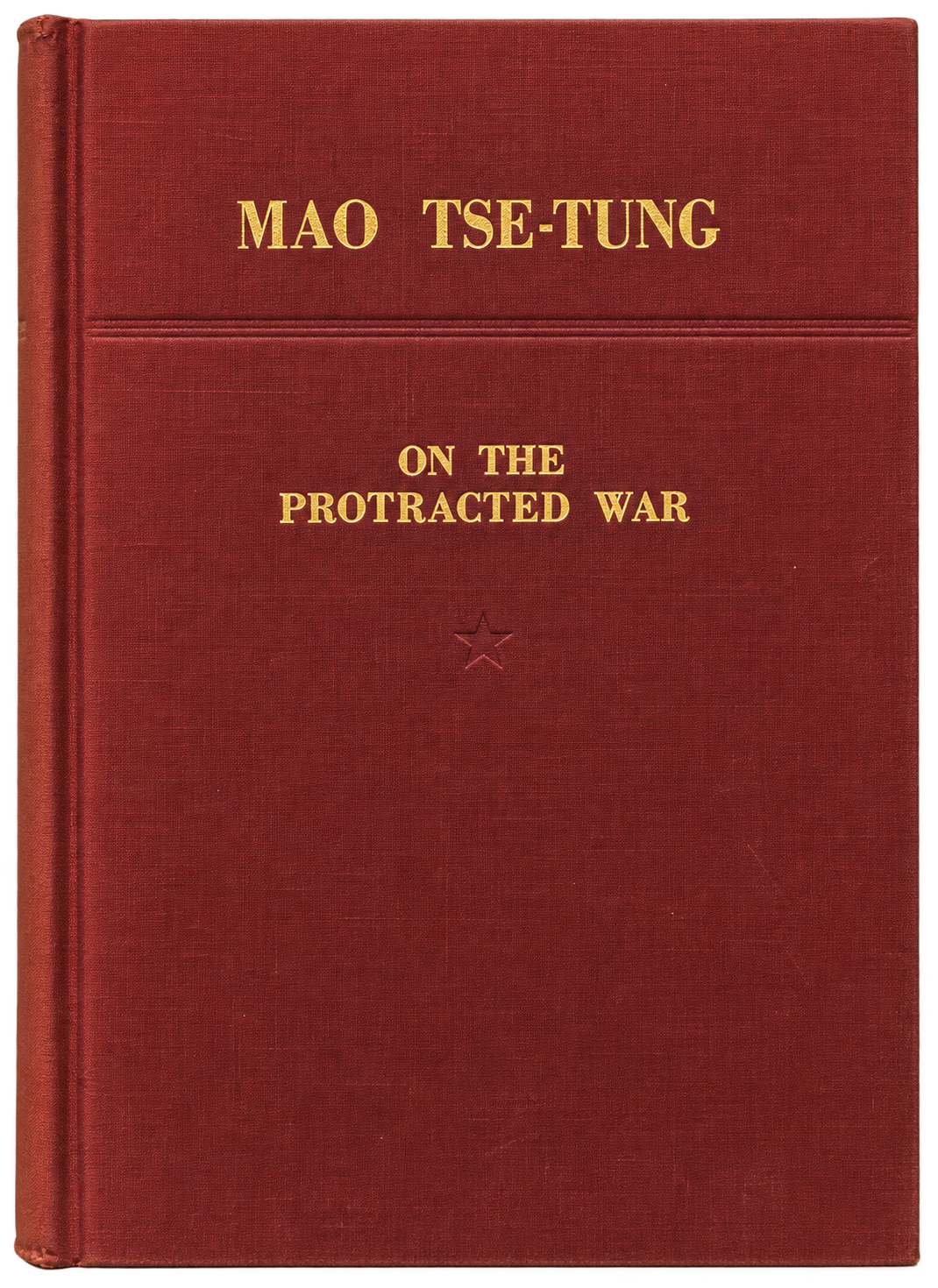
Mao Tse-tung (Mao Zedong)
Foreign Languages Press, Peking · 1954
First English Edition · First Printing
The Book: First English-language edition, first printing of Mao Tse-tung’s On the Protracted War. The title page explicitly states “First Edition · June 1954” and identifies Foreign Languages Press, Peking, as publisher. The publisher’s note explains that the English translation was based upon the second edition of the Chinese text, while the present English-language volume itself is explicitly identified as the first edition and contains no indication of a later impression or reprint. Original publisher’s maroon cloth with silver lettering. Printed in the People’s Republic of China by the state publisher responsible for disseminating Mao’s writings internationally. No evidence of rebinding, facsimile production, ex-library provenance, restoration, or later publisher issue observed.
Condition: Near Fine. The original maroon publisher’s cloth remains exceptionally well preserved with bright silver lettering, a square and sound binding, and a clean interior. Only light shelf wear is present. No documented ownership history, institutional markings, rebinding, or restoration observed.
Story Of The Book
Before Mao Zedong became one of history’s most powerful dictators, he had to persuade people to follow him.
Originally delivered in 1938 during the Second Sino-Japanese War, On the Protracted War presented Mao’s argument for how a materially weaker China could ultimately defeat Japan through a prolonged conflict. Rather than accepting either inevitable defeat or the possibility of rapid victory, Mao described war as a process whose balance of power could change through endurance, organization, popular mobilization, and strategic patience.
The historical irony is what makes the book especially important to this collection. Mao appears here not principally as the ruler of an authoritarian state, but as a revolutionary intellectual explaining how a weaker movement can resist superior power. The rhetoric is disciplined, strategic, and often persuasive. It offers sacrifice, national liberation, and eventual victory rather than openly announcing the coercive political system that would later emerge under Mao’s leadership.
That distinction matters. Authoritarian movements do not necessarily begin by advertising repression. They can begin with arguments about liberation, justice, national survival, equality, and resistance to an existing order.
On the Protracted War preserves Mao while he is making that argument.
Why It’s In The Collection
On the Protracted War occupies an unusual place in the collection because the dissident eventually became the dictator.
Most objects in the collection document individuals challenging systems of power. Mao complicates that narrative. His revolutionary movement genuinely confronted existing political and military authority, yet the government he ultimately led concentrated enormous power of its own and presided over catastrophic campaigns of political repression and social engineering.
That makes the book valuable precisely because its ideas cannot be dismissed as obviously monstrous. The collection preserves harmful and authoritarian ideas not to admire them, but because understanding power requires understanding how people become persuaded to build, surrender to, or participate in it. On the Protracted War captures Mao as strategist and revolutionary advocate, before the consequences of Maoism had become historical knowledge.
This 1954 first English edition adds another layer. Issued by Foreign Languages Press after Mao had taken power, it represents the Chinese state deliberately translating and exporting the revolutionary arguments that helped bring that state into existence. The physical object therefore connects revolutionary dissent to institutional power: ideas once used to challenge authority were now being disseminated internationally by the government those ideas helped create.
Within the collection, Mao therefore serves as a warning against treating anti-authoritarianism as a permanent identity rather than a principle. Someone can resist one system of domination and subsequently construct another. The meaningful question is not simply whether a person challenges power, but what happens when that person finally possesses it.
Collection Categories: Political Dissent · Political Movements · Political History · War & Conflict · Anti-Authoritarianism · Counter-Thesis Object · Publication-Event Object
———
Authentication Evidence
• Title page identifies On the Protracted War by Mao Tse-tung, published by Foreign Languages Press, Peking.
• First Edition Evidence: Title page states "First Edition · June 1954," consistent with the first English-language edition issued by Foreign Languages Press.
• First Printing Evidence: Publisher's note specifies that this English translation is based upon the second edition of the Chinese text while the title page explicitly identifies the present volume as the First Edition (June 1954) with no indication of any later impression or reprint.
• The volume was printed in the People's Republic of China by the original state publisher responsible for disseminating Mao's works internationally.
• Original publisher's maroon cloth binding with silver lettering matches known first English issue examples.
• No evidence of rebinding, facsimile production, ex-library provenance, restoration, or later publisher issue observed.
• The observed bibliographic evidence is fully consistent with an authentic First English Edition, First Printing.
On the Protracted War
Every dictatorship begins first as a highly persuasive argument for building a better future.
Long before Mao Zedong became one of history's most powerful dictators, before he commanded armies or presided over policies that would kill tens of millions, he wrote as a revolutionary seeking to persuade rather than to command. On the Protracted War captures that earlier voice—a dissident arguing against an existing government, offering strategy, sacrifice, and hope instead of coercion. The tragedy is not that these words sound monstrous. They do not. They sound disciplined, rational, and inspiring. That is precisely why they matter. This volume preserves the ideas that helped transform an insurgent movement into one of the twentieth century's most powerful authoritarian regimes, reminding us that tyranny is often built first through conviction before it is enforced through fear.
Mao Tse-tung (Mao Zedong)
Foreign Languages Press · Peking (Beijing), People’s Republic of China · 1954
First English Edition · First Printing
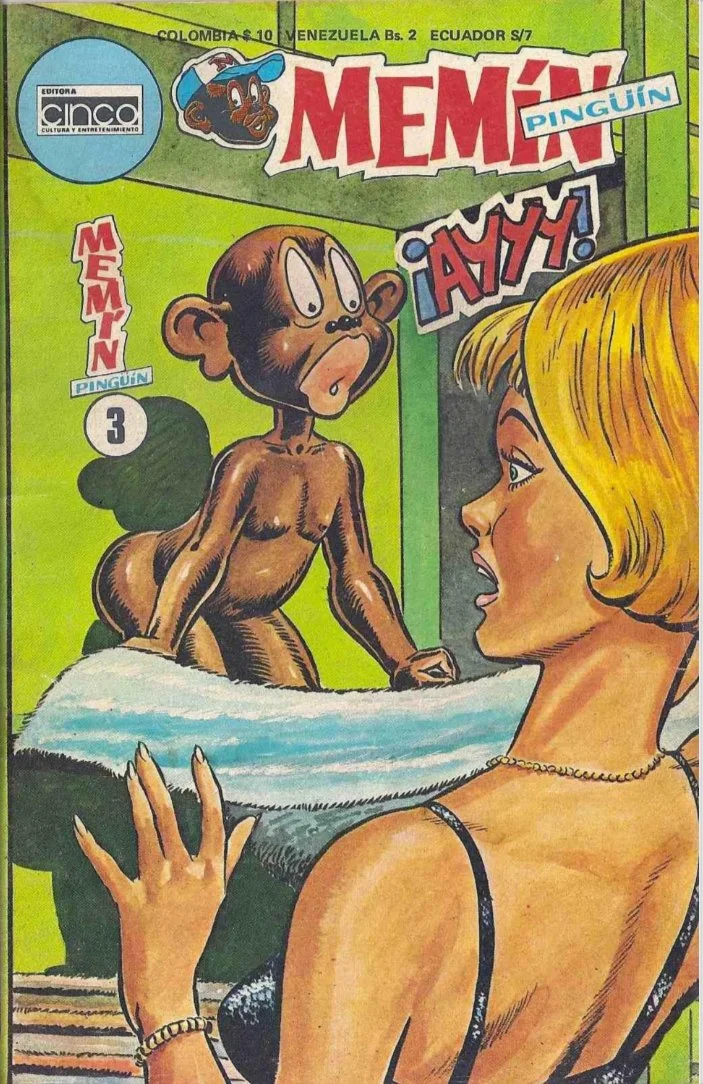
Yolanda Vargas Dulché
Editora Cinco, Colombia, 1983
First Edition · First Printing
The Book:
An original Spanish-language 1983 issue of Memín, published by Editora Cinco in the popular serialized format through which generations of Latin American readers encountered the character. The comic remains in its original color pictorial, staple-bound wrappers, with regional prices printed for the Dominican Republic, Panama, and Costa Rica. Internal advertising promotes the immediately following issue, No. 4, supporting its identification as a contemporaneous sequential issue rather than a later reproduction or collected edition.
Condition:
Very Good. Complete and structurally intact with both original staples present. The covers show moderate handling wear, including surface rubbing, creasing, edge wear, corner rounding, and noticeable toning, with small spine stresses at the staple folds but no major separation. Interior pages appear complete with expected age toning and light handling wear. No major tears, missing pages, or restoration are evident.
Story Of The Book
Memín Pinguín was a beloved comic character. He also became an international argument about race.
Created in the 1940s and repeatedly published across Latin America, Memín became one of the Spanish-speaking world's most recognizable comic figures. His exaggerated appearance, however, would eventually place the series at the center of a much larger debate. Admirers defended Memín as an affectionate character rooted in Mexican popular culture; critics argued that the depiction of its Afro-descendant protagonist perpetuated racist caricature and stereotypes.
That disagreement is what makes an original issue like this more historically interesting than a retrospective book about the controversy. This copy was printed in 1983, before later international disputes transformed Memín into a symbol in arguments over race, representation, cultural identity, censorship, and historical memory. It preserves the imagery in the ordinary mass-market form in which readers actually encountered it—not isolated in a textbook, exhibition, or modern reproduction, but surrounded by the advertisements, editorial material, pricing, and serial context of a working popular comic.
The difficult question Memín leaves behind is therefore larger than whether the character was offensive.
What happens when something a culture once embraced becomes something later generations struggle to defend?
And once that happens, what should we do with the object itself—remove it, contextualize it, condemn it, preserve it, or continue arguing over what it meant?
Why It’s In The Collection
Memín No. 3 belongs in Consigned to Darkness because anti-authoritarianism is not only concerned with governments banning books. It is also concerned with who has the authority to define acceptable representation, whose dignity popular culture protects or diminishes, and what societies choose to do with uncomfortable evidence from their own past.
This issue was acquired as a primary artifact of mass-market visual culture, not because it is an especially early or premiere issue of the series. Its value to the collection lies in preserving the controversial imagery in its original publication context—before later debates changed the way the character was understood. That original editorial, advertising, and distribution context preserves evidence that later reproductions and collected editions cannot.
The collection does not need to resolve the argument over Memín to justify preserving it. In some ways, the unresolved argument is the reason to preserve it. Hiding an uncomfortable object makes it easier to forget the assumptions that produced it. Keeping the original allows those assumptions to be examined.
The point is not to protect Memín from criticism. It is to protect the evidence that makes criticism possible.
Collection Categories: Graphic Literature · Race & Representation · Censorship · Cultural History · Human Dignity · Publication-Event Object · Counter-Thesis Object
———
Authentication Evidence
• The indicia identifies the publication as Memín No. 3 published by Editora Cinco, with copyright dated 1983, consistent with the stated publication.
• Publisher information, editorial staff, distribution data, and copyright notice correspond with known Editora Cinco production.
• Original staple binding remains present and consistent with period production.
• Internal advertising promotes the immediately following issue (No. 4), consistent with sequential first-release publication.
• No evidence of facsimile production, modern reprint markings, or reproduction printing is visible in the supplied photographs.
• Based on the available evidence, this copy is consistent with a contemporaneous 1983 first-edition, first-printing issue.
Memín (No. 3)
Yolanda Vargas Dulché
Editora Cinco · Colombia · 1983
First Edition · First Printing
A little boy in a Mexican comic became one of Latin America's most beloved characters — and one of its most controversial.
Created in the 1940s, Memín Pinguín entertained generations of readers while its exaggerated portrayal of a Black child raised troubling questions about race and representation. Millions saw an affectionate cultural icon. Others saw a racist caricature. In 2005, commemorative Mexican postage stamps brought that disagreement into international headlines, exposing a question that remains uncomfortable: Can something be beloved and still cause harm?
This original 1983 issue preserves the character before that international controversy, when his image was already familiar to millions. Sometimes the stories a society cherishes reveal as much about its prejudices as its pleasures.
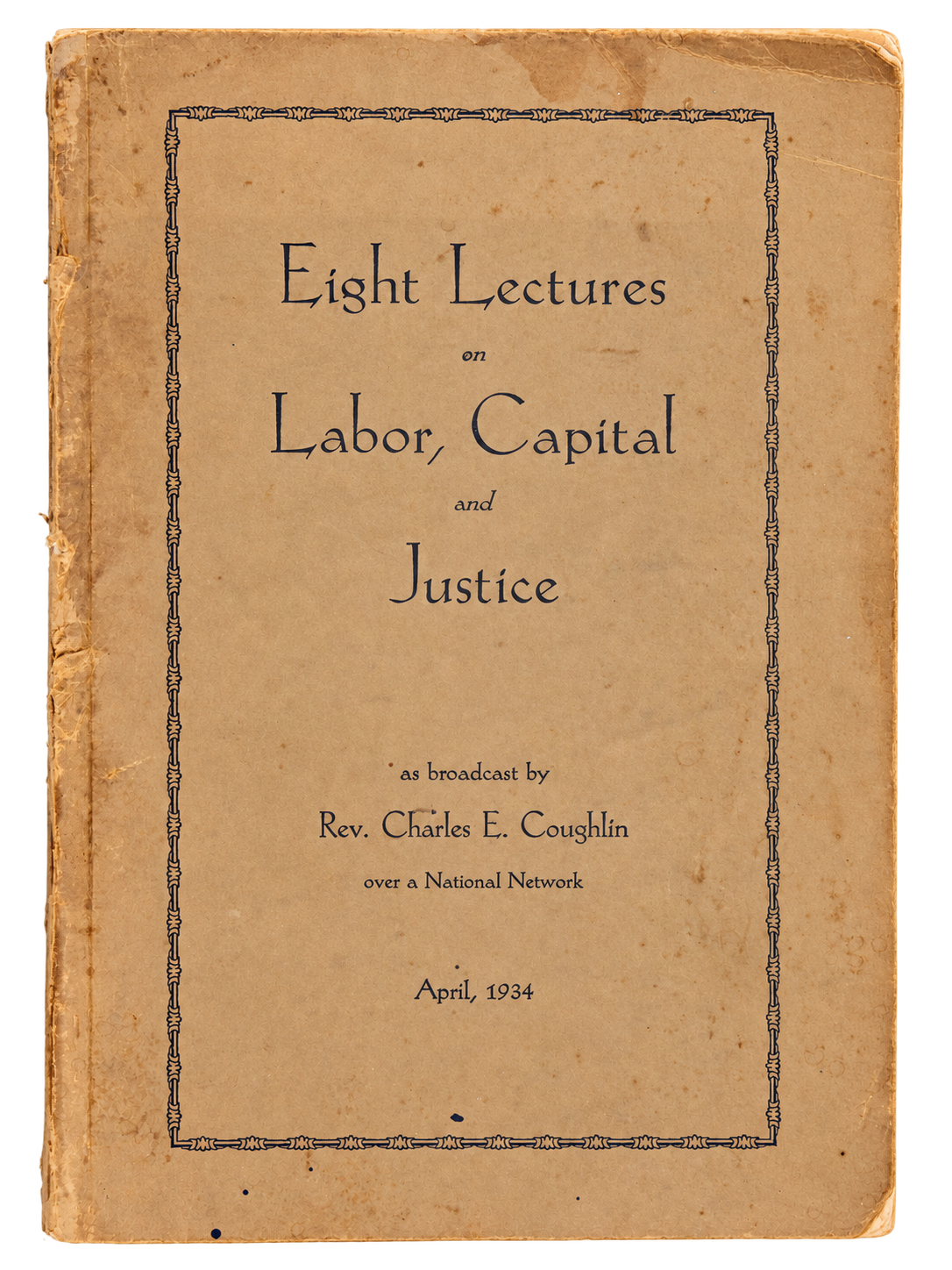
Charles E. Coughlin
The Radio League of the Little Flower, Royal Oak, Michigan · April 1934
First Edition · First Printing
The Book: First edition, first printing of Charles E. Coughlin’s Eight Lectures on Labor, Capital and Justice. The title page credits “The Rev. Chas. E. Coughlin,” identifies The Radio League of the Little Flower in Royal Oak, Michigan as publisher, and is explicitly dated April, 1934 A.D. Original publisher’s stiff printed paper wrappers retained. No later-edition or reprint statement is recorded in the collection inventory.
Condition: Good. The original wrappers exhibit moderate toning, rubbing, edge wear, and a diagonal crease to the front wrapper, with significant wear and loss along the spine. A previous owner added contemporary handwritten identification to the spine. The sewn binding remains structurally sound, the text block is complete, and the interior is generally clean with moderate age toning.
Story Of The Book
Before political broadcasting became a permanent feature of American life, Charles Coughlin demonstrated how effectively a microphone could convert economic grievance into mass political influence.
Broadcast nationally during the depths of the Great Depression, the eight lectures collected here address unemployment, labor rights, monetary policy, banking power, private capital, and the moral responsibilities of economic institutions. Coughlin presented himself as a defender of workers and ordinary citizens against concentrated financial power, using radio’s unprecedented intimacy to carry political and economic arguments directly into American homes.
Published in April 1934, the volume appeared while Coughlin was evolving from a nationally known radio priest into an independent political force and before he organized the National Union for Social Justice later that year. His broadcasts eventually reached audiences numbering in the tens of millions, demonstrating radio’s ability to bypass established newspapers, political parties, and other traditional intermediaries.
The book therefore captures Coughlin at an important transitional moment. The economic populism preserved in these pages helped build the audience and political machinery that would later accompany the more extreme antisemitic and pro-fascist positions for which he became notorious.
Why It’s In The Collection
Eight Lectures on Labor, Capital and Justice belongs in the collection because it documents how new communications technology can reshape the relationship between political speakers and mass audiences.
The importance of the object is not that the collection endorses Coughlin’s arguments. It is precisely that his career demonstrates how dissent, populist grievance, mass persuasion, and political extremism can overlap. Radio allowed Coughlin to communicate directly with millions of listeners outside the traditional structures that had previously mediated political discourse, and the printed publication of those broadcasts extended their life beyond the moment of transmission.
This April 1934 first printing is especially valuable because it preserves an early stage in that evolution, before the later antisemitism and pro-fascist advocacy that would define Coughlin’s historical reputation had fully emerged. It documents the economic populism through which he initially built his following and therefore helps explain how a mass political audience can form before the ultimate direction of a movement becomes clear.
As both a printed record of nationally broadcast political speech and a publication-event object from the emergence of modern mass persuasion, the volume gives the collection an important counterexample: not every challenge to established power necessarily advances liberty, and the technologies that democratize expression can also magnify demagoguery.
Collection Categories: Political Movements · Political History · Labor & Economic Justice · Mass Media & Propaganda · Free Expression · Publication-Event Object
———
Authentication Evidence
• The title page reads “Eight Lectures on Labor, Capital and Justice” and credits “The Rev. Chas. E. Coughlin,” matching the title and author recorded for the original publication.
• The title page identifies The Radio League of the Little Flower, Royal Oak, Michigan as publisher, matching the original 1934 institutional record.
• The title page is explicitly dated “April, 1934 A.D.,” establishing publication in the month and year assigned to the original edition.
• The copyright leaf states “Copyright 1934 by Rev. Chas. E. Coughlin — All rights of reproduction reserved,” consistent with first publication in 1934.
• No later-edition, revised-edition, or subsequent-printing statement appears on the photographed title or copyright leaves.
• The copyright leaf identifies the original printer as The Condon Printing Co., Detroit, with the NRA emblem and statement that it was printed in the United States.
• The book terminates at numbered page 132, matching the pagination recorded for the original Radio League edition by institutional sources.
• The publisher’s original stiff gray-brown printed wrappers are present, with the full title, author, national-broadcast description, April 1934 date, and decorative border on the front panel.
• The original sewn construction remains visible at the exposed spine head and is consistent with surviving copies of the 1934 wrappered issue.
• Institutional cataloging records only the 1934 Radio League publication as the original edition and supplies LCCN 34013888 and OCLC 730270.
• Multiple independent antiquarian descriptions identify copies with the same publisher, date, format, and pagination as first edition or first edition, first printing. These records support, but do not independently control, the determination made from the copy’s physical evidence.
• No facsimile indicators, modern ISBN, later publisher imprint, photoreproduction artifacts, or other evidence of the documented modern reprints is present.
• The observable evidence supports identification as the first edition, first printing of the April 1934 Radio League publication.
Eight Lectures on Labor, Capital and Justice
Before “hate radio” had a name, Charles Coughlin discovered that a microphone could turn economic grievance into mass political power.
Broadcast nationally during the depths of the Great Depression, these eight lectures carried arguments about labor, banking, monetary policy, private capital, and economic justice from a parish in Royal Oak into American homes. Coughlin presented himself as the defender of workers and ordinary citizens against concentrated financial power, using the apparent intimacy of radio to transform political economics into moral drama.
Published in April 1934—months before he organized the National Union for Social Justice—this first printing preserves an early stage in the rise of one of America’s most influential and ultimately destructive political broadcasters, before his populism hardened into the antisemitism and pro-fascist advocacy that would define his legacy. The object documents not simply what Coughlin believed, but how a new mass medium taught political extremism to speak directly into the private lives of millions.
Charles E. Coughlin
The Radio League of the Little Flower · Royal Oak, Michigan · April 1934
First Edition · First Printing

Full Title: Psychopathia Sexualis: With Especial Reference to the Antipathic Sexual Instinct: A Medico-Forensic Study
Richard von Krafft-Ebing
Translated from the Twelfth German Edition by Franklin S. Klaf
Foreword by Daniel Blain
Stein and Day · New York · 1965
First Complete English-Language Edition · First Printing
The Book:
The First Complete English-Language Edition · First Printing of Richard von Krafft-Ebing’s Psychopathia Sexualis, one of the foundational texts of modern sexology. First published in German in 1886, the work helped give lasting currency to categories including sadism, masochism, fetishism, and homosexuality. Earlier English editions left portions untranslated, while Krafft-Ebing himself placed especially explicit material in Latin. Franklin S. Klaf’s 1965 translation of the twelfth German edition was explicitly issued as the “First Complete Translation into English.” xviii, 434 pp. Original red publisher’s cloth, red topstain, and original unclipped $10.00 dust jacket retained.
Condition:
Fine book in a Very Good original dust jacket. Original red cloth remains clean and tight, with gilt spine lettering, decorative rules, publisher device, and red topstain intact. Interior is exceptionally well preserved, with only a small pencil price notation to the rear free endpaper. The original unclipped $10.00 jacket shows localized chipping and paper loss at the spine ends and corners, several short edge tears, and moderate surface rubbing, but remains substantially complete and presents strongly.
Story Of The Book
Krafft-Ebing helped give medicine a vocabulary for talking about sexuality. He also helped establish the idea that homosexuality and other forms of sexual difference were diseases.
First published in 1886, Psychopathia Sexualis became one of the most influential books in the history of sexology. It organized sexual behavior into medico-forensic categories and gave medicine, psychiatry, and law a vocabulary for subjects long treated primarily as sin, crime, or scandal.
That visibility was profoundly double-edged. Krafft-Ebing brought same-sex desire into sustained scientific discussion, but framed it through theories of abnormality and degeneration. The result was a language that helped make sexuality legible to modern institutions while also giving those institutions new authority to classify, diagnose, and judge it.
Access to the book itself was restricted too. Explicit passages were placed in Latin, and earlier English translations remained incomplete. This 1965 Stein and Day edition finally translated the complete twelfth German edition into English.
Krafft-Ebing deliberately put some of the book’s most explicit material in Latin to keep provocative information about sex out of the hands of ordinary readers. This 1965 edition finally made the complete text available in English.
Why It’s In The Collection
Psychopathia Sexualis belongs in Consigned to Darkness because power does not only decide what may be said. It also decides what people are called.
Krafft-Ebing’s categories shaped medicine, psychiatry, law, and public culture for generations. For LGBTQ+ people, that legacy was both emancipatory and damaging: scientific recognition could replace silence, but recognition arrived through a framework that often treated identity as pathology.
This 1965 edition matters because it finally removed a linguistic barrier that had limited English access to the complete text—just as psychiatry was beginning to reconsider some of the assumptions the book had helped institutionalize.
It preserves a moment when the language of authority became fully visible to the people it had helped define.
Collection Categories: Free Expression · Censorship · Publication-Event Object · Human Rights · LGBTQ+ History · Sexuality & Culture · Sexology · History of Medicine · History of Psychiatry
———
Authentication Evidence
Title page identifies the work as Psychopathia Sexualis: With Especial Reference to the Antipathic Sexual Instinct: A Medico-Forensic Study by Richard von Krafft-Ebing.
Title page identifies Franklin S. Klaf, M.D., M.P.H., as translator and author of the introduction.
Title page identifies Daniel Blain, M.D., F.A.C.P., F.A.P.A., as author of the foreword.
Title page explicitly states “Translated from the Twelfth German Edition.”
Title page explicitly states “First Complete Translation into English.”
Title page identifies Stein and Day · New York as publisher.
Copyright page states “Translation and Introduction copyright © 1965 by Franklin S. Klaf.”
Copyright page states “Foreword copyright © 1965 by Stein and Day, Incorporated.”
Copyright page gives Library of Congress Catalog Card No. 65-16706.
Copyright page states that the volume was manufactured in the United States.
Contemporary scholarly review literature independently identifies the Stein and Day/Klaf edition as the “First complete translation into English.”
Physical collation is xviii + 434 pages, consistent with independently recorded copies of the Stein and Day edition.
A distinct 1965 G. P. Putnam’s Sons edition, translated by Harry E. Wedeck, was separately advertised as the “First unexpurgated edition in English.”
The Putnam/Wedeck and Stein and Day/Klaf editions are therefore bibliographically distinct 1965 English-language editions.
Original red Stein and Day publisher’s cloth remains present.
Binding retains gilt spine title, author name, decorative rules, and publisher device.
Original red topstain remains present.
Original Stein and Day dust jacket remains present.
Dust jacket is unclipped and retains the original $10.00 publisher’s price.
Dust jacket prominently identifies the work as the “First Complete Translation into English.”
No later-printing or reissue statement is present.
No evidence of book-club manufacture, later publisher issue, facsimile jacket, rebinding, or restoration is observed.
Observable physical and bibliographic evidence supports identification as the 1965 First Complete English-Language Edition · First Printing.
Psychopathia Sexualis
Full Title: Psychopathia Sexualis: With Especial Reference to the Antipathic Sexual Instinct: A Medico-Forensic Study
Richard von Krafft-Ebing
Translated from the Twelfth German Edition by Franklin S. Klaf
Foreword by Daniel Blain
Stein and Day · New York · 1965
First Complete English-Language Edition · First Printing
For decades, some of the most explicit passages in one of the foundational books of modern sexology were deliberately kept beyond the reach of ordinary readers.
First published in 1886, Richard von Krafft-Ebing's Psychopathia Sexualis attempted to classify human sexuality through medicine and law, giving lasting currency to concepts including sadism, masochism, fetishism, and homosexuality. Its influence was enormous—and deeply double-edged. Krafft-Ebing helped make same-sex desire an object of sustained scientific study while simultaneously defining it through a medical language of pathology and degeneration that would echo through psychiatry for generations.
Krafft-Ebing had deliberately placed sexually explicit material in Latin partly to keep it from lay readers. This 1965 edition finally translated the complete twelfth German edition into English, removing a linguistic barrier that had survived through decades of English publication.
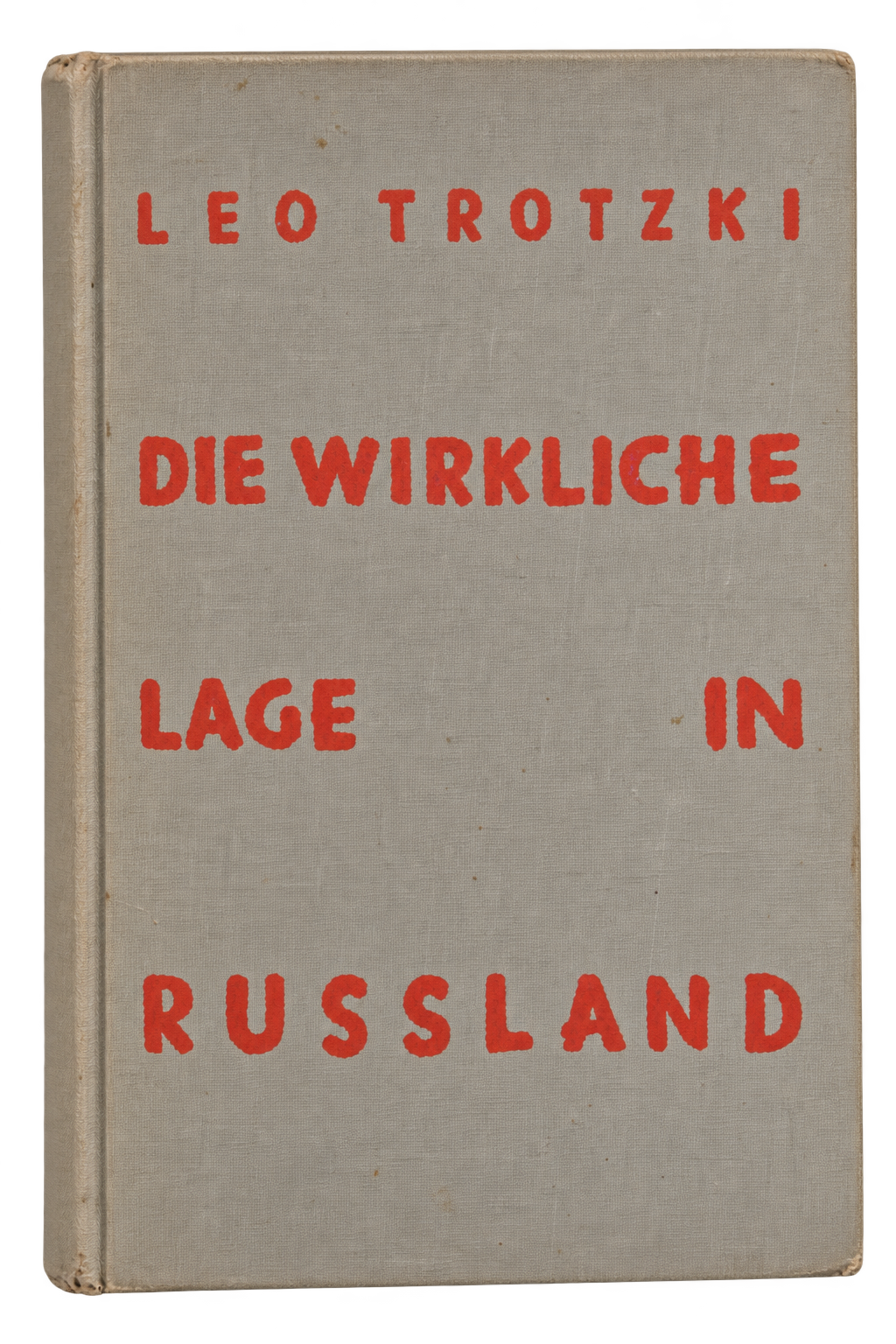
Leo Trotzki (Leon Trotsky)
Translated by Wilhelm Cremer
Avalun-Verlag · Hellerau bei Dresden · [1928]
First Avalun Edition · First Printing
Spuriously designated “Autorisierte Ausgabe” by the publisher
The Book:
The first Avalun edition, first printing of Leon Trotsky’s Die wirkliche Lage in Russland (The Real Situation in Russia), translated into German by Wilhelm Cremer and issued without a printed publication date, conventionally dated [1928]. The volume assembles documents and writings of the Left Opposition from Trotsky’s struggle against Stalin’s consolidation of power. Although Avalun-Verlag explicitly presented the publication as an “Autorisierte Ausgabe”—an authorized edition—Trotsky subsequently denied having authorized it. 286 numbered pages followed by an unnumbered contents leaf headed “Inhalt,” printed recto and verso. Original beige/gray publisher’s cloth lettered in orange-red, with red-stained top edge and original ribbon marker.
Condition:
Good+. The text block remains complete, cohesive, and readable with moderate age toning and no ownership markings or restoration observed. The original publisher’s cloth and stamped lettering remain present, together with the red-stained top edge and ribbon marker. The binding exhibits substantial structural wear, including extensive splitting and lifting of the spine cloth, fraying and loss at the spine ends, cracked hinges with exposed mull, and partial separation of the text block from the case. The boards remain attached. Despite the binding deterioration, the volume remains complete and readable.
Story Of The Book
This book calls itself authorized. Trotsky said it was nothing of the kind.
Die wirkliche Lage in Russland appeared during Trotsky’s struggle against Stalin’s consolidation of power. By the late 1920s, the Left Opposition had been defeated within the Communist Party, Trotsky had been expelled from the party and sent into internal exile, and the political space for organized opposition to Stalin was rapidly disappearing.
Avalun-Verlag brought Trotsky’s arguments and documents of the Left Opposition to German readers during that confrontation. But the publisher created a controversy of its own.
The book identifies itself as an “Autorisierte Ausgabe.” In an April 1929 letter, however, Trotsky denied having any relationship with Avalun-Verlag. He stated that there had been no contract, that he had received neither royalties nor an author’s copy, and that he rejected both the translation and the title.
That makes the publication more complicated than an ordinary unauthorized edition.
Avalun circulated the writings of a political dissident while claiming an authority from that dissident that he said it never possessed.
The publisher therefore became part of the history contained inside the book. It helped circulate material suppressed within the Soviet Union while simultaneously overriding Trotsky’s control over how that material was translated, assembled, titled, and presented to readers.
Why It’s In The Collection
Die wirkliche Lage in Russland belongs in Consigned to Darkness because it preserves two struggles over control of ideas within the same physical object.
The first was political. Trotsky was losing his struggle against Stalin as independent opposition within the Soviet system became increasingly dangerous. The documents and writings gathered here preserve arguments produced during that confrontation and carried them to readers outside the Soviet Union.
The second struggle concerned authorship itself.
Avalun presented the volume as authorized. Trotsky said it was not.
That contradiction makes this edition particularly important to the collection. A publisher could preserve and circulate politically endangered ideas while simultaneously disregarding the author’s authority over their publication.
This copy also appears to preserve that controversy at its beginning. Bibliographic evidence identifies the undated, 286-page Avalun publication without a numbered Tausend designation as the first Avalun edition, conventionally dated [1928]. Later impressions explicitly identify themselves as 8.–12. Tausend, 11.–16. Tausend, and 17.–22. Tausend. This copy contains no Tausend or other numbered-impression statement.
It therefore corresponds to the original Avalun publication—the edition already in circulation when Trotsky rejected the publisher’s claim of authorization in 1929.
Sometimes preserving a dissident voice and respecting the dissident’s control over that voice are not the same thing. This book preserves the collision between the two.
Collection Categories: Anti-Authoritarianism · Anti-Totalitarianism · Political Dissent · Political History · Exile & Émigré Literature · Publication-Event Object
———
Authentication Evidence
Title page identifies Die wirkliche Lage in Russland by Leo Trotzki and Avalun-Verlag, Hellerau bei Dresden, as publisher.
Translation is credited to Wilhelm Cremer.
Title-page verso explicitly identifies the volume as an “Autorisierte Ausgabe” and records production by Rossberg’sche Buchdruckerei, Leipzig.
The volume itself contains no printed publication date.
The volume contains 286 numbered pages followed by an unnumbered contents leaf headed “Inhalt,” printed recto and verso.
Original beige/gray publisher’s cloth with orange-red stamping, red-stained top edge, and ribbon marker are retained.
Physical examination confirms that no Tausend/Tsd. or other numbered-impression designation appears anywhere in this copy.
Bibliographic evidence records the first Avalun edition as an undated 286-page publication conventionally dated [1928]. Later Avalun impressions are specifically identified as 8.–12. Tausend, 11.–16. Tausend, and 17.–22. Tausend.
Specialist antiquarian cataloguing cites Mehnert II, C 86; Sammlung Kerssemakers 7876; and Bibliothek Stein K1388 for the Avalun publication.
The absence of a numbered-impression statement, together with the Avalun imprint, Wilhelm Cremer translation, Rossberg printer statement, correct collation, and original publisher’s binding, supports identification as the First Avalun Edition · First Printing, conventionally dated [1928].
Trotsky subsequently denied authorizing Avalun’s publication, stating that he had no contractual relationship with the publisher and had received neither royalties nor author’s copies; the printed “Autorisierte Ausgabe” designation is therefore treated as the publisher’s claim rather than an accepted statement of authorization.
No evidence of rebinding, facsimile title page, replacement leaves, or modern reproduction is observed.
Die wirkliche Lage in Russland
Leo Trotzki (Leon Trotsky)
Translated by Wilhelm Cremer
Avalun-Verlag · Hellerau bei Dresden · [1928]
First Avalun Edition · First Printing
Spuriously designated “Autorisierte Ausgabe” by the publisher
Before Ralph Ginzburg became America's most famous publisher prosecuted for obscenity, he attempted something far more ambitious: to persuade the public that eroticism deserved the same intellectual, artistic, and literary treatment as any other serious subject.
Published in 1962, EROS rejected the distinction between high culture and forbidden culture by placing Renaissance art beside contemporary photography, literature beside sexuality, and scholarship beside subjects routinely excluded from respectable publishing. The magazine's extraordinary production values reinforced its argument that erotic expression belonged within civilization rather than outside it. Although EROS survived only four issues before financial pressures and the legal controversies surrounding Ginzburg's later publications ended the experiment, it became one of the defining publication-events in the modern history of obscenity, censorship, and American publishing. This assembled set preserves both the inaugural issue that announced Ginzburg's editorial vision and the final issue completing the magazine's brief but influential existence.
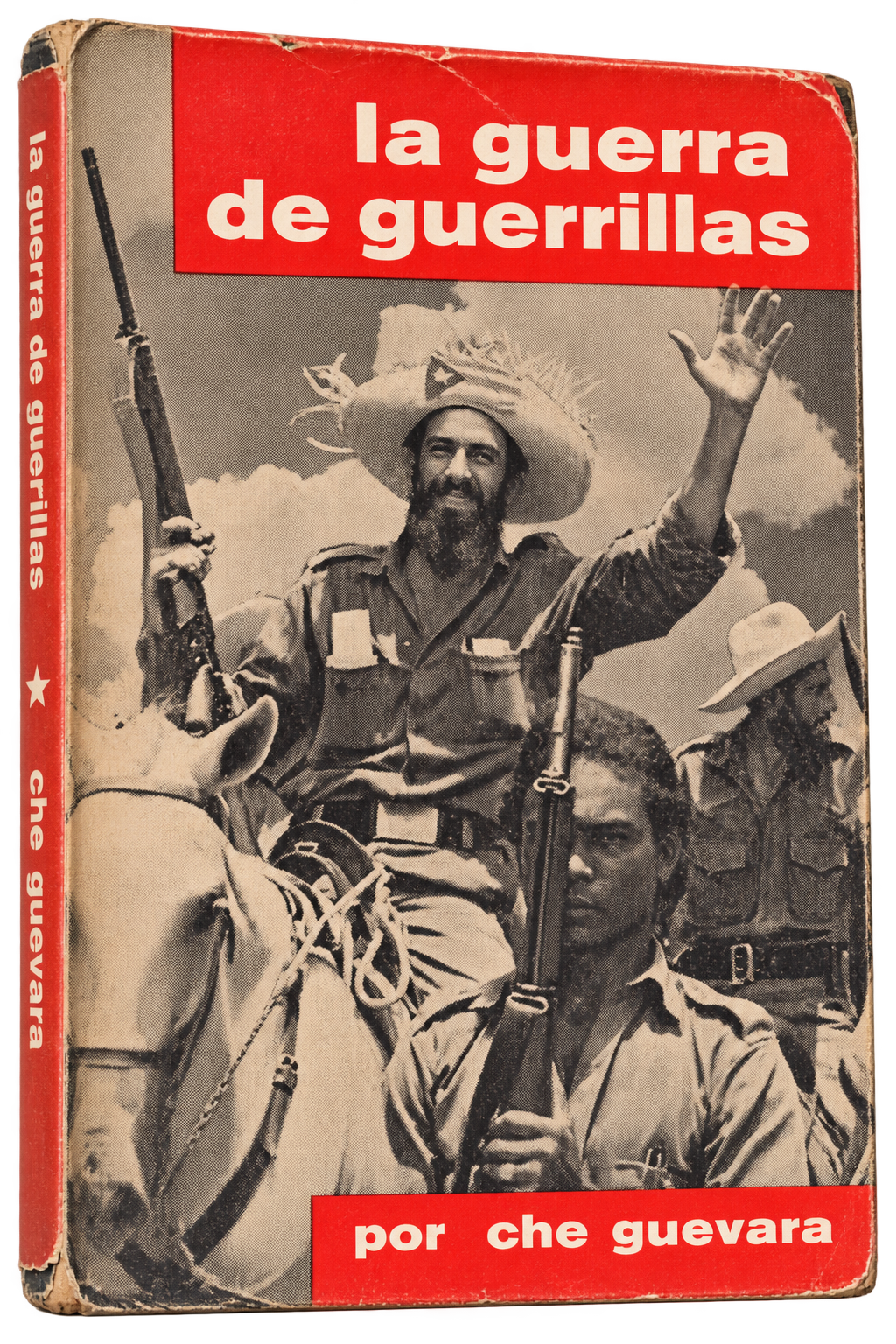
Ernesto “Che” Guevara
Havana: Departamento de Instrucción del MINFAR, 1960
First Edition · First Printing
The Book:
The very rare, true first edition, first printing of Che Guevara’s La Guerra de Guerrillas, published in Havana in 1960 by the Departamento de Instrucción del Ministerio de las Fuerzas Armadas Revolucionarias (MINFAR) and printed by the Talleres Tipográficos del I.N.R.A. Issued in its original illustrated staple-bound wrappers, the title page bears Guevara’s dedication “A Camilo,” honoring revolutionary commander Camilo Cienfuegos. The rear publication statement records an original print run of 50,000 copies on Cuban paper. This copy retains its original wrappers and carries the contemporary ownership inscription “Martin Prieto” inside the front wrapper. Independent bibliographic references cited in the inventory identify this MINFAR / INRA issue as the original 1960 first edition, first printing.
Condition:
Very Good. The original staple-bound wrappers remain intact and the book structurally sound, with moderate age toning and handling wear consistent with an ephemeral revolutionary publication of the period. The original binding, wrappers, typography, format, and paper are preserved, with no evidence of facsimile production, rebinding, restoration, or later commercial issue. Contemporary ownership inscription, “Martin Prieto,” to the inside front wrapper.
Story Of The Book
The Cuban Revolution had succeeded. Che Guevara wanted to explain how others could do it again.
Published in 1960, La Guerra de Guerrillas was not written as a history of the revolution that had brought Fidel Castro and his guerrillas to power.
It was written as instruction.
Drawing directly from the experience of revolutionary warfare in Cuba, Guevara attempted to turn that experience into a transferable theory of insurgency: how small guerrilla forces should organize themselves, operate in hostile territory, develop relationships with local populations, sustain a campaign, and transform armed struggle into political revolution.
The distinction matters.
Many revolutionary books explain why an existing political order should be overthrown. La Guerra de Guerrillas addresses the much more consequential question of how to overthrow it.
And this particular edition was not separated from the new revolutionary government whose experience it codified. It was issued directly by the instructional department of Cuba’s Revolutionary Armed Forces, printed by the I.N.R.A., dedicated to the recently deceased Camilo Cienfuegos, and produced in 50,000 copies.
The book therefore occupies an extraordinary historical moment.
Guevara was no longer simply an insurgent fighting Batista. He was now part of the government created by that insurgency—and was using the publishing machinery of the revolutionary state to explain the methods by which revolutionary warfare might be reproduced elsewhere.
Those ideas traveled.
La Guerra de Guerrillas became one of the twentieth century’s most influential texts on insurgency, circulating through revolutionary movements while also becoming an object of study for governments, military theorists, and counterinsurgency institutions attempting to understand and defeat the kind of warfare Guevara advocated. The inventory accordingly identifies its influence across Latin America, Africa, and Asia.
A revolution had become a government. One of its leaders immediately published the instructions for making another revolution.
Why It’s In The Collection
La Guerra de Guerrillas is one of the clearest counter-thesis objects in Consigned to Darkness.
The collection preserves resistance to power. But it is equally interested in the moment resistance becomes power.
Guevara embodies that transition unusually well.
The tactics described here emerged from an insurgency against an authoritarian government. But this book was published after that insurgency succeeded, when Guevara had become a powerful figure within a new revolutionary state—one that would itself restrict political opposition and exercise coercive authority.
That tension is precisely why the object matters.
Consigned to Darkness does not preserve La Guerra de Guerrillas because revolutionary violence is inherently anti-authoritarian, nor because Guevara’s political program deserves endorsement. It preserves the book because understanding power requires preserving the ideas, strategies, and printed objects through which people attempt to acquire it.
And few copies could tell that story better than this one.
This is not a later translation or retrospective edition explaining Guevara’s theories after they became historically famous. It is the original Cuban first edition, first printing, issued by the Revolutionary Armed Forces in 1960, immediately after the revolution whose experience supplied its argument.
The publication itself therefore marks a transition:
insurgency → doctrine → dissemination → power.
La Guerra de Guerrillas did not merely describe revolutionary warfare. This edition was one of the physical instruments through which revolutionary Cuba attempted to teach it to the world.
Che Guevara helped win a revolution. Then the revolutionary government printed 50,000 copies of his instructions for doing it again.
Collection Categories: Revolutionary Texts · Guerrilla Warfare · Guerrilla Military · Political Movements · Anti-Colonialism · Political History · Counter-Thesis Object
———
Authentication Evidence
• Title page identifies the work as "La Guerra de Guerrillas" by Che Guevara with the dedication "A Camilo," matching the original Cuban issue.
• Rear publication page states "Esta edición consta de 50,000 ejemplares...", consistent with the original Cuban printing.
• Rear wrapper states the booklet was printed by the Talleres Tipográficos del I.N.R.A. for the Departamento de Instrucción del MINFAR, matching known first-edition bibliographic descriptions.
• Physical construction (original staple binding, wrappers, typography, format, and paper) is consistent with authenticated revolutionary-era Cuban government publications.
• Independent bibliographic references identify this exact MINFAR / INRA "A Camilo" edition as the original 1960 first edition, first printing.
• No evidence of facsimile production, modern reproduction, rebinding, or later commercial issue is present in the supplied photographs.
La Guerra de Guerrillas
English Title: Guerrilla Warfare
Ernesto “Che” Guevara
Havana: Departamento de Instrucción del MINFAR · 1960
First Edition · First Printing
Che Guevara argued that revolutions are not merely won on battlefields but prepared through disciplined political organization and popular support.
Drawing upon the experience of the Cuban Revolution, La Guerra de Guerrillas became one of the twentieth century's most influential manuals of insurgency, shaping revolutionary movements throughout Latin America, Africa, and Asia. Admired by some and condemned by others, the work permanently altered modern thinking about irregular warfare and political struggle. Its publication transformed revolutionary strategy into a subject of global political debate.
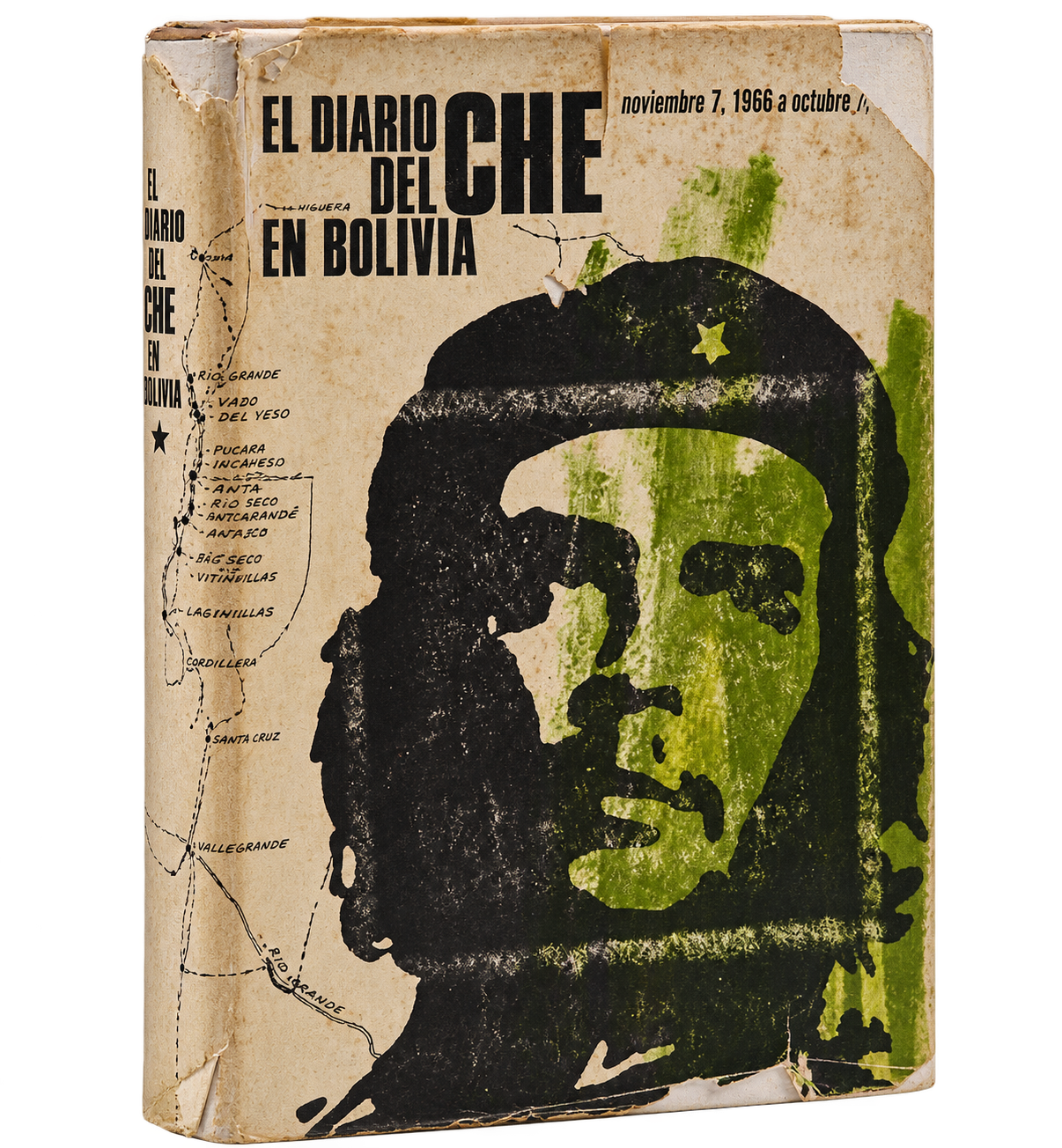
Full Title:El Diario del Che en Bolivia: Noviembre 7, 1966 a Octubre 7, 1967
Ernesto “Che” Guevara
Havana: Instituto del Libro, 1968
First Edition · First Printing
The Book:
The first Cuban edition, first printing of Che Guevara’s El Diario del Che en Bolivia, published in Havana by the Instituto del Libro in 1968, the Cuban government’s designated “Año del Guerrillero Heroico.” The volume reproduces Guevara’s private operational diary from his final guerrilla campaign in Bolivia, covering November 7, 1966 through October 7, 1967, with an introduction by Fidel Castro. This copy retains its original hard paper wrappers and original illustrated dust jacket. The first Cuban printing comprised 250,000 copies and was issued on June 26, 1968, less than nine months after Guevara’s death. This copy lacks the folding map originally issued loose at the front but is otherwise textually complete, with xxix, 346 pages and seven leaves of photographic plates.
Condition:
Very Good+ in a Very Good dust jacket. The original wrappers remain complete with moderate handling wear, edge rubbing, corner wear, and age toning consistent with use. The illustrated dust jacket shows edge wear and light toning but remains complete and presents attractively. The binding is sound and the interior complete and clean. The folding map originally issued loose at the front is absent.
Story Of The Book
Few revolutionary documents were intended less for publication than Che Guevara’s Bolivian diary.
This was not a manifesto written for supporters, a memoir polished after victory, or a history constructed with the benefit of hindsight.
It was a working document.
Beginning in November 1966, Guevara recorded the progress of the guerrilla campaign he hoped would ignite revolution in Bolivia and eventually spread armed struggle across Latin America. Day by day, the diary follows the increasingly desperate reality behind that ambition: movements, encounters, disagreements, shortages, tactical decisions, physical deterioration, isolation, and the widening distance between revolutionary expectation and what was actually happening on the ground.
Then the entries stop.
Guevara’s final entry is dated October 7, 1967. The following day he was captured by Bolivian forces. On October 9, he was executed.
His private field journal survived him.
That transformed the diary into something Guevara himself could never have planned. A confidential operational record became a political document, historical artifact, and eventually one of the most recognizable firsthand texts of twentieth-century revolutionary history.
Cuba understood its importance immediately.
In June 1968, less than a year after Guevara’s death, the Instituto del Libro published this enormous 250,000-copy Cuban edition, introduced by Fidel Castro and issued during a year the revolutionary government had officially dedicated to the “Heroic Guerrilla.”
The result is an unusually complicated publication object.
The words belong to Guevara in the field. But the book belongs equally to the political struggle over what Guevara would mean after his death.
A guerrilla’s private record of a failed revolution became the document through which another revolution began constructing his immortality.
Why It’s In The Collection
El Diario del Che en Bolivia belongs in Consigned to Darkness precisely because the collection is interested in power from both sides of the barricade.
Guevara was a revolutionary fighting established governments and advocating armed resistance against political systems he considered oppressive. He was also a central figure in the Cuban Revolution and an architect and defender of a new revolutionary state that exercised coercive power of its own.
The collection does not need to resolve that contradiction to preserve it.
This book is valuable because it brings the reader unusually close to the moment before history decided what Che Guevara would become. The diary records revolutionary conviction alongside practical failure, not through a later biographer’s reconstruction but through Guevara’s own contemporaneous observations during the campaign that ended his life.
The physical edition adds another layer. Published in Havana within months of his death, introduced by Fidel Castro, and issued during Cuba’s “Año del Guerrillero Heroico,” it documents the transformation of the dead revolutionary into a political symbol. The inventory therefore treats the object not merely as a revolutionary text, but as a primary publication-event object in the construction of Guevara’s posthumous political legacy.
That makes the book simultaneously a record of insurgency, a firsthand document of failure, and an artifact of revolutionary mythmaking.
Che Guevara went to Bolivia to export a revolution. He failed. His diary traveled farther than the revolution ever did.
Collection Categories: Revolutionary Texts · Guerrilla Warfare · Revolutionary Movements · Anti-Colonialism · Political Movements · Political Dissent · Latin American Political History · Cold War
———
Authentication Evidence
• Title page identifies Instituto del Libro, La Habana, 1968 (Año del Guerrillero Heroico), consistent with the first Cuban edition.
• Title page is dated 1968, the year of the earliest Cuban publication following Guevara's death.
• No evidence of later Cuban publisher changes, modern ISBNs, or subsequent reprint statements observed.
• The book retains its original publisher's binding and original illustrated dust jacket.
• Dust jacket artwork, map design, and publisher presentation are consistent with documented first Cuban issues.
• No evidence of book club manufacture, facsimile dust jacket, rebinding, ex-library provenance, or modern reproduction observed.
• The observed bibliographic evidence is consistent with a first Cuban edition, first printing.
El Diario del Che en Bolivia
Full Title: El Diario del Che en Bolivia: Noviembre 7, 1966 a Octubre 7, 1967
Ernesto “Che” Guevara
Havana: Instituto del Libro, 1968
First Edition · First Printing
For centuries, men claimed the authority to decide what women should do with their bodies, their lives, and their futures. Adrienne Rich challenged the very foundations of that authority.
In 1976, Rich confronted a society that celebrated motherhood as a woman's highest calling while denying women meaningful control over the conditions under which they became mothers. In “The Kingdom of the Fathers,” she argued that marriage, religion, property, and economic dependency had transformed motherhood from a human experience into an institution through which patriarchal power perpetuated itself. First published in this original issue of Partisan Review, the essay was later revised into a chapter of Rich's landmark feminist book Of Woman Born. This issue therefore preserves an important stage in the development of an argument that challenged centuries of accepted authority: motherhood could not truly be celebrated as a woman's choice while the power to define and govern it remained in someone else's hands.
Carl Van Vechten
Alfred A. Knopf · New York · 1926
First Edition · First Printing · Trade Issue
The Book:
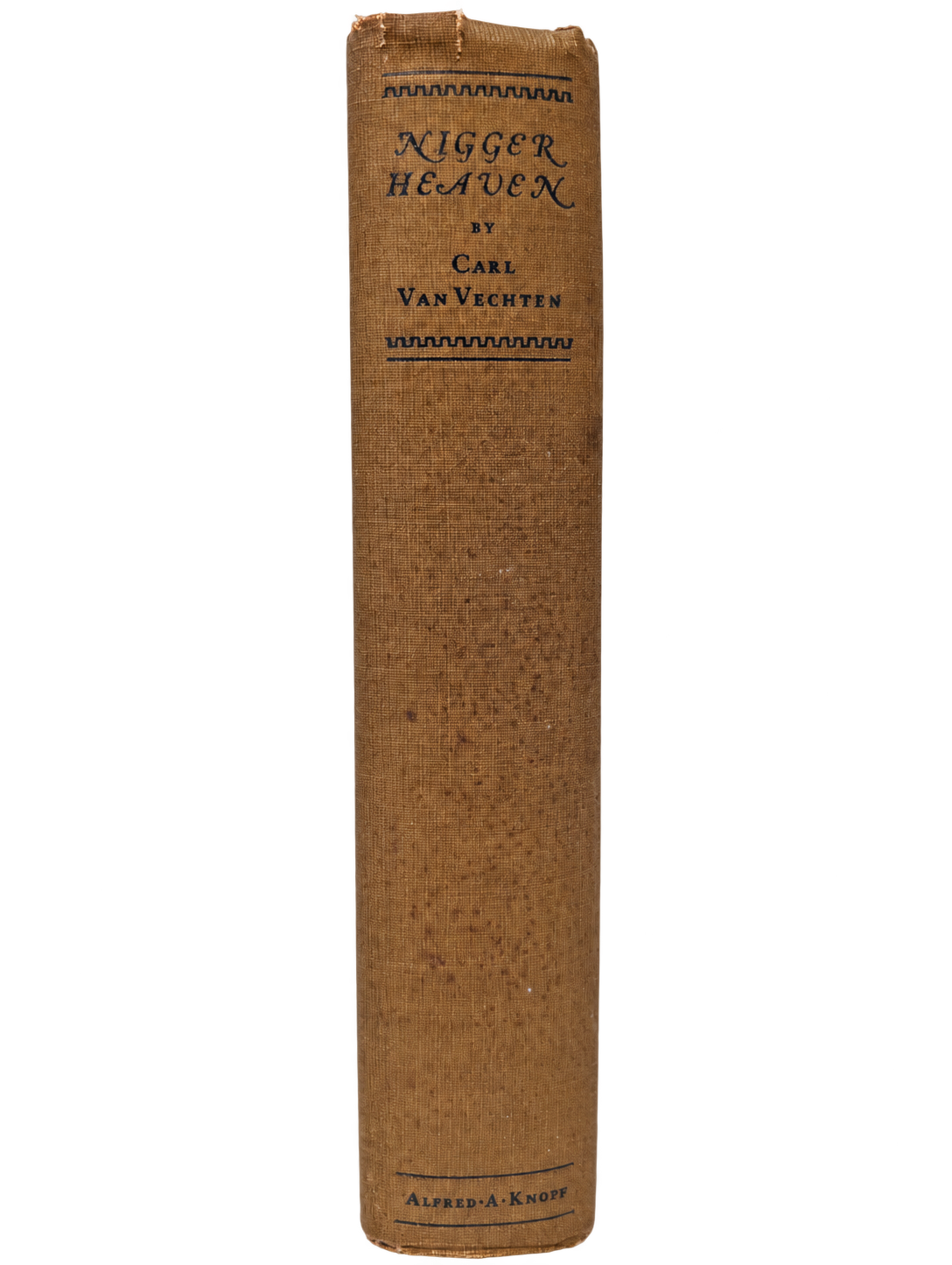
The first edition, first printing, trade issue of Carl Van Vechten’s Nigger Heaven, published by Alfred A. Knopf in 1926. One of the most controversial novels associated with the Harlem Renaissance, the book became the center of an immediate argument over race, representation, authorship, and Van Vechten’s deliberately provocative title. This first printing also preserves the book’s original textual state, including quoted blues lyrics that were removed and replaced in later printings. [8], 286, [2] pp. Original light-brown publisher’s cloth, the front board stamped in blue with a stepped border and the spine lettered and ruled in blue with the Knopf imprint at the foot. Original blue topstain present.
Condition:
Good+. The original publisher’s cloth remains present with the binding square and sound, boards firmly attached, joints intact, and text clean and unmarked. The cloth exhibits fraying and chipping across the head of the spine with a small area of loss, moderate scattered soiling and speckling to the spine and rear board, and light soiling and faint surface creasing to the front board. The original blue topstain remains present. Two period prior-owner signatures appear on the front free endpaper. The scarce original dust jacket is not present. No restoration is observed.
Story Of The Book
Carl Van Vechten spent years helping Black writers find publishers and audiences. Then he wrote a novel about Harlem himself—and gave it a title many of those writers could not forgive.
Van Vechten was a white critic, novelist, photographer, and unusually well-connected supporter of the emerging Harlem Renaissance. He promoted Black artists and writers, formed friendships throughout Harlem’s literary world, and used his publishing connections on their behalf.
Then came Nigger Heaven.
Published in 1926, the novel attempted to portray dimensions of Harlem life largely absent from mainstream white American fiction, including its educated, professional, artistic, and literary communities. But Van Vechten’s title ensured that the argument would extend far beyond the novel itself.
The controversy was not simply Black writers against a white outsider. It divided the literary community Van Vechten had supported.
W. E. B. Du Bois condemned the book and Van Vechten’s representation of Black life. Countee Cullen also objected. Others, including Langston Hughes and Nella Larsen, defended Van Vechten, while James Weldon Johnson argued that the book should be judged rather than dismissed because of its title.
At the center of the dispute was a question the Harlem Renaissance made impossible to avoid: Who possesses the authority to represent another community in print?
The people involved knew one another, supported one another, criticized one another, and disagreed profoundly about where artistic freedom ended and appropriation began.
The controversy did not prevent the book from reaching readers. Its initial printing sold rapidly, and additional printings followed within months.
The text itself soon changed as well. The earliest printings contained quoted blues lyrics that were subsequently removed following copyright objections. Beginning with the seventh printing, replacement verses supplied by Langston Hughes appeared instead.
This first printing therefore preserves the novel as readers encountered it at the beginning of the controversy—before later printings altered its text.
Why It’s In The Collection
Nigger Heaven belongs in Consigned to Darkness because power over representation is also power over who gets to describe whom.
The collection contains many objects in which governments, publishers, courts, and institutions attempted to control speech. This book presents a more difficult conflict because nobody needed to censor Van Vechten for the question of authority to become urgent.
Van Vechten had the legal freedom to write the book.
The controversy concerned something harder: whether friendship, sympathy, artistic freedom, and genuine support for Black writers gave a white author the moral authority to turn Harlem into his own subject—and to place a racial slur on the cover.
The people closest to that cultural moment could not agree. That disagreement is precisely why the object matters.
Du Bois condemned the book. Hughes defended Van Vechten. Larsen defended him. Johnson urged readers to judge the work itself.
This first printing preserves the publication that forced that argument into the open while the Harlem Renaissance was still unfolding—not a later history explaining the controversy after the fact.
And this particular printing preserves something later copies do not: the original textual state before copyright objections resulted in the removal of quoted blues lyrics and their eventual replacement with verses supplied by Langston Hughes.
The physical object therefore participated in two arguments about authority over a text: who possessed the authority to represent Harlem, and who possessed the authority to reproduce the cultural material embedded within that representation.
Everyone in the argument wanted Black life taken seriously in American literature. They disagreed over whose hand had the right to hold the pen.
Collection Categories: Civil Rights · Literature · Harlem Renaissance · Race & Representation · Publication-Event Object
———
Authentication Evidence
Title page identifies Nigger Heaven by Carl Van Vechten, dated 1926, with the Alfred A. Knopf New York and London imprint and Borzoi device.
Copyright page records Copyright, 1926, by Alfred A. Knopf and Manufactured in the United States of America.
No later-printing or subsequent-impression statement appears on the copyright page.
Documented later Knopf impressions explicitly identify subsequent printings; the matching 1926 title-page and copyright-page dates with no additional printing statement are consistent with the first printing.
Collation is [8], 286, [2] pp., consistent with documented copies of the New York first trade issue.
Original publisher’s light-brown cloth is present, with the front board stamped in blue with a stepped border and the spine lettered and ruled in blue with the Knopf imprint at the foot.
Original blue topstain is present, consistent with documented copies of the New York first trade issue.
The New York issue is distinguishable from the separate 1926 London Knopf issue, which was issued in a different binding and with different pagination.
This first printing retains the original textual state containing quoted blues lyrics subsequently removed from later impressions; replacement verses supplied by Langston Hughes appear beginning with the seventh printing.
Two period prior-owner signatures are present on the front free endpaper.
Original dust jacket is not present and no claim to jacket completeness is made.
No evidence of rebinding, facsimile title page, replaced leaves, institutional markings, or restoration is observed.
Taken together, the matching 1926 title and copyright dates, absence of a later-printing statement, original New York Knopf trade binding, blue topstain, correct collation, and original textual state support identification as an authentic First Edition · First Printing · Trade Issue.
Nigger Heaven
Carl Van Vechten
Alfred A. Knopf · New York · 1926
First Edition · First Printing · Trade Issue
No one could talk him out of the title, but the fight over this book was never about whether it was any good — it was about who had the right to write it.
By the measure of 1926, Carl Van Vechten was the most useful white man in Harlem — the critic who placed Black writers' manuscripts, made their introductions, and spent his own standing on their behalf. Then he wrote their neighborhood himself and hung a slur over the door. What followed did not pit Harlem against him. It split Harlem down the middle. Du Bois judged the book an affront to Black hospitality; Hughes and Nella Larsen defended it; James Weldon Johnson insisted the book be judged instead of its title. This first printing holds the text before ASCAP forced Knopf to cut the blues lyrics out of it — the verses Langston Hughes then quietly rewrote for the friend he had defended in public. Every writer in that argument wanted Black lives seen. None of them could agree on whose hand should hold the pen.