
 Image 1 of 2
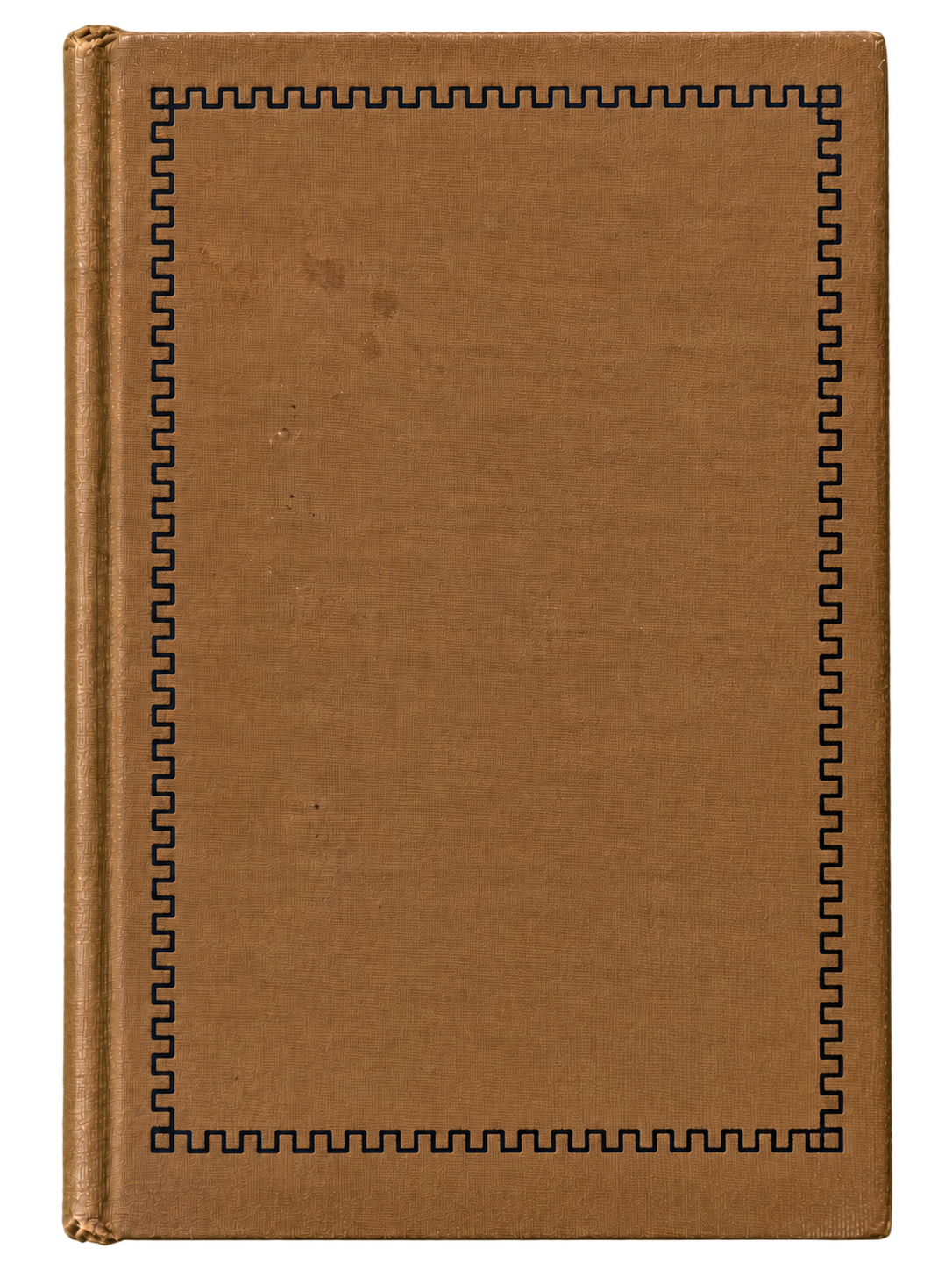 Image 2 of 2
Nigger Heaven — Carl Van Vechten
Carl Van Vechten
Alfred A. Knopf · New York · 1926
First Edition · First Printing · Trade Issue
The Book:
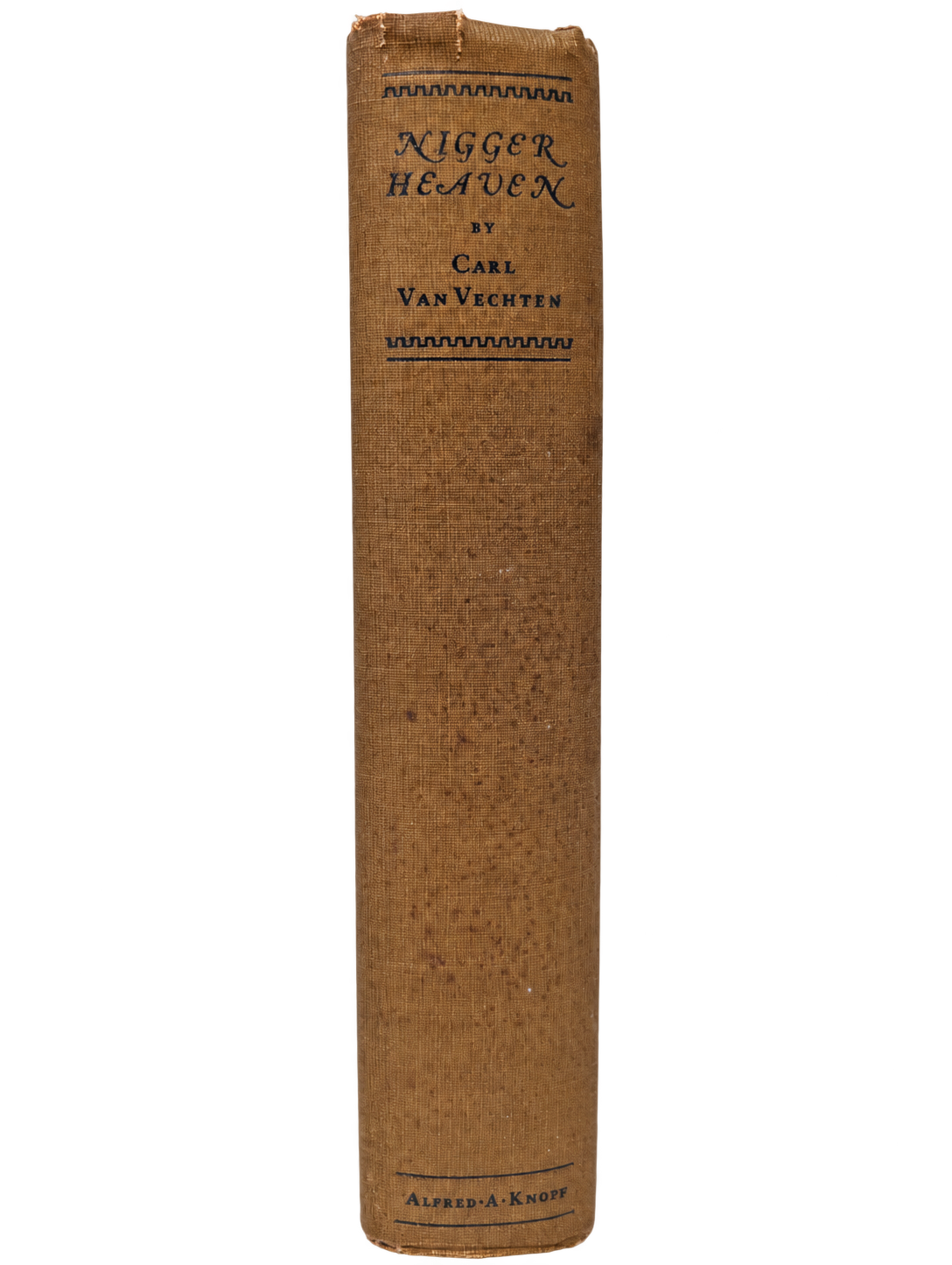
The first edition, first printing, trade issue of Carl Van Vechten’s Nigger Heaven, published by Alfred A. Knopf in 1926. One of the most controversial novels associated with the Harlem Renaissance, the book became the center of an immediate argument over race, representation, authorship, and Van Vechten’s deliberately provocative title. This first printing also preserves the book’s original textual state, including quoted blues lyrics that were removed and replaced in later printings. [8], 286, [2] pp. Original light-brown publisher’s cloth, the front board stamped in blue with a stepped border and the spine lettered and ruled in blue with the Knopf imprint at the foot. Original blue topstain present.
Condition:
Good+. The original publisher’s cloth remains present with the binding square and sound, boards firmly attached, joints intact, and text clean and unmarked. The cloth exhibits fraying and chipping across the head of the spine with a small area of loss, moderate scattered soiling and speckling to the spine and rear board, and light soiling and faint surface creasing to the front board. The original blue topstain remains present. Two period prior-owner signatures appear on the front free endpaper. The scarce original dust jacket is not present. No restoration is observed.
Story Of The Book
Carl Van Vechten spent years helping Black writers find publishers and audiences. Then he wrote a novel about Harlem himself—and gave it a title many of those writers could not forgive.
Van Vechten was a white critic, novelist, photographer, and unusually well-connected supporter of the emerging Harlem Renaissance. He promoted Black artists and writers, formed friendships throughout Harlem’s literary world, and used his publishing connections on their behalf.
Then came Nigger Heaven.
Published in 1926, the novel attempted to portray dimensions of Harlem life largely absent from mainstream white American fiction, including its educated, professional, artistic, and literary communities. But Van Vechten’s title ensured that the argument would extend far beyond the novel itself.
The controversy was not simply Black writers against a white outsider. It divided the literary community Van Vechten had supported.
W. E. B. Du Bois condemned the book and Van Vechten’s representation of Black life. Countee Cullen also objected. Others, including Langston Hughes and Nella Larsen, defended Van Vechten, while James Weldon Johnson argued that the book should be judged rather than dismissed because of its title.
At the center of the dispute was a question the Harlem Renaissance made impossible to avoid: Who possesses the authority to represent another community in print?
The people involved knew one another, supported one another, criticized one another, and disagreed profoundly about where artistic freedom ended and appropriation began.
The controversy did not prevent the book from reaching readers. Its initial printing sold rapidly, and additional printings followed within months.
The text itself soon changed as well. The earliest printings contained quoted blues lyrics that were subsequently removed following copyright objections. Beginning with the seventh printing, replacement verses supplied by Langston Hughes appeared instead.
This first printing therefore preserves the novel as readers encountered it at the beginning of the controversy—before later printings altered its text.
Why It’s In The Collection
Nigger Heaven belongs in Consigned to Darkness because power over representation is also power over who gets to describe whom.
The collection contains many objects in which governments, publishers, courts, and institutions attempted to control speech. This book presents a more difficult conflict because nobody needed to censor Van Vechten for the question of authority to become urgent.
Van Vechten had the legal freedom to write the book.
The controversy concerned something harder: whether friendship, sympathy, artistic freedom, and genuine support for Black writers gave a white author the moral authority to turn Harlem into his own subject—and to place a racial slur on the cover.
The people closest to that cultural moment could not agree. That disagreement is precisely why the object matters.
Du Bois condemned the book. Hughes defended Van Vechten. Larsen defended him. Johnson urged readers to judge the work itself.
This first printing preserves the publication that forced that argument into the open while the Harlem Renaissance was still unfolding—not a later history explaining the controversy after the fact.
And this particular printing preserves something later copies do not: the original textual state before copyright objections resulted in the removal of quoted blues lyrics and their eventual replacement with verses supplied by Langston Hughes.
The physical object therefore participated in two arguments about authority over a text: who possessed the authority to represent Harlem, and who possessed the authority to reproduce the cultural material embedded within that representation.
Everyone in the argument wanted Black life taken seriously in American literature. They disagreed over whose hand had the right to hold the pen.
Collection Categories: Civil Rights · Literature · Harlem Renaissance · Race & Representation · Publication-Event Object
———
Authentication Evidence
Title page identifies Nigger Heaven by Carl Van Vechten, dated 1926, with the Alfred A. Knopf New York and London imprint and Borzoi device.
Copyright page records Copyright, 1926, by Alfred A. Knopf and Manufactured in the United States of America.
No later-printing or subsequent-impression statement appears on the copyright page.
Documented later Knopf impressions explicitly identify subsequent printings; the matching 1926 title-page and copyright-page dates with no additional printing statement are consistent with the first printing.
Collation is [8], 286, [2] pp., consistent with documented copies of the New York first trade issue.
Original publisher’s light-brown cloth is present, with the front board stamped in blue with a stepped border and the spine lettered and ruled in blue with the Knopf imprint at the foot.
Original blue topstain is present, consistent with documented copies of the New York first trade issue.
The New York issue is distinguishable from the separate 1926 London Knopf issue, which was issued in a different binding and with different pagination.
This first printing retains the original textual state containing quoted blues lyrics subsequently removed from later impressions; replacement verses supplied by Langston Hughes appear beginning with the seventh printing.
Two period prior-owner signatures are present on the front free endpaper.
Original dust jacket is not present and no claim to jacket completeness is made.
No evidence of rebinding, facsimile title page, replaced leaves, institutional markings, or restoration is observed.
Taken together, the matching 1926 title and copyright dates, absence of a later-printing statement, original New York Knopf trade binding, blue topstain, correct collation, and original textual state support identification as an authentic First Edition · First Printing · Trade Issue.