
As Only A Soldier Can
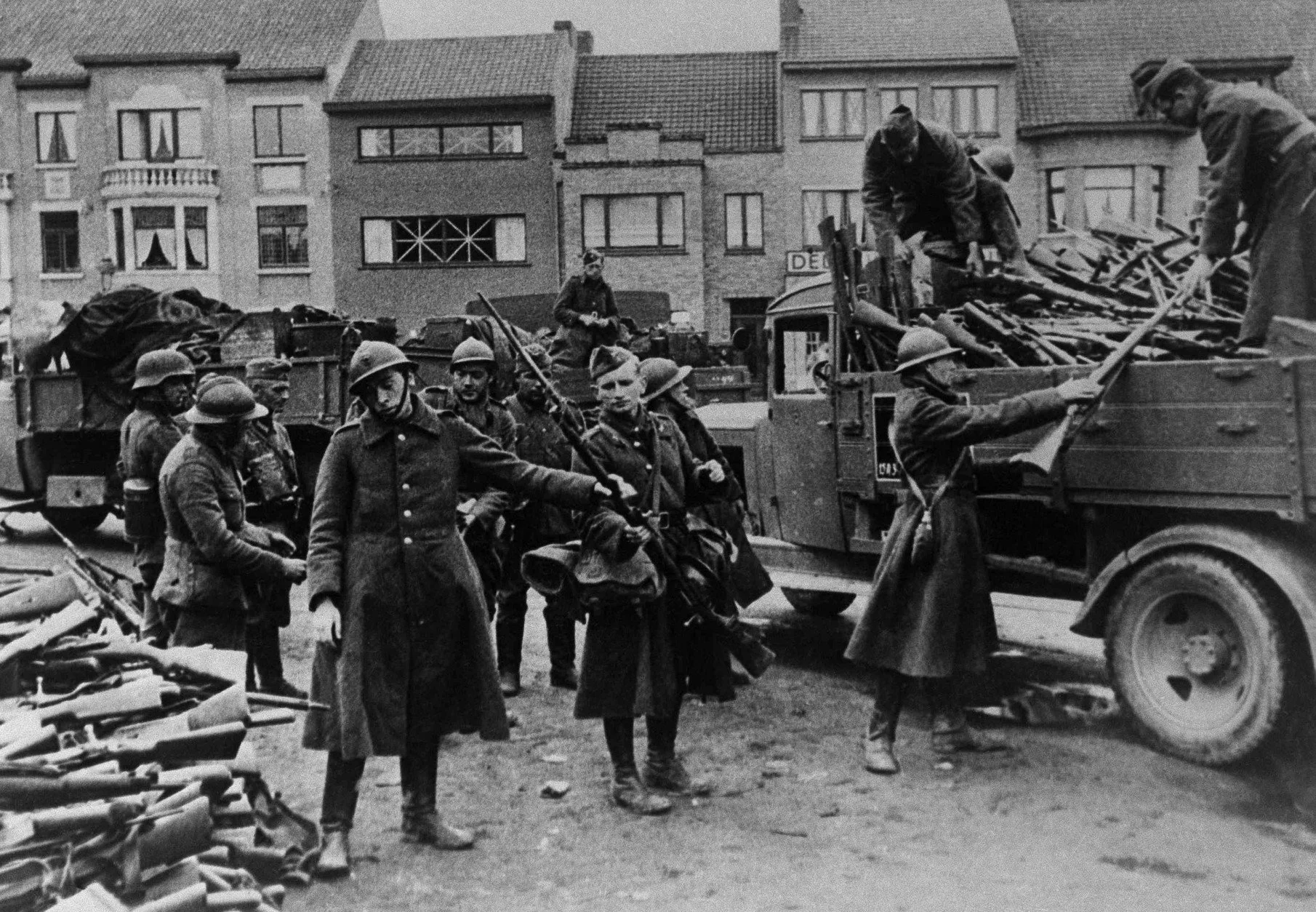
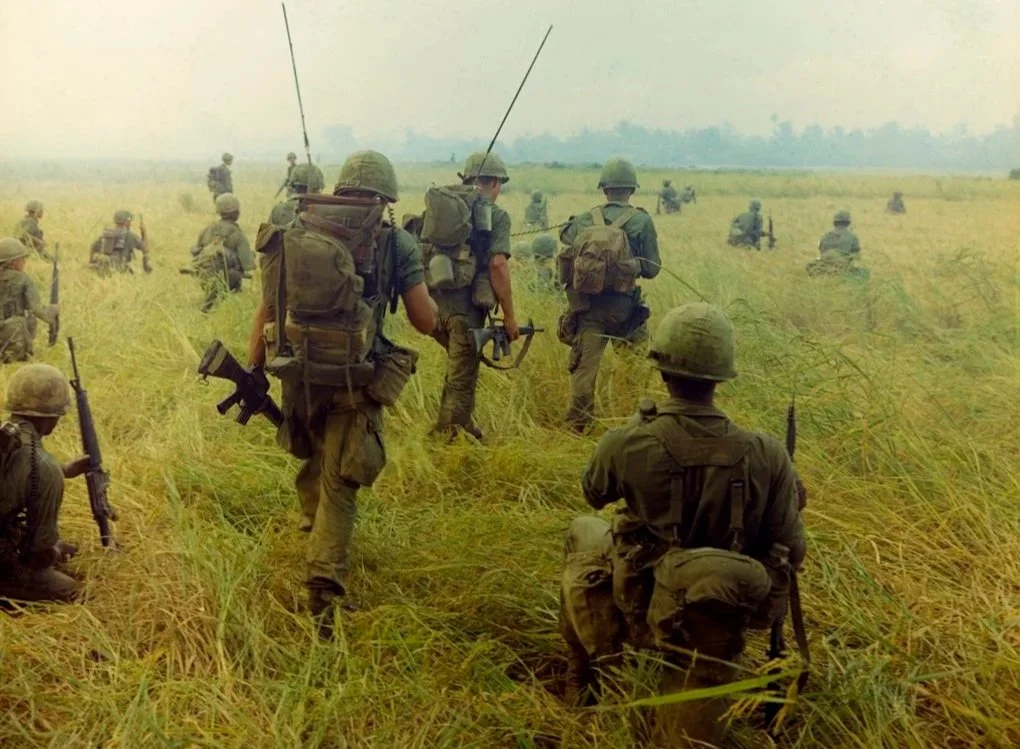
Wars are often fought by nations, but always experienced by individuals. For those delivered into the fog of war, the battlefield and its peripheries become a world of their own, steeped in fear, courage, loyalty, brutality, survival, and the most desperate impulses of the human condition.
Some soldiers return home as heroes, others as witnesses, many not at all. Survivors of that fog often carry the smell of its smoke for the length of their lives — experiences that most often resist explanation to those who were never there. This room examines war through the words of those who've survived it, confronting the distance between the romantic notions of glory and duty that war so often inspires and the realities endured — and ultimately embodied — by those who fight it.
Erich Maria Remarque
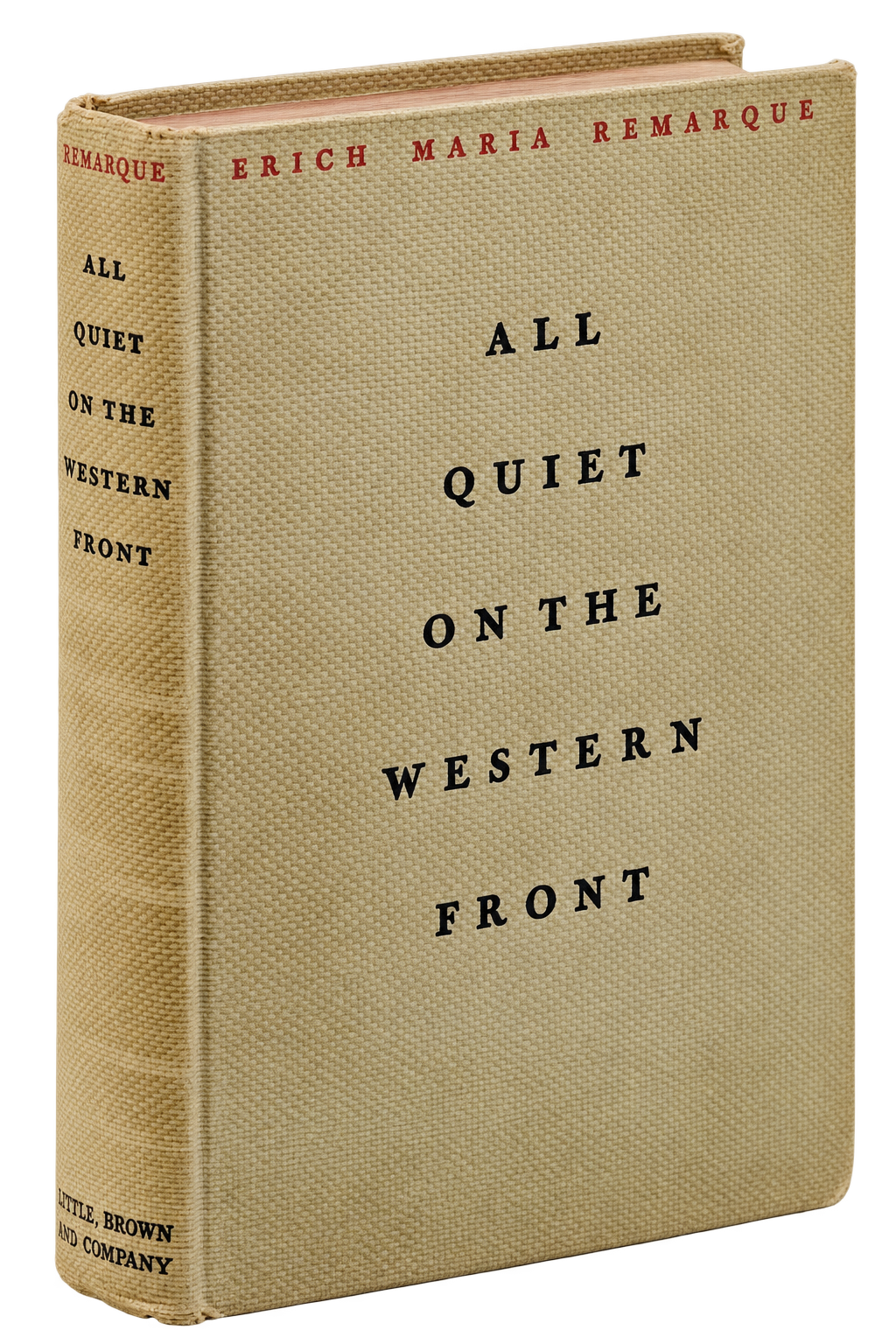
Little, Brown, and Company · Boston · 1929
First American Edition · First Printing
The Book:
The first American edition, first printing of Erich Maria Remarque’s All Quiet on the Western Front, translated from the German by A. W. Wheen and published by Little, Brown in June 1929. One of the defining literary accounts of the First World War, the novel rejected heroic mythology in favor of the exhaustion, terror, and psychological destruction experienced by ordinary soldiers. This copy retains its original oatmeal publisher’s cloth with black lettering and red author lettering.
Condition:
Near Fine, without dust jacket. The original oatmeal cloth remains exceptionally clean and well preserved, with crisp black lettering, strong red author lettering, sharp corners, and only very minor evidence of handling. The original red topstain remains present. The binding is square and tight and the interior remains bright and clean, with no significant ownership markings, foxing, structural weakness, or restoration observed.
Story Of The Book
Governments had described the First World War in the language of patriotism, sacrifice, and glory. Remarque described what happened to the people asked to fight it.
A German veteran himself, Remarque centered the novel on Paul Bäumer and a generation of young soldiers whose identities are steadily consumed by industrialized warfare. The enemy is not simply the opposing army, but the machinery of nationalism and militarism that turns young men into instruments of political ambition.
The book became an international phenomenon almost immediately—and later a target. After the Nazis came to power, Remarque’s work was denounced as un-German, banned, and burned.
A novel written against the glorification of war had become intolerable to a regime preparing Germany for another one.
Why It’s In The Collection
All Quiet on the Western Front belongs in Consigned to Darkness because it challenged one of the most powerful narratives governments use to justify violence: that war ennobles the people who fight it.
Remarque instead restored individuality, fear, grief, and physical suffering to soldiers otherwise absorbed into patriotic abstraction. The Nazi regime’s later suppression of the novel demonstrated how threatening that testimony could become to an authoritarian state built around militarism and nationalist myth.
This 1929 first American printing preserves the novel at the moment it entered American public life—before its author was driven into exile and before the book itself became an object of Nazi censorship and destruction.
Collection Categories: War & Conflict · Anti-War Literature · Censorship · Anti-Authoritarianism · Free Expression · Exile & Émigré Literature · Literature · Publication-Event Object
———
Authentication Evidence
Correct Little, Brown, and Company title page dated 1929, confirming the first American edition
Copyright page states “Published June, 1929”
Copyright page explicitly states “First Printing,” confirming first printing
Translation credited to A. W. Wheen, consistent with the first American edition
Original oatmeal publisher’s cloth binding present
Original red-and-black lettering to the front board and spine present, consistent with documented first American copies
Original red topstain present and physically confirmed
Collation: [6], 291 pp.
Deckled fore-edge and bottom edge present
Original dust jacket not present
Publisher imprint, typography, binding, and physical construction consistent throughout
No evidence of book-club manufacture, rebinding, later issue, facsimile production, or restoration observed
Observable bibliographic evidence, including the explicit “First Printing” statement, supports identification as the 1929 Little, Brown First American Edition · First Printing.
All Quiet on the Western Front
Erich Maria Remarque
Little, Brown, and Company · Boston · 1929
First American Edition · First Printing
Curator’s note: This book bears, in my opinion, the most moving opening inscription of any book in the collection. The book begins with this:
"This book is to be neither an accusation nor a confession, and least of all an adventure, for death is not an adventure to those who stand face to face with it. It will try simply to tell of a generation of men who, even though they may have escaped shells, were destroyed by the war."
The First World War was celebrated by governments as a triumph of patriotism. Erich Maria Remarque remembered it as the destruction of a generation.
Rejecting romantic visions of combat, All Quiet on the Western Front depicts modern industrial warfare through the exhaustion, fear, and disillusionment of ordinary soldiers whose lives were consumed by forces beyond their control. Its uncompromising honesty provoked censorship, public outrage, and eventual suppression by the Nazi regime, which viewed the novel as incompatible with militarism and nationalism. This edition preserves one of the defining literary indictments of war and one of the twentieth century's great defenses of human dignity against organized violence.
George Orwell
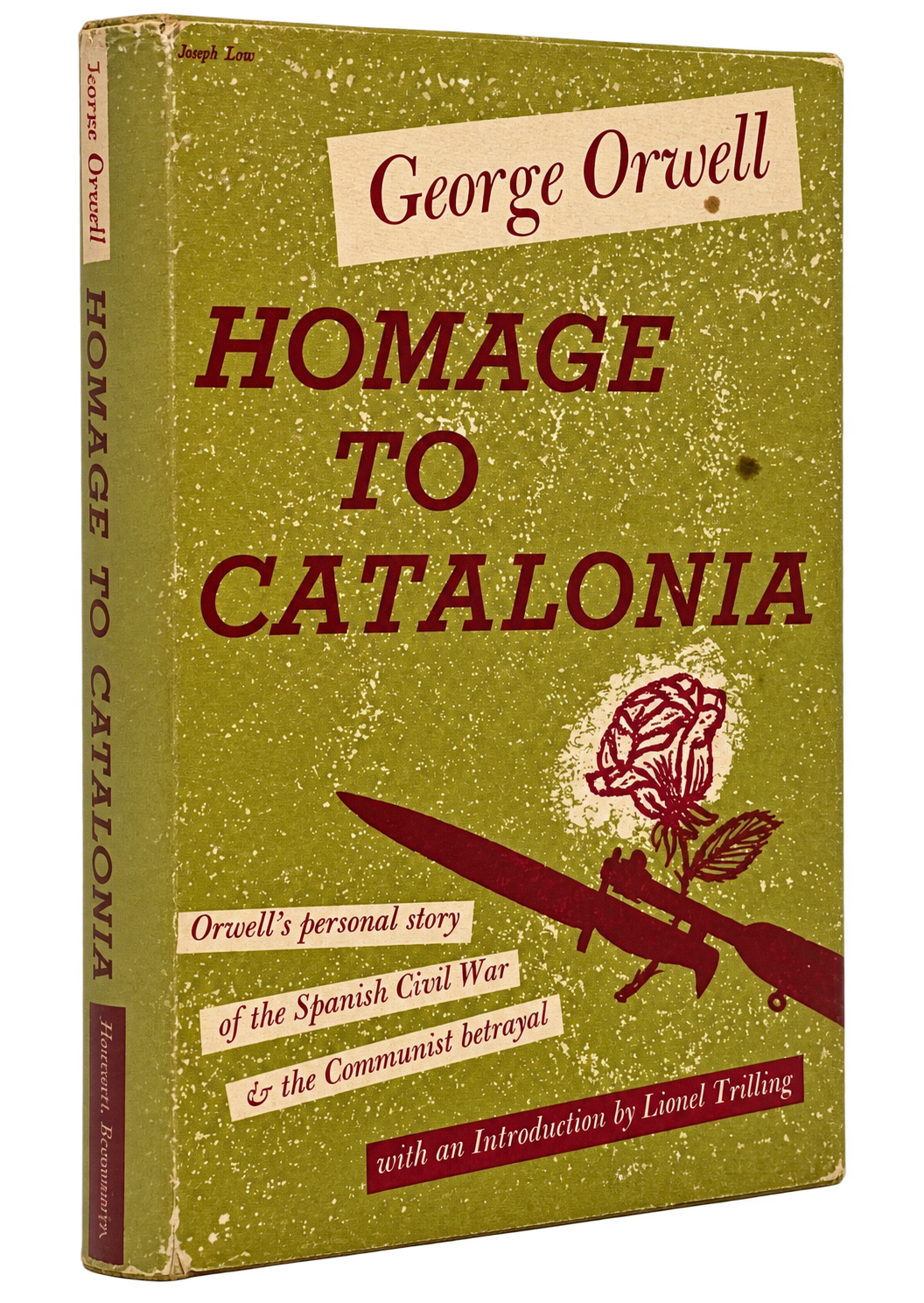
Harcourt, Brace and Company · New York · 1952
First US Edition · First Printing
The Book:
The first American edition, first printing of George Orwell’s Homage to Catalonia, published by Harcourt, Brace in 1952, fourteen years after the British first edition and two years after Orwell’s death. The copyright page explicitly states “First American edition,” with no later-printing statement present. This copy retains its original yellow cloth binding stamped in green and original unclipped $3.50 dust jacket.
Condition:
Near Fine+ in a Very Good original dust jacket. The book is exceptionally bright and square with crisp green lettering, a clean interior, minor offsetting, and light adhesive residue from a removed label on the rear pastedown. The jacket retains excellent color and complete typography with moderate toning, scattered edge chipping, corner losses, and a short closed tear across the spine, and is protected in an archival sleeve.
Story Of The Book
George Orwell went to Spain intending to report on a war. Instead, he found himself fighting in one revolution while watching another betray itself from within.
Orwell joined a militia fighting Franco during the Spanish Civil War and was wounded by a bullet through the throat. But Homage to Catalonia became more than an account of combat. Orwell also witnessed the struggle within the Republican side, as Soviet-backed Communists moved against revolutionary factions—including the POUM militia with which Orwell had served—and political allies became enemies.
The experience transformed his understanding of propaganda and political truth. Orwell remained committed to democratic socialism, but Spain taught him how readily a movement claiming to fight oppression could manipulate facts, suppress inconvenient voices, and reproduce authoritarian methods of its own.
He went to Spain to fight fascism. He came home understanding that no ideology had a monopoly on authoritarianism.
Why It’s In The Collection
Homage to Catalonia belongs at the center of Consigned to Darkness because it records the moment Orwell learned the lesson that would shape his most influential political writing: loyalty to a cause cannot require loyalty to a lie.
Unlike Animal Farm or Nineteen Eighty-Four, this is not allegory or dystopia. Orwell writes as a participant and eyewitness, documenting both the fight against Franco and repression within the anti-fascist coalition itself.
This 1952 first American printing matters because it introduced American readers to that testimony at the beginning of the Cold War, when Orwell’s warnings about propaganda and totalitarianism were becoming central to political debate.
Collection Categories: Anti-Totalitarianism · Anti-Authoritarianism · Witness Literature · Political Dissent · Spanish Civil War · Political History · Literature · Publication-Event Object
———
Authentication Evidence
Title page correctly identifies Homage to Catalonia by George Orwell.
Title page identifies Harcourt, Brace and Company, New York, consistent with the first American edition.
Copyright page records copyright 1952 by Sonia Brownell Orwell.
Copyright page explicitly states “First American edition,” confirming first American edition status.
No subsequent printing or later-impression statement appears in the volume, consistent with first-printing status.
Original yellow publisher’s cloth binding with green lettering and rifle device is present, consistent with documented first American copies.
Original dust jacket is retained.
Dust jacket retains the original unclipped $3.50 publisher’s price on the front flap.
No evidence of book-club manufacture, rebinding, facsimile dust jacket, or replacement components is observed.
Observable bibliographic evidence supports identification as the 1952 Harcourt, Brace first American edition, first printing.
Homage to Catalonia
George Orwell went to Spain intending to report on a war. Instead, he found himself fighting in one revolution while watching another betray itself from within.
Homage to Catalonia preserves Orwell's firsthand account of the Spanish Civil War, documenting not only the struggle against fascism but also the systematic suppression of anti-Stalinist revolutionaries by their supposed allies. Published in the United States in 1952, this true first American edition, first printing introduced American readers to one of Orwell's most personal works and preserves the publication of the book that transformed his understanding of propaganda, political truth, and totalitarian power.
George Orwell
Harcourt, Brace and Company · New York · 1952
First US Edition · First Printing
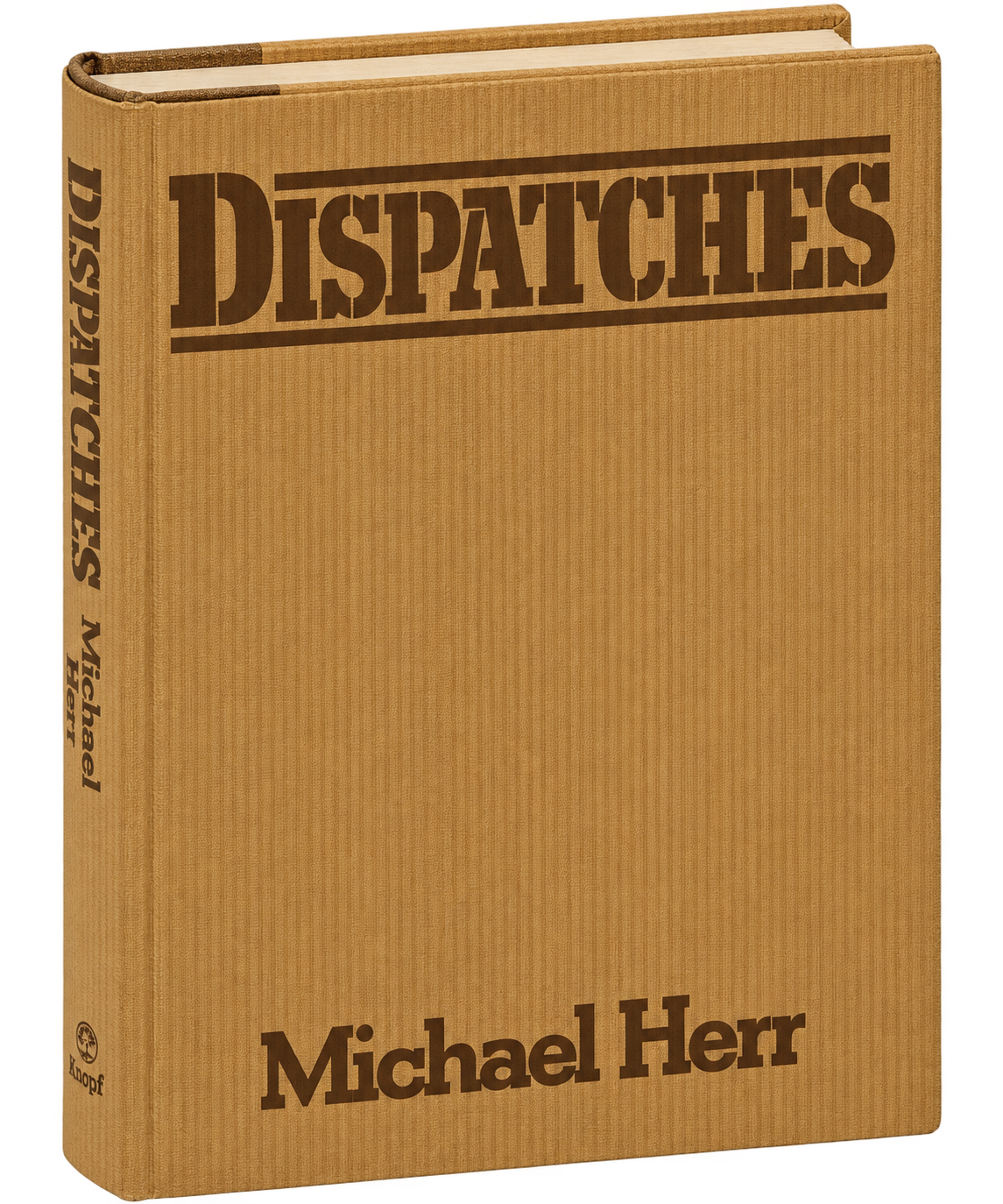
Michael Herr
New York: Alfred A. Knopf, 1977
First Edition · First Printing
The Book:
The true first edition, first printing of Michael Herr’s Dispatches, published by Alfred A. Knopf in 1977. The copyright page explicitly states “First Edition” and carries the original 1968, 1969, 1970, and 1977 copyright notices, with no indication of a later printing. This copy retains the original Knopf quarter brown cloth over beige paper-covered boards and the original first-issue dust jacket. The front flap is price-clipped, preventing direct verification of the original $8.95 price, but the jacket otherwise matches the correct 1977 first-issue design.
Condition:
Near Fine in a Near Fine dust jacket. The book is clean and tightly bound, with bright boards, crisp spine lettering, and no ownership markings, foxing, restoration, or structural defects observed. The original jacket shows light overall toning and minimal wear, with no significant chips or tears. The front flap is price-clipped.
Story Of The Book
Michael Herr rejected the comforting idea that war could be understood through official reports alone.
Dispatches grew out of Herr’s reporting from Vietnam, where he encountered a war that looked very different from the one described in briefings, statistics, and military communiqués.
The conflict he recorded was fragmented, hallucinatory, frightening, absurd, and intensely human.
Rather than writing a conventional military history, Herr reconstructed Vietnam through the language of soldiers, correspondents, helicopters, firefights, exhaustion, drugs, fear, rumor, and memory. The result was not simply reportage. It was an attempt to capture what war actually felt like to the people inside it.
That distinction made Dispatches one of the defining works of modern war journalism.
Portions of Herr’s reporting had appeared earlier in Esquire, Rolling Stone, and New American Review, but the 1977 Knopf edition brought the material together in book form for the first time.
By then, the United States had left Vietnam.
But Herr was not interested in reducing the war to lessons, strategy, or verdicts.
He was interested in memory.
What did the war sound like?
What did it do to perception?
What happened to people when terror became routine?
The book’s answer was deliberately unstable because the experience itself had been unstable.
Official history could explain what units moved where. Herr wanted to preserve what it felt like to be there when everything stopped making sense.
Why It’s In The Collection
Dispatches belongs in Consigned to Darkness because witness can challenge power in ways argument sometimes cannot.
Where America’s Vietnam Policy directly contests the government’s public explanation of the war, Dispatches undermines abstraction by restoring individual experience to the center of the story.
The difference is important.
Governments speak in objectives, casualty figures, operations, and policy. Herr gives the reader fear, confusion, violence, exhaustion, and the psychological fragmentation experienced by the people living inside those policies.
That makes Dispatches one of the collection’s strongest works of witness literature.
It does not argue that official narratives are false in the same way a political tract might. It makes those narratives feel incomplete.
The collection acquired this first edition, first printing because it preserves the first book-form appearance of one of the most influential literary accounts of the Vietnam War and one of the works that helped permanently reshape modern war reporting.
Read beside the collection’s political critiques of Vietnam, Dispatches supplies the human evidence those arguments cannot.
Power can describe a war in statistics. Witness literature asks what those statistics felt like to the people who had to live inside them.
Collection Categories: Witness Literature · Investigative Journalism · War & Conflict · Free Expression · Human Rights · Vietnam War
———
Authentication Evidence
• Title page reads Dispatches by Michael Herr, published by Alfred A. Knopf, New York, 1977, consistent with the first edition.
• Copyright page carries the original 1968, 1969, 1970, and 1977 copyright notices and explicitly states "First Edition," with no indication of later printings, consistent with a true first printing.
• Original Knopf quarter brown cloth over beige paper-covered boards is present and consistent with the publisher's first-issue binding.
• Original first-issue dust jacket is present and matches the correct 1977 design with the bold DISPATCHES typography on the front panel and review text on the rear panel.
• The front flap appears price-clipped, preventing direct verification of the original $8.95 issue price. The clipping affects collector desirability but does not alter the edition or printing of the book itself. Comparable authenticated first printings with price-clipped jackets are recognized in the antiquarian market.
• No evidence of book-club manufacture, later rebinding, remainder marking, ex-library ownership, or facsimile dust jacket is observed in the photographs.
• First edition, first printing characteristics consistent throughout.
Dispatches
Michael Herr
New York · Alfred A. Knopf · 1977
First Edition · First Printing
Michael Herr rejected the comforting illusion that war could be understood through official reports alone.
Drawing upon his experience as a correspondent in Vietnam, Herr reconstructed the conflict through the language, confusion, fear, and psychological fragmentation experienced by those who fought it. Rejecting conventional military history, Dispatches became one of the defining literary responses to the Vietnam War and permanently transformed war reporting by restoring individual experience to the center of historical memory. The first edition preserves one of the twentieth century's greatest works of witness literature.

Philip Deane
Hamish Hamilton Ltd. · London · 1953
First Edition · First Printing · Signed Presentation Copy
The Book:
The First Edition · First Printing of Philip Deane’s Captive in Korea, his firsthand account of approximately thirty-three months as a prisoner of North Korea during the Korean War. Deane, then a young correspondent for the Observer, was wounded and captured in 1950 and endured interrogation, beatings, deprivation, forced marches, illness, and sustained ideological pressure before his release in 1953. 224 pp., with eight leaves of photographic plates. Original burgundy publisher’s cloth retained. This copy is personally inscribed and signed by Deane on the front pastedown: “To Bill and Joan / with my friendship / Philip Deane.”
Condition:
Near Fine. Original burgundy cloth remains exceptionally well preserved, with gilt spine title, author name, rule, and Hamish Hamilton device intact. Only minor superficial handling evidence and slight wear at the extremities observed. Interior remains clean and bright; binding tight and sound. The presentation inscription is clear and intact. An illustrated ex-libris label is also present on the front pastedown. No rebinding or restoration observed. No dust jacket present.
Story Of The Book
Philip Deane went to Korea to report a war. Instead, he became part of it.
Captured by North Korean forces in 1950, Deane spent nearly three years as a prisoner. He was interrogated, beaten, deprived of food and medical care, forced through brutal marches, and subjected to repeated attempts to break prisoners psychologically and politically.
Yet what made Captive in Korea remarkable to contemporary readers was not only what Deane survived, but how he wrote about it.
Deane returned with a journalist’s instinct to observe rather than merely condemn. Contemporary reviewers noted the unusual absence of hatred in an account filled with cruelty. He recorded the behavior of captors and prisoners alike, the machinery of propaganda, and the way coercion works when another power controls nearly every condition of your life.
Published in 1953, almost immediately after his release and the Korean War armistice, the book carried that experience directly into public view.
And this copy carries Deane’s own hand.
The witness who survived the captivity personally signed the record of what happened inside it.
Why It’s In The Collection
Captive in Korea belongs in Consigned to Darkness because authoritarian power becomes clearest when it controls not only what someone may say, but where they may go, what they may eat, what they may believe, and whether they may leave.
Deane’s memoir documents that power from inside captivity. It preserves physical abuse, propaganda, ideological coercion, and political imprisonment—but also the effort to maintain independent judgment when nearly every external freedom has been removed.
The presentation inscription makes this copy especially meaningful. The physical object is directly connected to the person whose testimony it preserves.
Deane was not writing about repression from a distance.
He was writing about what it felt like when repression controlled the room he was standing in.
Collection Categories: Witness Literature · Memoir & Testimony · Investigative Journalism · Anti-Authoritarianism · Anti-Totalitarianism · Political Imprisonment · Political History · War & Conflict · Signed
———
Authentication Evidence
Title page identifies the work as Captive in Korea by Philip Deane.
Title page identifies Hamish Hamilton · London as publisher.
Copyright page explicitly states “First published in Great Britain, 1953 by Hamish Hamilton Ltd.”
Copyright page identifies the publisher’s address as 90 Great Russell Street, London WC1.
Copyright page states that the volume was printed in Great Britain by Ebenezer Baylis and Son, Ltd., Trinity Press, Worcester and London.
Independent British bibliographic records identify the 1953 Hamish Hamilton publication as the original British edition.
Contemporary bibliographic records describe the edition as 224 pages and illustrated, matching this copy.
Institutional cataloging records 224 pages plus eight leaves of plates, consistent with this copy’s physical configuration.
A separate W. W. Norton American edition appeared in 1953 under the title I Was a Captive in Korea, distinguishing that edition from the Hamish Hamilton Captive in Korea.
Original burgundy publisher’s cloth remains present.
Binding retains gilt spine title, author name, rule, and Hamish Hamilton device.
No later-impression or reissue statement is observed.
Front pastedown bears Philip Deane’s handwritten presentation inscription: “To Bill and Joan / with my friendship / Philip Deane.”
Presentation inscription and signature are executed directly in ink on the original pastedown and show no evidence of mechanical reproduction, facsimile application, insertion, or alteration.
An illustrated ex-libris label is affixed to the same pastedown.
The identities of “Bill and Joan” have not been established with sufficient documentary certainty for an association attribution.
No evidence of book-club manufacture, later publisher issue, modern rebinding, facsimile material, or restoration is observed.
Observable physical and bibliographic evidence supports identification as the 1953 First Edition · First Printing · Signed Presentation Copy.
Captive in Korea
Philip Deane went to Korea as a young Observer correspondent expecting to cover a war. Instead, he became part of it.
Captured by North Korean forces in 1950, Deane spent roughly two years in captivity, enduring interrogation, beatings, deprivation, forced marches, illness, and repeated attempts to break the prisoners psychologically. Yet the remarkable quality of the book is precisely what contemporary reviewers noticed: Deane returned from captivity without turning his account into a simple exercise in hatred.
This is testimony written from inside captivity: an eyewitness record of coercion, imprisonment, propaganda, survival, and the struggle to preserve individual judgment when an authoritarian state controlled almost every condition of life.
And this particular copy carries Deane's own hand: a first edition, first printing personally inscribed and signed by the former captive whose experience it records.
Philip Deane
Hamish Hamilton Ltd. · London · 1953
First Edition · First Printing · Signed Presentation Copy
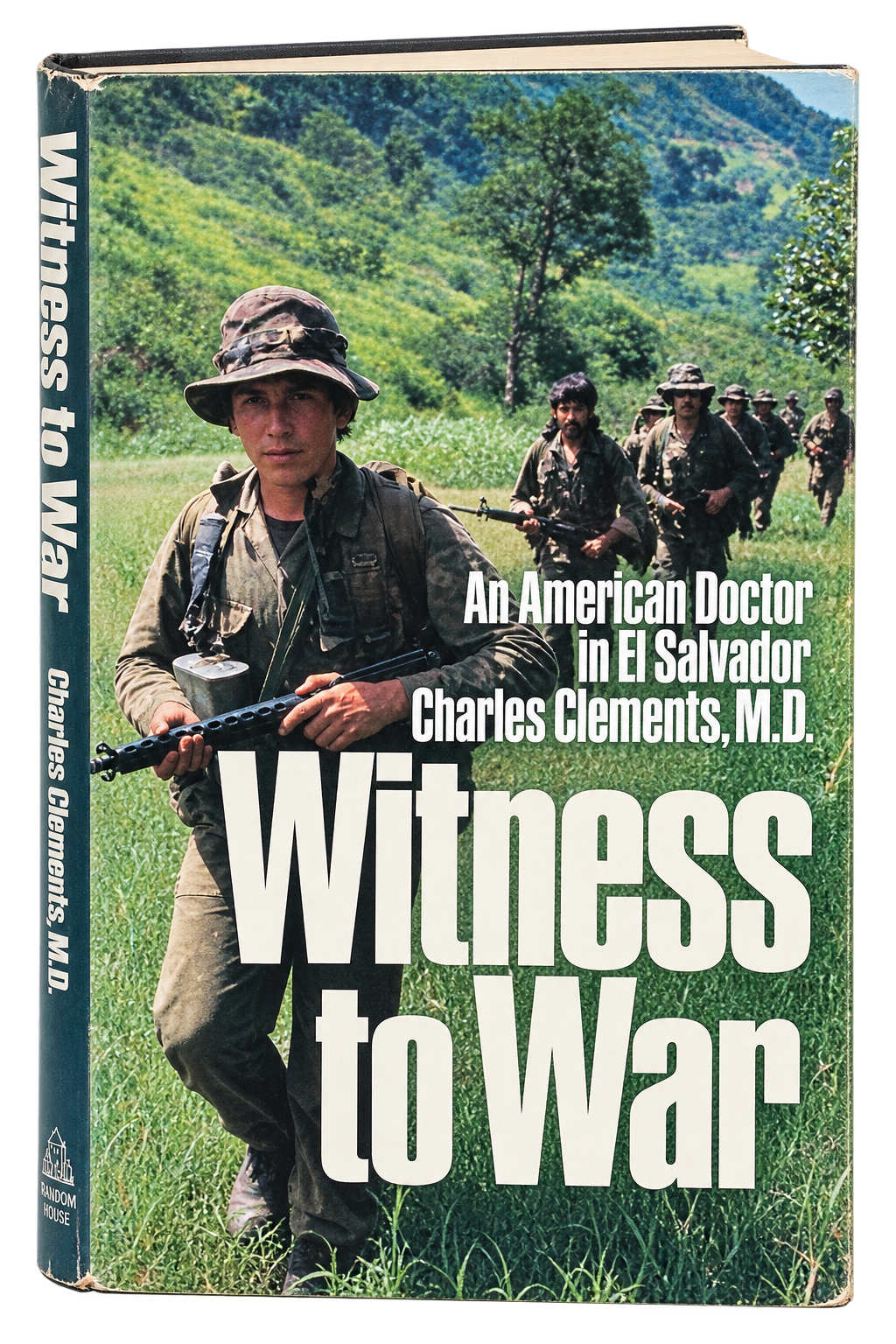
Full Title:Witness to War: An American Doctor in El Salvador
Charles Clements, M.D.
Bantam Books, New York · 1984
First Edition · First Printing · Signed & Inscribed
The Book: First edition, first printing of Charles Clements’s Witness to War: An American Doctor in El Salvador. The copyright page carries the complete printer’s number line FG 0 9 8 7 6 5 4 3 2 1, with the 1 present, confirming first-printing status. Original black cloth spine over gray paper-covered boards in the original unclipped $15.95 first-state dust jacket. This presentation copy is warmly inscribed and signed by Clements to Pat and Herbert Pratt, dated January 16, 1990. No evidence of book-club manufacture, remainder marking, rebinding, ex-library provenance, or facsimile components observed.
Condition: Near Fine book in Near Fine dust jacket. The book remains clean and tight with bright spine lettering and no ownership markings beyond the author’s presentation inscription. The original dust jacket shows only light age toning and minimal handling wear, with no significant tears or losses observed.
Story Of The Book
Charles Clements entered El Salvador as a physician and came to believe that medicine required public witness as much as private care.
Published in 1984, Witness to War brought the Salvadoran Civil War to American readers through the eyes of a doctor treating civilians caught in one of the Cold War’s most violent conflicts. Rather than observing from a distance, Clements wrote from hospital wards, refugee camps, and villages devastated by political violence. His account combined medical testimony with political observation, placing individual suffering at the center of a conflict too often described only through military strategy and geopolitical rivalry.
The book’s significance lies in that immediacy. Clements did not reconstruct the war after it ended; he wrote while the conflict remained unresolved, preserving firsthand testimony from a physician whose humanitarian work had placed him inside its consequences.
Why It’s In The Collection
Witness to War belongs in the collection because it demonstrates how firsthand humanitarian testimony can become a form of resistance against indifference.
Clements’s account restores individual lives to the center of political violence. Rather than allowing the Salvadoran Civil War to remain an abstraction of policy, ideology, or Cold War strategy, he documented what that conflict did to civilians, patients, families, and communities. In doing so, he transformed medical observation into moral testimony.
This particular copy carries an additional significance. Clements’s signed presentation inscription references justice, peace, and continued humanitarian commitment, suggesting a personal connection to recipients active in the broader human-rights or solidarity community. The inscription extends the book’s meaning beyond authorship itself: the witness is not merely recorded, but passed from one person to another.
As a first edition, first printing issued while the conflict itself continued, the volume is therefore both a publication-event object and a participant narrative—preserving the testimony of someone who treated the human consequences of political violence and chose to make those consequences public.
Collection Categories: Witness Literature · Human Rights · Political Conflict · Medical Witness · Anti-Authoritarianism · Free Expression
———
Authentication Evidence
• Title page identifies Bantam Books, New York, as the publisher, consistent with the original 1984 publication.
• Copyright page bears the original 1984 copyright by Charles Clements with no indication of a later edition, revised edition, or reissue.
• Publication statement notes simultaneous publication in the United States and Canada, consistent with the original first edition.
• Copyright page contains the complete printer's number line:
• FG 0 9 8 7 6 5 4 3 2 1
• with the 1 present, confirming first-printing status.
• Original unclipped $15.95 dust jacket is present and consistent with the first issue.
• No evidence of book club manufacture, later printing statements, remainder marks, rebinding, ex-library provenance, or facsimile dust jacket observed.
• The observed bibliographic evidence is consistent with a true first edition, first printing.
Witness to War
Full Title: Witness to War: An American Doctor in El Salvador
Charles Clements, M.D.
Bantam Books · New York · 1984
First Edition · First Printing · Signed & Inscribed
For decades, some of the most explicit passages in one of the foundational books of modern sexology were deliberately kept beyond the reach of ordinary readers.
First published in 1886, Richard von Krafft-Ebing's Psychopathia Sexualis attempted to classify human sexuality through medicine and law, giving lasting currency to concepts including sadism, masochism, fetishism, and homosexuality. Its influence was enormous—and deeply double-edged. Krafft-Ebing helped make same-sex desire an object of sustained scientific study while simultaneously defining it through a medical language of pathology and degeneration that would echo through psychiatry for generations.
Krafft-Ebing had deliberately placed sexually explicit material in Latin partly to keep it from lay readers. This 1965 edition finally translated the complete twelfth German edition into English, removing a linguistic barrier that had survived through decades of English publication.
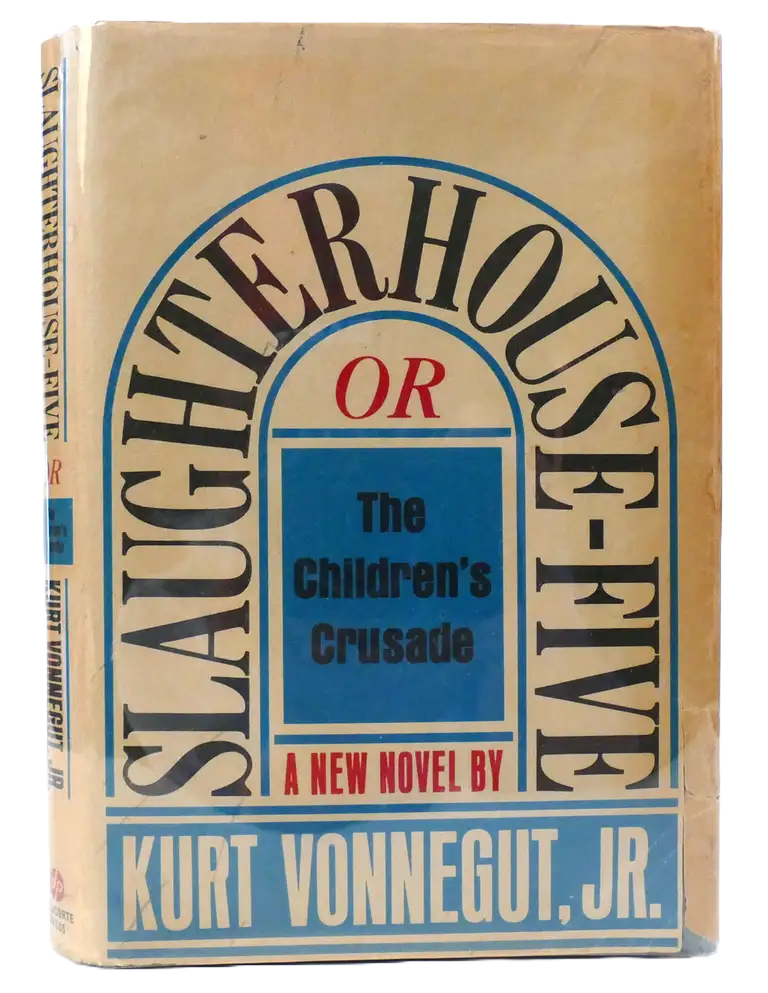
Full Title: Slaughterhouse-Five, or The Children’s Crusade: A Duty-Dance with Death
Kurt Vonnegut, Jr.
Delacorte Press / Seymour Lawrence · New York · 1969
First Edition · Fifth Printing · June 1969
The Book:
An exceptionally well-preserved fifth printing from June 1969, still within the first edition and issued only months after the original publication of Kurt Vonnegut’s Slaughterhouse-Five. Drawing directly upon Vonnegut’s experience as an American prisoner of war who survived the Allied firebombing of Dresden, the novel fused autobiography, fiction, science fiction, satire, and historical witness into one of the defining anti-war works of the twentieth century. Octavo; 186 pp. This copy retains its original blue publisher’s cloth, gilt facsimile Vonnegut signature on the front board, black endpapers, and original unclipped $5.95 Paul Bacon dust jacket, with a rear-panel photograph of Vonnegut by Bossi.
Condition:
Near Fine+ book in a Near Fine original dust jacket. The blue cloth remains bright, with the gilt facsimile signature and gilt-and-red spine decoration well preserved. Binding is square and sound and the interior exceptionally clean, with no ownership markings, foxing, or restoration observed. The original unclipped jacket remains structurally complete and highly attractive, showing only mild age toning, light rubbing, and trivial edge wear.
Story Of The Book
Kurt Vonnegut survived Dresden in 1945. It took him more than twenty years to find a way to write about it.
As an American prisoner of war, Vonnegut was being held in Dresden when Allied bombers devastated the city in February 1945. He and other prisoners survived underground in the meat locker of the slaughterhouse that gave the novel its name. When they emerged, they encountered a destroyed city and were put to work recovering bodies from the ruins.
A conventional war novel could not contain what Vonnegut wanted to say about that experience. So Slaughterhouse-Five refuses conventional time itself. Billy Pilgrim becomes “unstuck in time,” moving helplessly among childhood, war, Dresden, suburban America, death, and the alien world of Tralfamadore. The fragmentation turns trauma into form: Billy cannot leave the past behind because, for him, the past never actually ends.
Published in March 1969 as the Vietnam War divided the United States, the novel arrived while another generation was confronting the language of military necessity, civilian casualties, patriotism, and obedience. Vonnegut offered no heroic counter-myth. His soldiers are frightened, confused, young, absurd, and largely powerless before forces they cannot control.
That is why the subtitle matters. This is a children’s crusade. The mythology of glorious warfare collapses when the people sent to fight it are seen not as warriors in an epic, but as human beings caught inside machinery larger than themselves.
Vonnegut survived the bombing. The novel records what survival could not make comprehensible.
Why It’s In The Collection
Slaughterhouse-Five belongs in Consigned to Darkness because witness does not always look like testimony. Sometimes memory becomes so difficult that fiction is the only form capable of carrying it.
Vonnegut was there. Dresden is not historical scenery borrowed for a novel; it is an event he survived and spent decades trying to understand. By refusing chronology, heroism, and conventional realism, he found a literary form capable of expressing something ordinary historical narrative could not: the persistence of traumatic memory and the absurdity of industrialized killing.
Published during the Vietnam War, the novel also became a major literary expression of dissent against the narratives that make warfare appear orderly, heroic, or inevitable. Its later history extended that confrontation into another arena. Slaughterhouse-Five has repeatedly been challenged and removed from American schools and libraries, making arguments over who should be permitted to read Vonnegut’s account of war part of the history of the book itself.
This copy is a fifth printing rather than the scarce first. But June 1969 places it inside the novel’s original publication moment, only months after its March appearance, while its anti-war argument was entering American culture during the Vietnam War itself. Its exceptional condition and original jacket preserve that moment remarkably well.
Vonnegut wrote about what happens when human beings become expendable. The book’s later history asks a related question: who gets to decide whether the next generation is allowed to read about it?
Collection Categories: Literature · Witness Literature · Anti-Authoritarianism · Political Dissent · Free Expression · Censorship
———
Authentication Evidence
Title page identifies the work as Slaughterhouse-Five, or The Children’s Crusade: A Duty-Dance with Death by Kurt Vonnegut, Jr.
Publisher is correctly identified as A Seymour Lawrence Book / Delacorte Press.
Copyright page carries the original 1969 copyright.
Copyright page explicitly states “Fifth printing, June 1969,” directly establishing the printing and date.
The volume therefore belongs to the original 1969 first edition but is not represented as a first printing.
Volume collates to 186 pages, consistent with documented 1969 Delacorte copies.
Original blue/turquoise publisher’s cloth remains present.
Front board carries the original gilt facsimile signature of Kurt Vonnegut, a documented feature of the 1969 Delacorte binding.
Spine retains the original gilt-and-red titling and decoration, consistent with documented early Delacorte copies.
Original black endpapers remain present.
Original dust jacket designed by Paul Bacon remains present.
Rear jacket panel carries the original author photograph credited to Bossi.
Original dust jacket is unclipped and retains the $5.95 publisher’s price.
Jacket retains publisher’s code 8021 on the front flap and 0369 on the rear flap, consistent with the original 1969 issue jacket.
Independently documented June 1969 fifth-printing copies exhibit the same binding, gilt-and-red spine treatment, gilt facsimile front-board signature, $5.95 price, and 8021/0369 jacket codes observed on this copy.
Publisher imprint, binding, typography, jacket configuration, and production characteristics are internally consistent with documented early 1969 Delacorte trade copies.
No evidence of book-club manufacture, remainder marking, rebinding, facsimile dust jacket, or replacement components is observed.
Observable bibliographic evidence supports identification as the 1969 First Edition · Fifth Printing (June 1969), in the original unclipped $5.95 dust jacket.
Slaughterhouse-Five
Full Title: Slaughterhouse-Five, or The Children’s Crusade: A Duty-Dance with Death
Kurt Vonnegut, Jr.
Delacorte Press / Seymour Lawrence · New York · 1969
First Edition · Fifth Printing · June 1969
Some books condemn war. Slaughterhouse-Five questions whether war has made nonsense of time, memory, and humanity itself.
Drawing upon his survival of the firebombing of Dresden as a prisoner of war, Kurt Vonnegut transformed one of history's greatest civilian catastrophes into a novel that rejected heroism, certainty, and conventional storytelling. Published during the Vietnam War, it became one of the twentieth century's defining anti-war works while provoking repeated censorship efforts across the United States. This early first-edition printing preserves the publication of a novel that permanently altered the language through which modern literature confronts violence and memory.
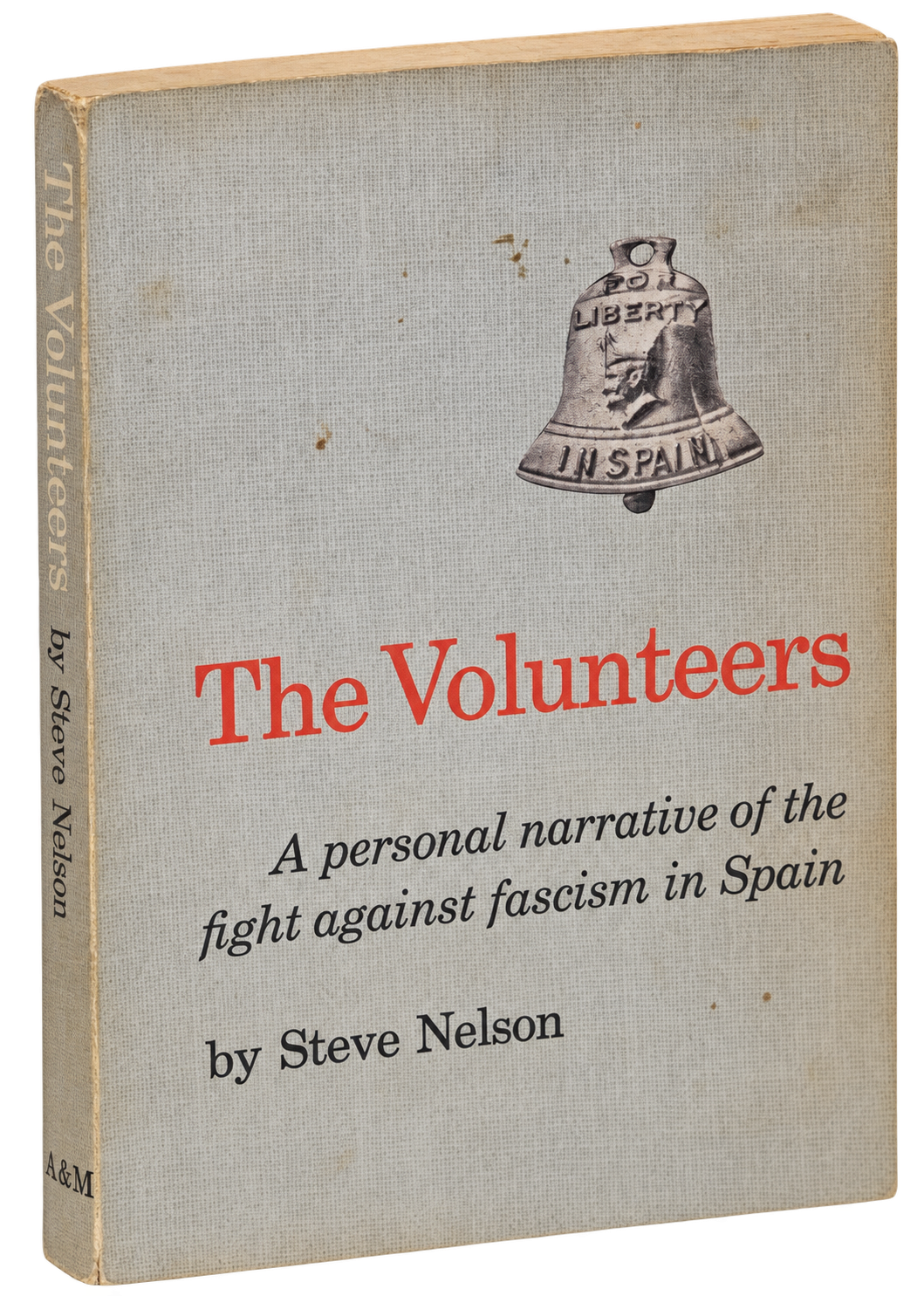
Full Title: The Volunteers: A Personal Narrative of the Fight Against Fascism in Spain
Steve Nelson
Masses & Mainstream · New York · 1953
First Edition · First Printing · Signed by Steve Nelson
The Book:
The first edition, first printing of Steve Nelson’s firsthand account of his service with the Abraham Lincoln Brigade during the Spanish Civil War, published by Masses & Mainstream in 1953. This copy retains its original publisher’s cloth binding and original unclipped $2.50 dust jacket and is signed by Nelson on the front free endpaper. The volume comprises 192 pages.
Condition:
Very Good+ in a Good original dust jacket. The book remains clean, square, and firmly bound with bright spine lettering and a clean interior. The jacket is complete but shows moderate edge wear, chipping, and paper loss, most notably along the rear panel and spine extremities, and is protected in a removable archival sleeve.
Story Of The Book
Steve Nelson went to Spain to fight fascism. Years later, he wrote about that fight while the American government was trying to imprison him for sedition.
Nelson was among the Americans who joined the International Brigades to defend the Spanish Republic against Franco’s rebellion and its German and Italian allies. The Volunteers recounts that war from inside it: the combat, comradeship, casualties, and convictions of Americans who believed Spain was part of a larger struggle against fascism.
But the circumstances of publication give the book a second history. Nelson had been convicted under Pennsylvania’s Sedition Act, fined $10,000, and sentenced to twenty years in prison. While free on bail fighting that conviction, he wrote about his experiences in Spain. Masses & Mainstream published the book in 1953 as Nelson faced further prosecution under the federal Smith Act, even advertising a special autographed edition whose proceeds helped support his legal defense.
Three years later, Nelson’s case reached the Supreme Court. In Pennsylvania v. Nelson (1956), the Court held that federal law preempted Pennsylvania’s prosecution of sedition against the United States.
The anti-fascist volunteer had become the defendant in a landmark American case about the government's power to punish political subversion.
Why It’s In The Collection
The Volunteers belongs in Consigned to Darkness as both witness literature and an unusually direct publication-event object.
Nelson wrote as a participant in the Spanish Civil War, but this 1953 first printing also captures him as a political dissident confronting state power at home. Whatever one thinks of Nelson’s communist politics, the relationship between object and event is unusually tangible: a man already imprisoned for his political activity published his account of fighting fascism while challenging the sedition conviction that threatened to return him to prison.
This signed copy therefore connects two struggles over political power separated by fifteen years: armed resistance to European fascism and an American Supreme Court battle over the reach of sedition law.
Collection Categories: Witness Literature · Anti-Authoritarianism · Political Movements · War & Conflict · Political Dissent · Free Expression · Legal History · Publication-Event Object
———
Authentication Evidence
Title page identifies The Volunteers: A Personal Narrative of the Fight Against Fascism in Spain by Steve Nelson, published by Masses & Mainstream.
Publication information corresponds to the documented 1953 New York edition.
Collation of 192 pages is consistent with documented copies of the 1953 edition.
Original publisher’s cloth binding is present.
Original dust jacket is retained.
Dust jacket retains the publisher’s printed price of $2.50, matching the price advertised contemporaneously for the cloth edition.
Publisher advertisements inside the jacket correspond to contemporary Masses & Mainstream publications by W. E. B. Du Bois, Pablo Neruda, Herbert Aptheker, and others.
No later-printing statement, revised-edition statement, or book-club indicators are observed.
Observable bibliographic characteristics support identification as the first edition, first printing.
Front free endpaper bears a signature reading “Steve Nelson,” consistent with an author-signed copy; formal third-party autograph authentication has not been performed.
The Volunteers
Full Title: The Volunteers: A Personal Narrative of the Fight Against Fascism in Spain
Steve Nelson
Masses & Mainstream · New York · 1953
First Edition · First Printing · Signed by Steve Nelson
The Spanish Civil War became the first battlefield of the twentieth century's global struggle against fascism, drawing thousands of volunteers from around the world who believed Spain's fate would determine Europe's future.
Published in 1953, The Volunteers is Steve Nelson's firsthand account of serving with the Abraham Lincoln Brigade during the Spanish Civil War. Writing not as a historian but as a participant, Nelson recounts the experiences of American volunteers who fought to defend the Spanish Republic against Franco's military rebellion, supported by Hitler and Mussolini. Issued during the early Cold War, when many veterans of the Lincoln Brigade faced political persecution in the United States, the book preserves both the memory of anti-fascist resistance and the contested legacy of those who volunteered to fight before the Second World War began.
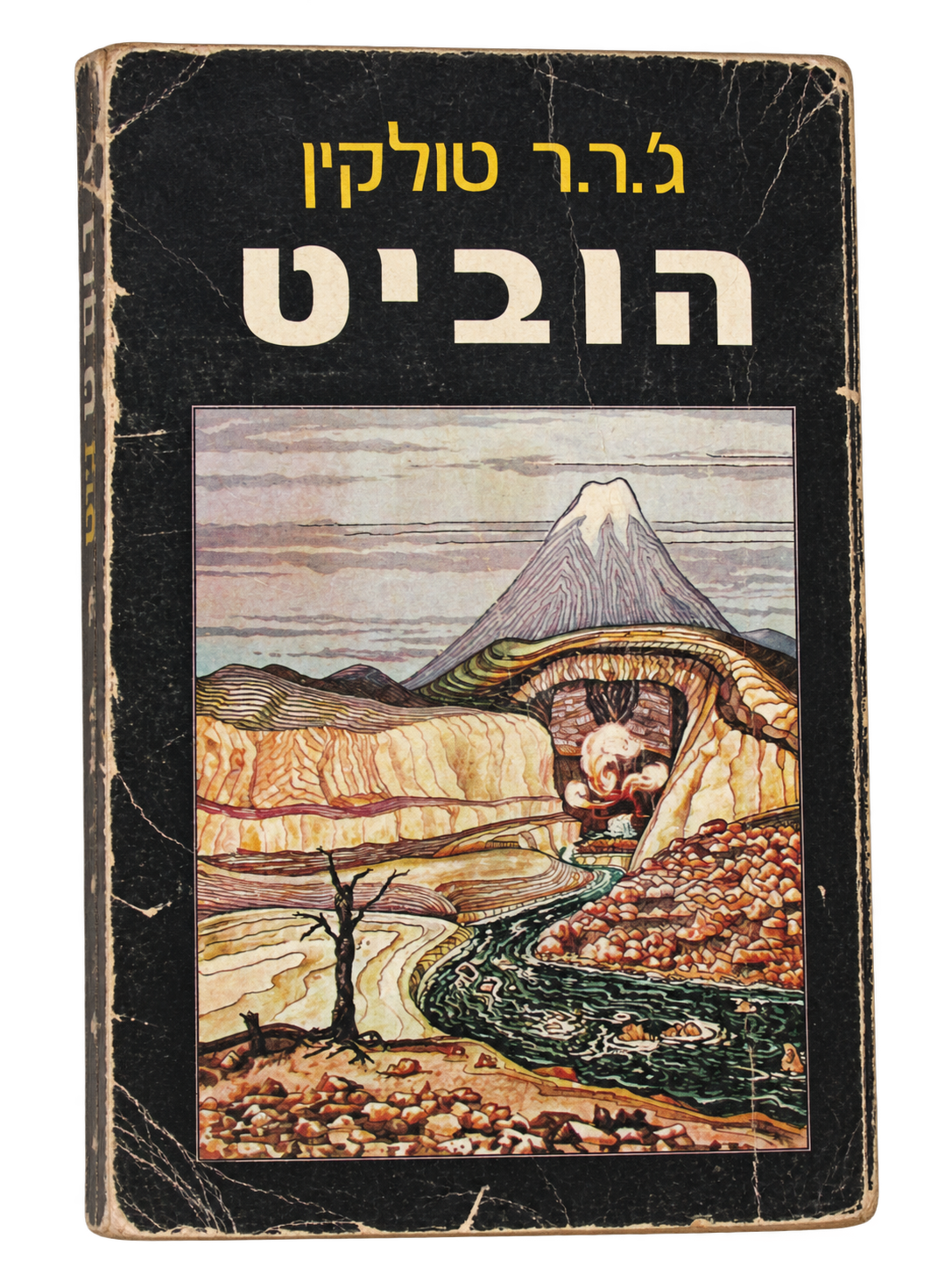
Full Title: Hobit (הוביט) — The Israeli POWs’ Hebrew Translation
J. R. R. Tolkien
Translated by Israeli Air Force POWs and their comrades
Zmora, Bitan, Modan Publishers · Israel · 1977
First Edition of the Israeli POWs’ Hebrew Translation · First Printing
The Book:
The First Edition · First Printing of the Israeli POWs’ Hebrew translation of J. R. R. Tolkien’s The Hobbit, created collaboratively by prisoners held at Abbassia Prison in Cairo between 1970 and 1973. Four captured Israeli pilots—Rami Harpaz, Menachem Eini, Yitzhak Pir, and Avinoam Kaldas—served as the principal translators, with fellow prisoners contributing to difficult passages and songs. Their completed translation filled seven handwritten notebooks and was brought home after their release. In 1977, with support from the Israeli Air Force, it was published as the celebrated “Pilots’ Translation.” 242 pp. Original black pictorial wrappers with Tolkien artwork retained.
Condition:
Very Good. Original black pictorial wrappers remain complete, with widespread but predominantly superficial rubbing and scuffing, several vertical and diagonal creases, moderate edge and corner wear, and localized loss to the black printed surface at the extremities. Spine remains intact and fully legible; binding is sound. Interior is clean and complete with moderate uniform age toning and no significant ownership markings observed.
Story Of The Book
They didn't know if they would ever make it back home, so they translated a book about going home.
Ten Israeli prisoners of war spent years together in Cairo’s Abbassia Prison after being captured during the War of Attrition. After months of interrogation, solitary confinement, and isolation, they were eventually placed together and faced a captivity with no clear end in sight.
Then an English copy of J. R. R. Tolkien’s The Hobbit reached the prisoners through the Red Cross.
Several of the men could not read English well enough to share in the escape the book offered. So four of the captured pilots—Rami Harpaz, Menachem Eini, Yitzhak Pir, and Avinoam Kaldas—began translating it for them.
For roughly four months, the prisoners read aloud, translated, debated words, edited one another, and eventually filled seven handwritten notebooks with Bilbo’s journey. Translation became part of the communal life they built inside captivity.
The men returned to Israel in 1973 carrying the battered English book and their handwritten translation. Four years later, their version was published.
Men who could not leave their prison had found a way for everyone in the cell to leave with Bilbo for a few hours.
Why It’s In The Collection
Hobit belongs in Consigned to Darkness because sometimes a book does not merely bear witness to captivity. Sometimes a book helps people survive it.
The prisoners did not translate Tolkien for publication, recognition, or literary prestige. They translated it because some of their friends could not read the English book that had become a source of escape. What began as an act of inclusion became months of shared intellectual work under conditions designed to strip prisoners of control over their lives.
Then something extraordinary happened: the private object they created to endure captivity became a public book.
This 1977 first printing preserves that transformation—from one English book entering a prison, to seven handwritten Hebrew notebooks leaving it, to a published edition that allowed the prisoners’ act of mutual aid to outlive their captivity.
They translated a story about getting home. Then they brought their translation home with them.
Collection Categories: Publication-Event Object · Witness Literature · Political Imprisonment · War & Conflict · Human Rights · Political History · Literature
———
Authentication Evidence
Hebrew title page identifies the work as הוביט (Hobit) by J. R. R. Tolkien.
Title-page subtitle identifies the work as translated collaboratively by Israeli Air Force pilots and their comrades while imprisoned at Abbassia Prison in Cairo, 1970–1973.
Copyright page gives the Hebrew publication year 1977 / תשל״ז and identifies Zmora, Bitan, Modan as publisher.
Copyright page explicitly states in English: “Hebrew Rights by Zmora, Bitan, Modan—Publishers.”
Copyright page explicitly states “Printed in Israel, 1977.”
Copyright page explicitly states “Translated into Hebrew by the P.O.W. of the Israeli Air-Force Pilots and their comrades in Abbassya Prison, Cairo, 1970–1973.”
Copyright page records the underlying Tolkien copyright to George Allen & Unwin Ltd., London.
Original publisher’s black pictorial wrappers remain present.
Front wrapper retains yellow author lettering, large white Hebrew title, and Tolkien artwork.
Spine retains the Hebrew author and title together with the Zmora-Bitan-Modan publisher’s device and imprint.
Rear wrapper identifies the volume as a special edition translated by Israeli Air Force pilots and their comrades during Egyptian captivity at Abbassia Prison between 1970 and 1973.
Contents page records seventeen chapters extending through page 235.
Volume concludes on page 242, matching independent bibliographic descriptions of the 1977 Pilots’ Translation.
Independent Israeli bibliographic records identify the publisher as Zmora-Bitan/Modan, publication year as 1977, format as softcover, and translation as the collaborative work of Israeli Air Force POWs and their comrades.
The National Library of Israel documents that the translation was completed during captivity, preserved in seven notebooks, and subsequently published by Zmora Bitan in 1977.
Independent bibliographic evidence identifies the 1977 publication as the first published edition of the Pilots’ Translation.
This edition is not claimed as the first Hebrew translation of The Hobbit; a separate Hebrew translation by Moshe Hana’ami appeared in 1976.
The 1977 volume therefore represents the first edition of the independently created Israeli POWs’ Hebrew translation.
Copyright page carries a single 1977 publication statement with no indication of a subsequent impression.
Wrapper, pagination, imprint, and translation statement correspond with independently documented copies of the original 1977 issue.
No later-printing statement is present.
No evidence of facsimile manufacture, later publisher issue, replacement wrappers, or rebinding is observed.
Observable physical and bibliographic evidence supports identification as the 1977 First Edition of the Israeli POWs’ Hebrew Translation · First Printing.
Hobit (Hebrew)
J. R. R. Tolkien
Translated by Israeli Air Force POWs and their comrades
Zmora, Bitan, Modan Publishers · Israel · 1977
First Edition of the Israeli POWs’ Hebrew Translation · First Printing
Full Title: Hobit (הוביט) — The Israeli POWs’ Hebrew Translation
They did not know when they were going home. So they translated a book about going home.
Ten Israeli prisoners of war spent years together in Cairo’s Abbassia Prison after capture during the War of Attrition. Following months of interrogation, solitary confinement, and isolation, they were eventually placed together in a single cell and faced an indefinite captivity with no clear end in sight. When an English copy of J. R. R. Tolkien’s The Hobbit reached one of the prisoners through the Red Cross, several of the men could not read it well enough to share in the escape it offered. Four of the captured pilots — Rami Harpaz, Menachem Eini, Yitzhak Pir, and Avinoam Kaldas — began translating it for them. Other prisoners joined in, especially on poems and difficult passages.
For four months they worked day after day, sometimes for hours at a time, reading aloud, translating, arguing over words, editing one another, and turning Tolkien’s journey into seven handwritten Hebrew notebooks. The work gave structure to captivity and helped keep the group together; Yitzhak Pir later recalled that they chose not to translate The Lord of the Rings because continuing would have divided the prisoners into translators and readers and threatened that unity.
They were released only after the Yom Kippur War in 1973 and returned to Israel carrying the worn English book and the seven handwritten Hebrew notebooks. Four years later, the Israeli Air Force financed publication of their translation.
This book is not important because it is another edition of The Hobbit. It is important because men trapped far from home created a way for everyone in the cell to leave with Bilbo for a few hours — and eventually carried that shared escape with themselves as part of their own journey back home.
Few revolutionary documents were intended less for publication than Che Guevara's Bolivian diary.
Written as a private operational record during his final guerrilla campaign and published only after his death, the diary transformed a confidential field journal into one of the twentieth century's most influential political documents. It preserves Guevara's final campaign not through later interpretation but through his own daily observations, recording both revolutionary conviction and ultimate failure in real time. The volume stands among the most significant firsthand documents of modern revolutionary history.
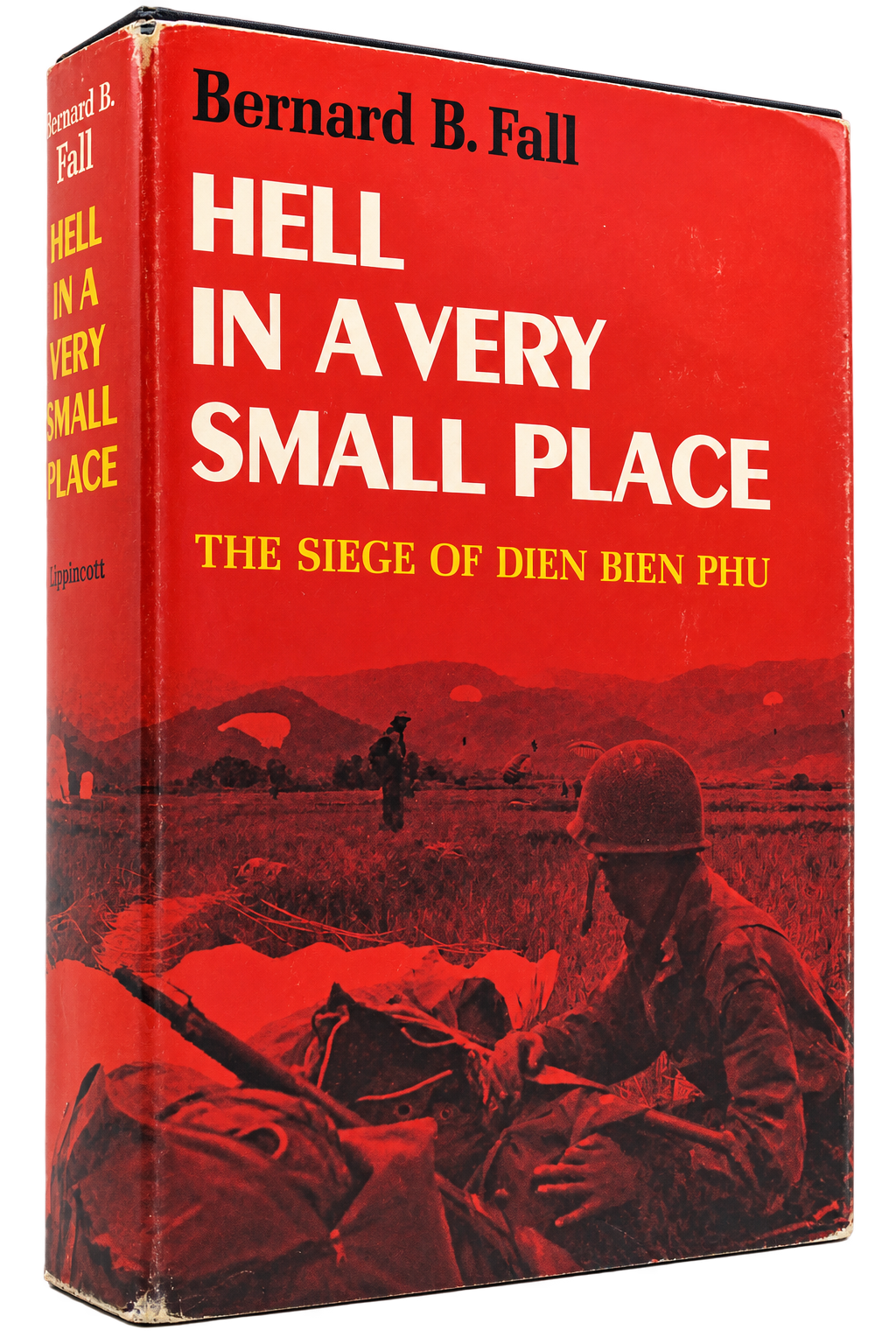
Full Title:Hell in a Very Small Place: The Siege of Dien Bien Phu
Bernard B. Fall
Philadelphia and New York: J. B. Lippincott Company, 1967
First Edition · First Printing
The Book:
The true first edition, first printing of Bernard B. Fall’s landmark history of the 1954 Battle of Dien Bien Phu. Published by J. B. Lippincott in 1967, the volume retains its original black publisher’s cloth with gilt cannon device and red spine lettering, as well as the original unclipped first-state dust jacket priced at $8.95. Fall’s reconstruction became one of the defining accounts of the battle that ended French colonial rule in Indochina and helped set the stage for the conflict that followed in Vietnam.
Condition:
Near Fine in a Good+ dust jacket. The book itself is exceptionally well preserved, with a tight binding, clean interior, bright lettering, and no ownership markings. The original jacket remains substantially complete but shows moderate rubbing, edge wear, chipping concentrated around the spine, and general spine wear. It is protected in archival polyester.
Story Of The Book
An empire went into a valley believing it could win a battle. It came out having lost Indochina.
In 1954, French forces established a fortified position at Dien Bien Phu in northwestern Vietnam, intending to draw the Viet Minh into a decisive confrontation. Instead, the position became a trap. After a prolonged siege, the French garrison collapsed, producing a military defeat that accelerated the end of French colonial rule in Indochina and transformed the political future of Southeast Asia.
Bernard Fall understood that Dien Bien Phu was more than a famous battle. It was a demonstration of what could happen when a colonial power misunderstood both its enemy and the political conditions of the war it was fighting.
Hell in a Very Small Place reconstructed that catastrophe in extraordinary detail. Fall combined military analysis, documentary evidence, firsthand observation, and deep knowledge of Indochina to explain not simply how the French lost, but how a seemingly localized battle became part of the collapse of an empire. The inventory identifies the book as the definitive contemporary history of Dien Bien Phu and one of the foundational works of modern military history.
The timing gives this edition another layer of significance. It appeared in 1967, when the United States was already deeply engaged in its own war in Vietnam.
Readers encountering Fall’s account for the first time were therefore not studying a remote colonial disaster.
They were reading about one Western power’s defeat in Vietnam while another Western power was fighting there.
Why It’s In The Collection
Hell in a Very Small Place belongs in Consigned to Darkness because the history of power is also the history of what happens when power encounters people determined to resist it.
Dien Bien Phu was simultaneously a military battle, an anti-colonial struggle, and a turning point in the collapse of European imperial authority in Southeast Asia. Fall’s book preserves the consequences of that collision without reducing it to a simple story of heroes and villains. It documents armies, strategy, political miscalculation, colonial authority, revolutionary resistance, and the enormous human cost produced when those forces converged.
The collection sought this particular copy as the true first edition, first printing with its original first-state jacket because it preserves the original publication of one of the essential works through which English-speaking readers came to understand Dien Bien Phu. The acquisition specifically strengthens the collection’s documentation of anti-colonial struggle, collapsing empires, and the historical record of twentieth-century war.
And because Fall’s book appeared while another war in Vietnam was escalating, it preserves something more unsettling than hindsight:
a warning from one failed war arriving while the next one was already underway.
Collection Categories: Witness Literature · War & Conflict · Anti-Colonialism · Political History · Cold War · Vietnam War · Publication-Event Object
———
Authentication Evidence
• Title page reads J. B. Lippincott Company, Philadelphia / New York, 1967, consistent with the true first American edition.
• Copyright page bears the 1966 copyright and explicitly states "First Edition," establishing first-edition status.
• No later printing statements, number lines, or subsequent edition designations are present, consistent with Lippincott's first-printing practice of the period.
• Original unclipped dust jacket retains the $8.95 price, consistent with the first-state jacket.
• Original publisher's black cloth binding with gilt cannon emblem and red spine lettering matches known first-issue copies.
• No evidence of book club manufacture, ex-library provenance, rebinding, or facsimile dust jacket observed.
• The observed bibliographic evidence is consistent with a true first edition, first printing.
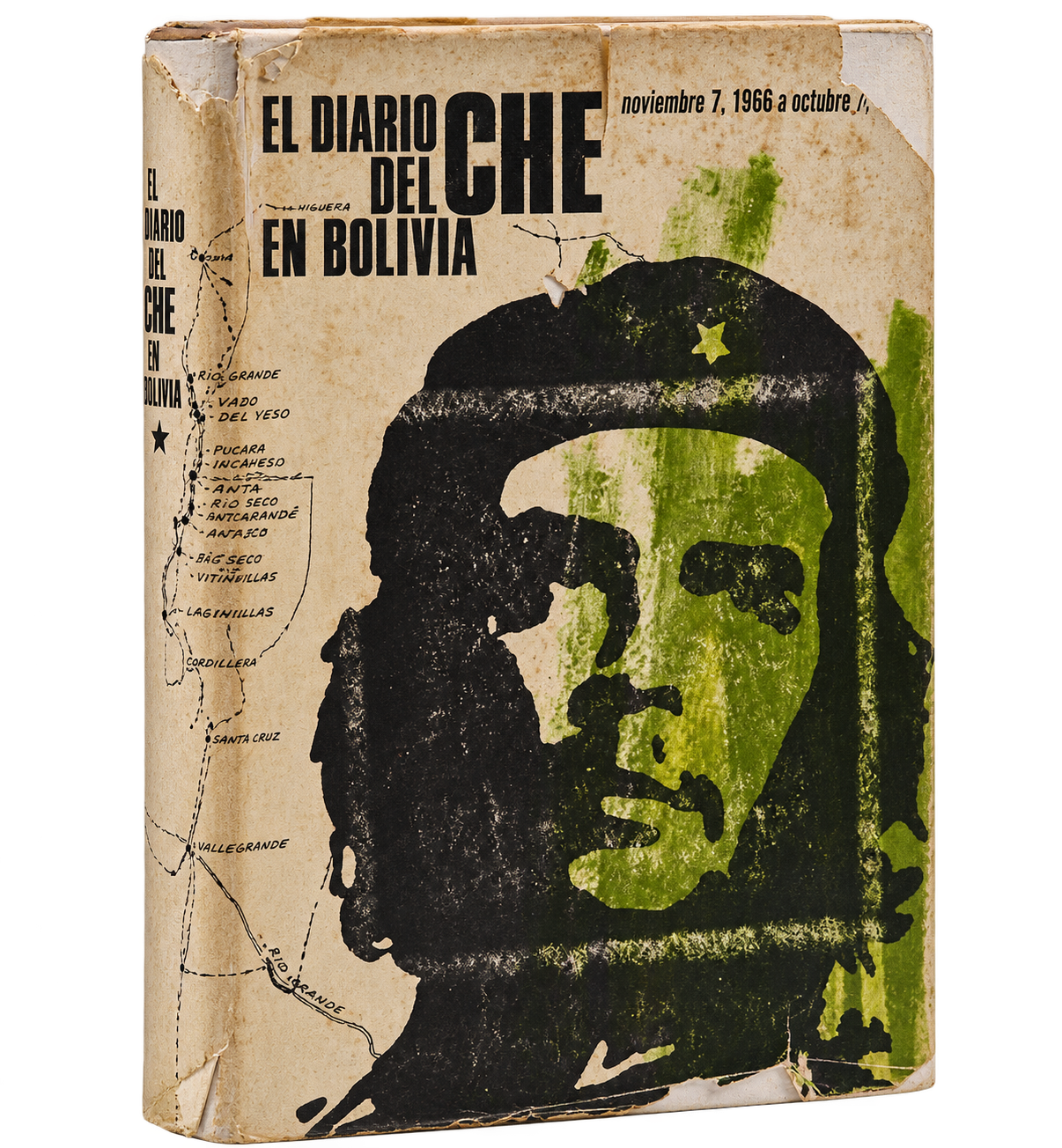
Full Title:El Diario del Che en Bolivia: Noviembre 7, 1966 a Octubre 7, 1967
Ernesto “Che” Guevara
Havana: Instituto del Libro, 1968
First Edition · First Printing
The Book:
The first Cuban edition, first printing of Che Guevara’s El Diario del Che en Bolivia, published in Havana by the Instituto del Libro in 1968, the Cuban government’s designated “Año del Guerrillero Heroico.” The volume reproduces Guevara’s private operational diary from his final guerrilla campaign in Bolivia, covering November 7, 1966 through October 7, 1967, with an introduction by Fidel Castro. This copy retains its original hard paper wrappers and original illustrated dust jacket. The first Cuban printing comprised 250,000 copies and was issued on June 26, 1968, less than nine months after Guevara’s death. This copy lacks the folding map originally issued loose at the front but is otherwise textually complete, with xxix, 346 pages and seven leaves of photographic plates.
Condition:
Very Good+ in a Very Good dust jacket. The original wrappers remain complete with moderate handling wear, edge rubbing, corner wear, and age toning consistent with use. The illustrated dust jacket shows edge wear and light toning but remains complete and presents attractively. The binding is sound and the interior complete and clean. The folding map originally issued loose at the front is absent.
Story Of The Book
Few revolutionary documents were intended less for publication than Che Guevara’s Bolivian diary.
This was not a manifesto written for supporters, a memoir polished after victory, or a history constructed with the benefit of hindsight.
It was a working document.
Beginning in November 1966, Guevara recorded the progress of the guerrilla campaign he hoped would ignite revolution in Bolivia and eventually spread armed struggle across Latin America. Day by day, the diary follows the increasingly desperate reality behind that ambition: movements, encounters, disagreements, shortages, tactical decisions, physical deterioration, isolation, and the widening distance between revolutionary expectation and what was actually happening on the ground.
Then the entries stop.
Guevara’s final entry is dated October 7, 1967. The following day he was captured by Bolivian forces. On October 9, he was executed.
His private field journal survived him.
That transformed the diary into something Guevara himself could never have planned. A confidential operational record became a political document, historical artifact, and eventually one of the most recognizable firsthand texts of twentieth-century revolutionary history.
Cuba understood its importance immediately.
In June 1968, less than a year after Guevara’s death, the Instituto del Libro published this enormous 250,000-copy Cuban edition, introduced by Fidel Castro and issued during a year the revolutionary government had officially dedicated to the “Heroic Guerrilla.”
The result is an unusually complicated publication object.
The words belong to Guevara in the field. But the book belongs equally to the political struggle over what Guevara would mean after his death.
A guerrilla’s private record of a failed revolution became the document through which another revolution began constructing his immortality.
Why It’s In The Collection
El Diario del Che en Bolivia belongs in Consigned to Darkness precisely because the collection is interested in power from both sides of the barricade.
Guevara was a revolutionary fighting established governments and advocating armed resistance against political systems he considered oppressive. He was also a central figure in the Cuban Revolution and an architect and defender of a new revolutionary state that exercised coercive power of its own.
The collection does not need to resolve that contradiction to preserve it.
This book is valuable because it brings the reader unusually close to the moment before history decided what Che Guevara would become. The diary records revolutionary conviction alongside practical failure, not through a later biographer’s reconstruction but through Guevara’s own contemporaneous observations during the campaign that ended his life.
The physical edition adds another layer. Published in Havana within months of his death, introduced by Fidel Castro, and issued during Cuba’s “Año del Guerrillero Heroico,” it documents the transformation of the dead revolutionary into a political symbol. The inventory therefore treats the object not merely as a revolutionary text, but as a primary publication-event object in the construction of Guevara’s posthumous political legacy.
That makes the book simultaneously a record of insurgency, a firsthand document of failure, and an artifact of revolutionary mythmaking.
Che Guevara went to Bolivia to export a revolution. He failed. His diary traveled farther than the revolution ever did.
Collection Categories: Revolutionary Texts · Guerrilla Warfare · Revolutionary Movements · Anti-Colonialism · Political Movements · Political Dissent · Latin American Political History · Cold War
———
Authentication Evidence
• Title page identifies Instituto del Libro, La Habana, 1968 (Año del Guerrillero Heroico), consistent with the first Cuban edition.
• Title page is dated 1968, the year of the earliest Cuban publication following Guevara's death.
• No evidence of later Cuban publisher changes, modern ISBNs, or subsequent reprint statements observed.
• The book retains its original publisher's binding and original illustrated dust jacket.
• Dust jacket artwork, map design, and publisher presentation are consistent with documented first Cuban issues.
• No evidence of book club manufacture, facsimile dust jacket, rebinding, ex-library provenance, or modern reproduction observed.
• The observed bibliographic evidence is consistent with a first Cuban edition, first printing.
Hell in a Very Small Place
Full Title: Hell in a Very Small Place: The Siege of Dien Bien Phu
Bernard B. Fall
Philadelphia and New York: J. B. Lippincott Company, 1967
First Edition · First Printing
The defeat of an army can alter the course of empires.
Bernard Fall's meticulous reconstruction of the 1954 Battle of Dien Bien Phu documents not only the military collapse of French colonial rule in Indochina but the beginning of a geopolitical transformation that would eventually draw the United States into Vietnam. Combining battlefield analysis with firsthand observation, the book became the definitive account of one of the twentieth century's most consequential military campaigns. This first edition preserves the landmark history of the battle that marked the beginning of the end of European colonialism in Southeast Asia.
El Diario del Che en Bolivia
Full Title: El Diario del Che en Bolivia: Noviembre 7, 1966 a Octubre 7, 1967
Ernesto “Che” Guevara
Havana: Instituto del Libro · 1968
First Edition · First Printing