
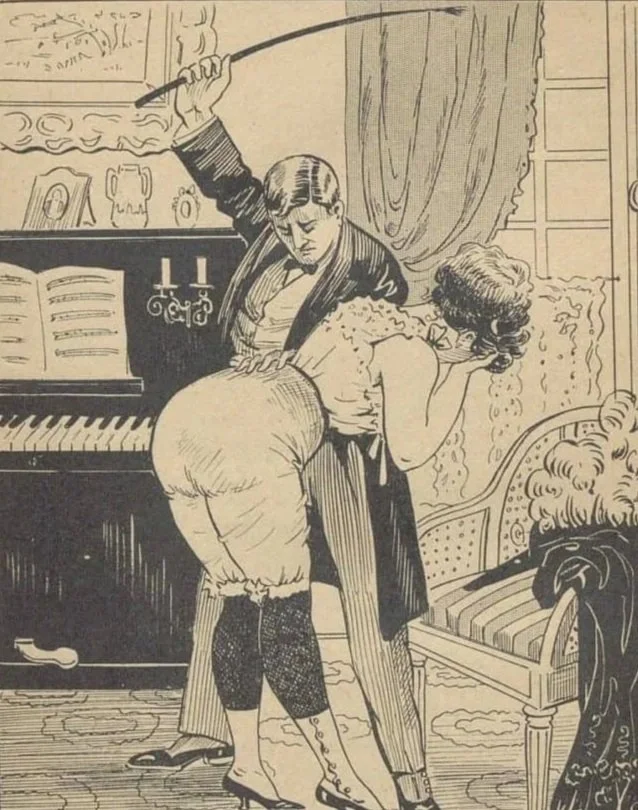
Behind the Beaded Curtain
Few things are more intimate than sex — and few freedoms are more personal than the freedom to understand, discuss, express, and explore it. Sex can cross lines that matter when it violates the rights of others, but a free society cannot simply draw those lines anywhere its disgust, fear, or disapproval tell it to.
Through literature, sexology, education, erotica, and pornography, the books in this room challenge who gets to draw those boundaries, where they are drawn, and ask a question at the heart of individual liberty: if power can govern what we know, say, read, and do in the most intimate corners of our lives, how free are we really?
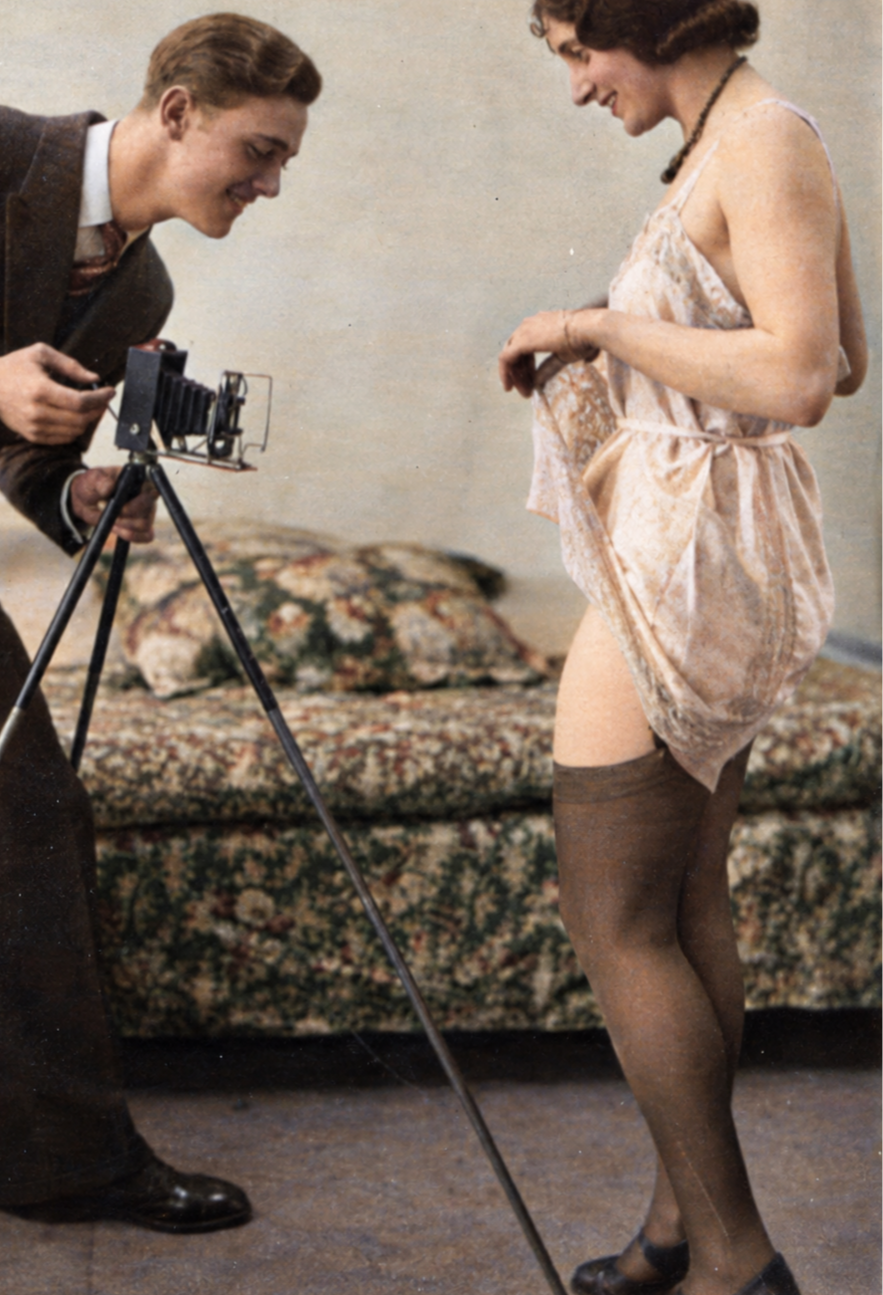
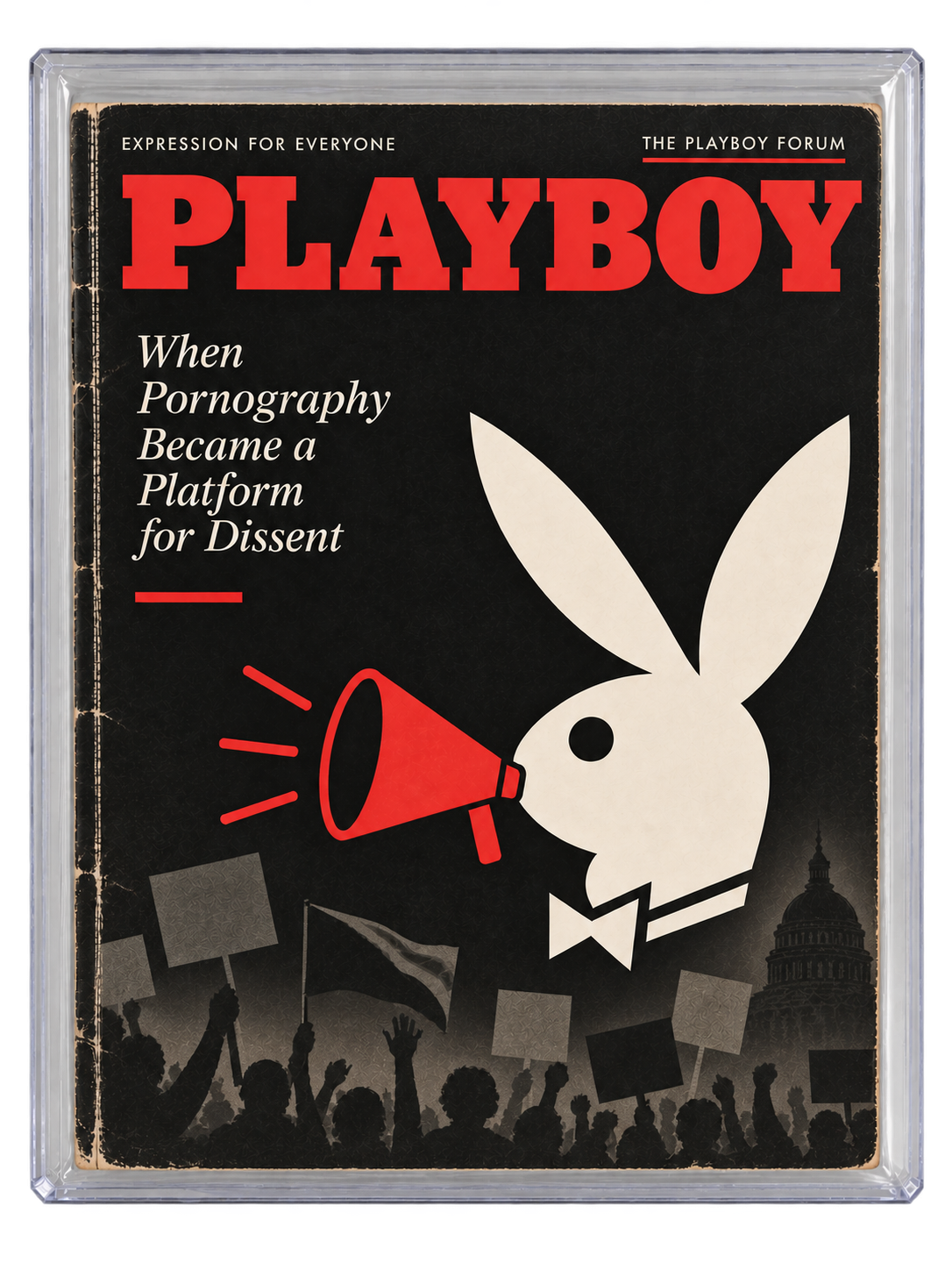
Full Title: The Playboy Forum: When Pornography Became a Platform for Dissent
Hugh M. Hefner (ed.) · Various Contributors
HMH Publishing Co., Inc. / Playboy · Chicago · 1965–1976
Ten Original First-Printing Issues
Curated Publication-Event Collection
The Collection:
A curatorially assembled collection of ten original Playboy magazines selected to preserve an unusual chapter in the history of American dissent: the moment when one of the country’s largest commercial entertainment publications became a mass-market platform for philosophers, civil-rights voices, antiwar clergy, reformers, revolutionaries, and political outsiders. The collection is intentionally selective rather than sequential. Each issue preserves a different way dissent entered Playboy’s enormous readership between 1965 and 1976.
Included Issues:
May 1965 · Vol. 12, No. 5 — Jean-Paul Sartre
Philosophical and political dissent enters the pages of a mass-market American magazine.December 1966 · Vol. 13, No. 12 — James Baldwin & Budd Schulberg
Racial injustice and the failures of the American democratic conscience move to the center of the conversation.January 1968 · Vol. 15, No. 1 — Norman Mailer
The politically engaged writer moves beyond commentary and into direct political confrontation.August 1968 · Vol. 15, No. 8 — William Sloane Coffin Jr.
Religious conscience becomes an argument against war, conscription, and obedience to the state.September 1968 · Vol. 15, No. 9 — Nat Hentoff, “The War on Dissent”
Playboy turns directly toward the legitimacy—and vulnerability—of dissent itself.October 1968 · Vol. 15, No. 10 — Ralph Nader
Evidence-driven reform challenges concentrated corporate power and the institutions meant to regulate it.December 1968 · Vol. 15, No. 12 — Eldridge Cleaver
Revolutionary Black dissent reaches an enormous mainstream commercial audience.January 1969 · Vol. 16, No. 1 — Martin Luther King Jr. / Civil Liberties
Racial justice becomes inseparable from a larger struggle over democratic liberty and political violence.April 1974 · Vol. 21, No. 4 — Jane Fonda & Tom Hayden
Antiwar and New Left dissent evolves from protest toward sustained political organization.May 1976 · Vol. 23, No. 5 — Abbie Hoffman
The Sixties dissenter has gone underground, but his voice still reaches the mainstream through Playboy.
Writers Featured: James Baldwin · Truman Capote · Roald Dahl · Ray Bradbury · Kurt Vonnegut Jr. · Arthur Miller · Allen Ginsberg · Ian Fleming · Saul Bellow · Arthur C. Clarke · Norman Mailer · Shel Silverstein · John Updike · Pearl S. Buck · Henry Miller · John Cheever · Isaac Bashevis Singer · Carlos Fuentes · Marshall McLuhan · Amiri Baraka (LeRoi Jones) · William Styron · Georges Simenon · Alan Watts · Lawrence Durrell · Kingsley Amis · Alberto Moravia · Art Buchwald · William Saroyan · Norman Podhoretz · Harvey Kurtzman · Donald Barthelme · Ogden Nash · Eric Hoffer · Leslie Fiedler · Len Deighton · Budd Schulberg · Donald Hall · James T. Farrell · John Gunther · Jean Shepherd · Frederik Pohl · Thomas M. Disch · Larry L. King · Herbert Gold · Norman Thomas · Mackinlay Kantor · Gerald Kersh
Condition:
Very Good overall. Individual issues range from Good to Very Good+, with varying rubbing, creasing, spine and edge wear, toning, and localized paper or color loss consistent with original period magazines. May 1965 and October 1968 grade Good; December 1966, January 1968, and December 1968 grade Good+; August 1968, September 1968, and January 1969 grade Very Good; and April 1974 and May 1976 grade Very Good+. All ten issues remain complete, identifiable, and presentable original examples.
Story Of The Set
What happens when one of America’s most commercially successful adult magazines becomes a national stage for people challenging the country itself?
Between 1965 and 1976, Playboy repeatedly placed dissent before an audience that had not necessarily bought the magazine looking for politics. Sartre brought the politically engaged intellectual; Baldwin confronted racial hierarchy; Coffin challenged war through religious conscience; Hentoff made dissent itself the subject; Nader confronted corporate power; and Cleaver carried revolutionary Black politics into a mainstream commercial publication.
The later issues show dissent changing shape. King and the January 1969 civil-liberties material mark a democratic reckoning after assassination and political violence. Fonda and Hayden represent the New Left moving toward organized politics. By 1976, fugitive Abbie Hoffman embodies its underground afterlife.
What connected them was access. Playboy possessed something most radical journals did not: extraordinary reach. The same publishing machinery that sold sex, celebrity, aspiration, and entertainment carried arguments about racism, war, civil liberties, corporate power, and political authority far beyond their customary audiences.
The historical action here is not suppression. It is amplification.
Why It’s In The Collection
The Playboy Forum belongs in Consigned to Darkness because power over expression is exercised not only by deciding what may be said, but by deciding who gets heard.
Many objects in this collection preserve attempts to stop ideas from circulating. This collection captures the inverse: an enormously influential commercial publisher repeatedly giving dissent more room to travel.
These ten issues were not selected because they are vintage Playboy magazines or because their contributors are famous. Each preserves a distinct form of dissent—from racial criticism and antiwar conscience to civil liberties, corporate accountability, revolutionary politics, and organized activism.
The erotic context makes that history more interesting, not less. A publication commercially identified with sex and entertainment became an unexpected distribution system for serious political opposition.
Most histories of free expression concentrate on the people trying to close the door. This collection preserves what happened when a publisher opened one.
Collection Categories: Free Expression · Political Dissent · Anti-Authoritarianism · Political Movements · Civil Rights · Literature · Pornography & Erotica · Publication-Event Object · Investigative Journalism · Religious Conscience · Anti-War · Counterculture · War & Conflict · Multi-Object Set · Curated Set · Magazine & Periodical History · Sexuality & Culture
———
Authentication Evidence
All ten constituent objects are original physical Playboy periodicals individually examined and supported by photographic documentation.
May 1965 is identified as Playboy, Volume 12, Number 5.
December 1966 is identified as Playboy, Volume 13, Number 12.
January 1968 is identified as Playboy, Volume 15, Number 1, Fifteenth Holiday Anniversary Issue.
August 1968 is identified as Playboy, Volume 15, Number 8.
September 1968 is identified as Playboy, Volume 15, Number 9.
October 1968 is identified as Playboy, Volume 15, Number 10.
December 1968 is identified as Playboy, Volume 15, Number 12.
January 1969 is identified as Playboy, Volume 16, Number 1.
April 1974 is identified as Playboy, Volume 21, Number 4.
May 1976 is identified as Playboy, Volume 23, Number 5.
Each issue retains the correct original masthead, month and year, period cover design, cover price, typography, wrapper construction, and production characteristics for its stated issue.
Period advertisements, paper stock, printing style, and interior production characteristics are consistent with original contemporary magazine manufacture.
The contents of the ten issues correspond to the contributors and material for which each magazine was curatorially selected.
No evidence of modern reproduction, facsimile covers, replacement wrappers, reconstructed issues, or later reprint manufacture has been observed.
Each of the ten magazines is authenticated individually as an original first-publication periodical.
The Playboy Forum: When Pornography Became a Platform for Dissent is the collection’s retrospective curatorial designation; the ten magazines were not originally issued or marketed by Playboy as a unified publisher-created set.
The Playboy Forum
Full Title: The Playboy Forum: When Pornography Became a Platform for Dissent
Hugh M. Hefner (ed.) · Various Contributors
HMH Publishing Co., Inc. / Playboy · Chicago · 1965–1976
Ten Original First-Printing Issues
Curated Publication-Event Collection
Millions of Americans bought Playboy for the sex. Some of the most consequential voices of the twentieth century found an audience waiting inside.
Between 1965 and 1976, a magazine that helped bring sexuality out of the shadows also became an unlikely stage for political dissent. The Playboy Forum assembles ten original issues featuring figures from James Baldwin and Martin Luther King Jr. to Jean-Paul Sartre, Eldridge Cleaver, Jane Fonda, and Abbie Hoffman, revealing how a publishing empire built on erotic entertainment gave radical ideas extraordinary commercial reach. Yet Playboy's celebration of sexual liberation carried a contradiction of its own: while challenging America's sexual taboos, it sold a vision of freedom largely defined by heterosexual male desire. This set preserves a fascinating collision between sex, commerce, and dissent — raising a question that reaches far beyond the magazine's pages: when society begins liberating sexuality from the constraints of traditional morality, whose freedom is actually being expanded, and who still gets to define its boundaries?

My Life and Loves (Complete Four-Volume Set)
Full Title:My Life and Loves (Complete Four-Volume Set)
Frank Harris
Paris: The Obelisk Press, 1945
1945 Obelisk Press Edition · First Printing · Complete Four-Volume Set
The Book:
The complete four-volume first printing of the 1945 Obelisk Press edition of Frank Harris’s My Life and Loves, published in Paris while the controversial autobiography remained prohibited from legal circulation in Britain and the United States. All four volumes retain their original publisher’s printed wrappers. Most strikingly, the rear wrappers carry the explicit warning “Must Not Be Imported into England or U.S.A.”—a restriction printed directly onto the books themselves. Original wrapper prices are also retained: 600 francs on Volumes I–II and 500 francs on Volumes III–IV. The title pages and publication statements have been physically examined and confirmed as corresponding to the first printing of the 1945 Obelisk Press edition.
Condition:
Good overall. The complete set remains in its original printed wrappers, which show moderate to heavy age toning, edge wear, creasing, corner wear, and varying degrees of spine deterioration. Volume I has substantial spine splitting, paper loss, and partial wrapper separation; the remaining three volumes show lesser but noticeable wrapper wear. The set remains complete, with no evidence of rebinding or restoration.
Story Of The Book
Governments spent decades trying to prevent English-speaking readers from owning this autobiography. Paris simply printed it anyway.
Frank Harris filled My Life and Loves with sexual candor, scandal, literary gossip, and accounts of encounters with many of the prominent figures of his age. To British and American authorities, the sexual content made the work unacceptable for legal circulation.
But prohibition did not make the book disappear. It changed where the book had to come from.
Paris became one of the great escape routes of twentieth-century English-language publishing. Expatriate presses could produce books that publishers in Britain and the United States could not safely—or legally—put into circulation at home. Readers who wanted them depended on foreign booksellers, private circulation, and importation.
The Obelisk Press operated inside that world.
Its 1945 edition of My Life and Loves therefore preserves something more interesting than another appearance of Harris’s autobiography. It preserves the physical infrastructure through which a prohibited English-language book continued to reach readers despite the censorship regimes of the countries in which many of those readers lived.
And unusually, the evidence of that censorship is printed directly on the object.
“Must Not Be Imported into England or U.S.A.”
Those words transform the rear wrappers into historical evidence.
They tell us that censorship had become part of the book’s physical design and commercial geography. A copy intended for sale had to announce the countries into which it could not legally travel.
The government did not need to destroy My Life and Loves. It could attempt to control the border instead.
The book existed. The readers existed. The law tried to keep the two in different countries.
Why It’s In The Collection
My Life and Loves belongs in Consigned to Darkness because it demonstrates one of the collection’s central ideas with unusual physical clarity:
When censorship closes one route between a writer and a reader, publishing finds another.
This complete four-volume set is particularly collection-relevant because it does not merely contain a text that was once suppressed. It is an artifact of the system created to circumvent that suppression.
The distinction matters.
A later legal edition can tell us what Frank Harris wrote. These Obelisk Press volumes tell us what had to happen for people to read it while authorities were still trying to prevent them from doing so. The place of publication is therefore part of the story. Paris was not incidental. It was what made publication possible.
And the export warning makes that history unusually tangible. Unlike a censorship story that has to be reconstructed entirely from court records or later scholarship, the restriction survives on the books themselves. The rear wrappers effectively preserve the border that governments attempted to place between controversial literature and its readers.
That is why the collection values the complete 1945 Obelisk Press set as a publication-event object. Its significance lies not in being the first appearance of Harris’s memoir, but in documenting the expatriate publishing network that kept a prohibited English-language work circulating beyond the reach of British and American censorship.
Four volumes survived together in their original wrappers. On the back of each sits the reason they had to be published where they were.
Britain and America could prohibit the book. Paris could still print it.
Collection Categories: Free Expression · Censorship · Publication-Event Object · Memoir & Testimony · Obscenity Law & Court History · Literature
———
Authentication Evidence
• Complete four-volume set published by The Obelisk Press, Paris.
• Original publisher's printed wrappers retained throughout the set.
• Rear wrappers bear the export statement "Must Not Be Imported into England or U.S.A.", consistent with Obelisk Press distribution outside British and American censorship.
• Wrapper prices of 600 francs (Volumes I–II) and 500 francs (Volumes III–IV) are consistent with the 1945 Obelisk issue.
• Wrapper typography, design, and construction are consistent across all four volumes.
• No evidence of rebound construction, facsimile wrappers, or later commercial rebinding observed.
• Title pages and publication statements were examined directly during physical inspection and confirmed by the owner to correspond to the first printing of the 1945 Obelisk Press edition.
• Edition and printing characteristics are consistent throughout the complete set.
My Life & Loves
Governments spent decades trying to prevent English-speaking readers from owning this autobiography. Paris simply printed it anyway.
Frank Harris filled My Life and Loves with scandal, literary gossip, sexual candor, and portraits of many of the most famous figures of his age. British and American authorities regarded the work as too explicit for legal circulation, forcing English-language readers to seek copies through expatriate Paris publishers willing to ignore Anglo-American censorship. This complete Obelisk Press set preserves one of the twentieth century's most famous examples of literary suppression, when geography itself became a tool of free expression and a book's place of publication determined whether it could legally exist.
Frank Harris
Paris: The Obelisk Press, 1945
1945 Obelisk Press Edition · First Printing · Complete Four-Volume Set
Jean Saddler [pseud. of Claire Willows]
The Gargoyle Press · New York · c. 1931
First Edition · First Printing · Limited to 1,500 Copies · Privately Issued
The Book:
The First Edition · First Printing of A Fascinating Tyrant, an illustrated erotic novel privately published in New York by The Gargoyle Press around 1931. The publisher limited the edition to 1,500 copies specifically for “adult collectors of Curiosa and recognized students of psychology,” while the title page announces that the book was “Issued Privately for Collectors Only.” Original quarter black cloth over red paper-covered boards, with a gilt-stamped kneeling female figure to the front board and gilt lettering to the spine. Illustrated throughout. 313 pp. plus preliminaries. No dust jacket was issued with this copy.
Condition:
Very Good+. Original binding remains square, sound, and unusually well preserved. Red paper-covered boards retain strong color with light-to-moderate rubbing and scattered surface wear. Black cloth spine is clean and intact; gilt spine lettering is faded but remains legible. Interior is exceptionally clean with only light natural toning. No significant ownership markings, rebinding, or restoration documented.
Story Of The Book
This erotic novel was published with the understanding that its readers needed an excuse to own it. Respectable people weren’t supposed to be interested in sexually explicit books—so the publisher deliberately recast interested readers as “collectors” or “students of psychology.”
In the early twentieth century, sexually explicit literature occupied an uneasy place in American publishing. Material considered too provocative for ordinary commercial circulation could invite censorship, obscenity charges, postal interference, or simply make respectable publishers unwilling to touch it.
Publishers found another way.
A Fascinating Tyrant was not presented as a book for the general public. The title page announced that it was “Issued Privately for Collectors Only.” Its limitation statement went further: only 1,500 copies were printed, supposedly for “adult collectors of Curiosa and recognized students of psychology.”
That language gave explicit literature a respectable disguise. Erotic books became curiosa. Readers became collectors or students. And material that could not comfortably stand on an ordinary bookstore shelf moved through a parallel publishing culture built around privacy, scarcity, and restricted circulation.
The strategy was not unique to this book. Gargoyle Press used similar private-issue practices for other erotic works associated with Claire Willows during the same period. Surviving bibliographic evidence places A Fascinating Tyrant squarely within that shadow publishing world.
The book may be obscure today. The system that produced it is the reason it matters.
Why It’s In The Collection
Most censorship objects in Consigned to Darkness preserve confrontation: a prosecution, a banned book, a confiscation, a court case.
A Fascinating Tyrant preserves something quieter.
It shows what publishing could look like when the threat of censorship had already been built into the way a book entered the world.
There is no evidence presently establishing that this particular title was formally banned or prosecuted. That distinction matters. Its significance instead lies in the precautions surrounding its publication. Gargoyle Press restricted the edition, defined its readers as collectors and students, and explicitly declared the book privately issued rather than openly marketed to everyone.
The physical object therefore preserves the architecture that developed around sexual expression when unrestricted publication was considered risky. Instead of waiting for authorities to tell readers they could not have the book, the publisher narrowed the audience from the beginning.
That makes this a valuable companion to the collection's better-known obscenity battles. Ulysses, Howl, Lady Chatterley's Lover, and Tropic of Cancer show what happened when publishers openly challenged censorship. A Fascinating Tyrant shows another response:
Keep the book alive—but move it out of ordinary public view.
Collection Categories: Free Expression · Censorship · Publication-Event Object · Literature · Sexuality & Culture
———
Authentication Evidence
Title page identifies the work as A Fascinating Tyrant by Jean Saddler.
Title page carries The Gargoyle Press imprint.
Title page explicitly states “Issued Privately for Collectors Only.”
Publisher's limitation statement records that 1,500 copies of the edition were printed.
Limitation statement specifies the intended audience as “adult collectors of Curiosa and recognized students of psychology.”
The Gargoyle Press is independently documented as an early-1930s New York private publisher associated with erotic and flagellation literature.
Claire Willows's Presented in Leather was privately issued through the same publishing milieu in an edition similarly limited for adult collectors, independently corroborating the restricted-distribution model represented by this copy.
Claire Willows's Modern Slaves is independently documented as a privately issued Gargoyle Press publication from approximately the same period.
Later publishing records associate Jean Saddler with Claire Willows and identify The Fascinating Tyrant as the same work under later republication.
Documented later editions establish subsequent republication of the work and support priority of the earlier Gargoyle Press issue.
Original publisher's binding is present: quarter black cloth over red paper-covered boards.
Front board retains the original gilt-stamped kneeling female figure.
Spine retains gilt title, author, and Gargoyle Press imprint.
Contents comprise an Introduction, Prologue, twenty-three numbered chapters, and an Epilogue extending through numbered page 313.
Illustrated title-page opening and interior illustrations remain present.
No later-edition statement, reprint statement, facsimile designation, or book-club indicator is present.
No earlier edition of A Fascinating Tyrant or The Fascinating Tyrant has been identified in the bibliographic research performed.
The stated 1,500-copy limitation records a single printing of the edition, and no separate later impression of that Gargoyle Press limited issue has been identified.
Publication context, imprint, limitation structure, and related Gargoyle Press publications support an approximate publication date of c. 1931.
Observable physical and bibliographic evidence supports identification as the First Edition · First Printing · Limited Issue of 1,500 Copies.
A Fascinating Tyrant
Jean Saddler [pseud. of Claire Willows]
The Gargoyle Press · New York · c. 1931
First Edition · First Printing · Limited to 1,500 Copies · Privately Issued
This book was published for readers who were not supposed to look like ordinary readers.
A Fascinating Tyrant belongs to the shadow world of twentieth-century erotic publishing, where sexually explicit books could be circulated under the protective language of privacy, collecting, and scholarship. Gargoyle Press did not simply limit this edition to 1,500 copies. It declared that they were printed specifically for “adult collectors of Curiosa and recognized students of psychology,” while the title page announced that the book was “Issued Privately for Collectors Only.” Those disclaimers turned the physical book into part of the strategy by which erotic literature moved through a culture that treated sexual expression as something requiring explanation, restriction, or disguise. The novel may be obscure today, but this surviving copy preserves something larger: a publishing culture that found ways to put forbidden desire into print without pretending the world was ready to receive it openly.

Full Title: Pornography & the Law: The Psychology of Erotic Realism and Pornography
Eberhard Kronhausen & Phyllis Kronhausen
Foreword by J. W. Ehrlich · Introduction by Theodor Reik
Ballantine Books, Inc. · New York · 1959
First Edition · First Printing
The Book:
The First Edition · First Printing of Eberhard and Phyllis Kronhausen’s Pornography and the Law, a contemporary psychological and legal challenge to American obscenity regulation. Published only two years after Roth v. United States reshaped the Supreme Court’s obscenity doctrine, the Kronhausens argued for a distinction between “hard-core pornography” and “erotic realism”—sexually candid literature with psychological, artistic, or social value. Their examples include D. H. Lawrence, Henry Miller, James Joyce, Rabelais, Casanova, and the Marquis de Sade. 315 numbered pages plus preliminary material. Original Ballantine mass-market wrappers retain publication number S346K, the 75¢ price, and the publisher’s repeated declaration that the book was “AN ORIGINAL” and “not a reprint.”
Condition:
Very Good. Original wrappers remain complete with moderate rubbing and handling wear, several minor edge defects, and a small area of loss at the foot of the spine. Paper is uniformly and noticeably toned, as expected for the inexpensive stock used in this mass-market edition. Binding remains square and sound; contents are complete and generally clean. No significant ownership markings, rebinding, restoration, or replacement components documented.
Story Of The Book
In 1959, American courts were wrestling with a deceptively simple question: when does sexually explicit writing become illegal?
Eberhard and Phyllis Kronhausen entered that fight as psychologists. Their argument challenged the idea that a book could be judged merely by how sexually explicit—or offensive—it appeared. They drew a distinction between pornography created principally for sexual stimulation and what they called “erotic realism”: serious literature that dealt candidly with sex but also possessed artistic, psychological, or social value.
That distinction put some of the most frequently censored writers of the century at the center of the discussion: D. H. Lawrence, Henry Miller, James Joyce, and the Marquis de Sade, among others. And this was not theoretical history. As the Kronhausens were writing, the unexpurgated American edition of Lady Chatterley’s Lover was itself being challenged by the Post Office. Contemporary legal commentary treated the book as part of the urgent debate over whether sexually explicit expression could possess enough social value to deserve constitutional protection.
The question was never simply whether the material was sexual. It was who had the authority to decide when sexuality made a book forbidden.
Why It’s In The Collection
Pornography and the Law belongs in Consigned to Darkness because censorship often begins with a definition.
If the state can define sexually explicit expression as obscene, then enormous power rests in deciding what counts as obscenity—and what counts as literature, art, scholarship, or legitimate human experience.
The Kronhausens tried to narrow that boundary. Their argument appeared while American obscenity law was still unsettled, while Lady Chatterley’s Lover was still being fought over, and before many of the century’s major literary censorship battles had been resolved.
This first printing therefore preserves not the aftermath of those battles, but one argument being made from inside them.
The book asks a question at the center of this collection: when authority calls something obscene, who gets the final word?
Collection Categories: Publication-Event Object · Free Expression · Censorship · Sexuality & Culture · Legal History · Civil Liberties · Literature · Obscenity Law & Court History
———
Authentication Evidence
Title page identifies the work as Pornography and the Law: The Psychology of Erotic Realism and Pornography by Eberhard and Phyllis Kronhausen.
Title page identifies Ballantine Books · New York as publisher.
Title-page verso explicitly states “This is an original publication—not a reprint—Published by Ballantine Books, Inc.”
Front wrapper carries Ballantine’s “AN ORIGINAL” designation.
Front wrapper carries Ballantine publication number S346K.
Original 75¢ price remains present on the front wrapper.
Rear wrapper again explicitly states “THIS IS AN ORIGINAL PUBLICATION—NOT A REPRINT.”
Rear wrapper identifies the volume as printed in the United States.
Copyright page records © 1959 by Eberhard Kronhausen.
Copyright page identifies the volume as the 1st Edition.
Independent bibliographic records identify the 1959 Ballantine publication as the First Edition.
Bibliographic records document later printings of the first edition, including a third printing in 1961, establishing that multiple impressions existed.
Cornell University’s Human Sexuality Collection bibliography records Pornography and the Law as New York: Ballantine Books, 1959, paperback.
Independent bibliographic records identify Ballantine S346K as the original 1959 publication.
Contemporary Yale Law Journal review identifies the book by Eberhard and Phyllis Kronhausen, with an introduction by Theodor Reik, as a 1959 Ballantine publication of approximately 317 pages priced at 75¢, matching this copy’s bibliographic characteristics.
Contemporary Mattachine Review material from October 1959 identifies the book as a new Ballantine publication priced at 75¢ and reproduces material from the volume, independently confirming publication-period circulation.
Contents include a foreword by J. W. Ehrlich and an introduction by Dr. Theodor Reik, consistent with contemporary bibliographic descriptions.
Bibliography occupies pages 293–304.
Index extends through page 315.
Original Ballantine wrappers remain present.
No evidence of later-edition substitution, facsimile manufacture, replacement wrappers, rebinding, or restoration is observed.
The combination of the stated “1st Edition,” Ballantine “AN ORIGINAL” designation, original S346K wrapper state, original 75¢ price, and independently documented later printings supports identification as the 1959 First Edition · First Printing.
Pornography & the Law
In 1959, American courts were wrestling with a deceptively difficult question: when does writing about sex become a crime?
Psychologists Eberhard and Phyllis Kronhausen entered the obscenity wars with Pornography and the Law, challenging the idea that sexually explicit literature could be condemned simply because it offended. Drawing on writers like D. H. Lawrence, Henry Miller, James Joyce, and the Marquis de Sade, they argued that serious literature depicting sexuality — what they called “erotic realism” — deserved to be distinguished from pornography intended primarily to arouse. Published amid the legal battle over Lady Chatterley’s Lover, the book confronted a question at the heart of American censorship: who gets to decide when writing about sex becomes too dangerous for anyone else to read?
Full Title: Pornography & the Law: The Psychology of Erotic Realism and Pornography
Eberhard Kronhausen & Phyllis Kronhausen
Foreword by J. W. Ehrlich · Introduction by Theodor Reik
Ballantine Books, Inc. · New York · 1959
First Edition · First Printing

Full Title: Psychopathia Sexualis: With Especial Reference to the Antipathic Sexual Instinct: A Medico-Forensic Study
Richard von Krafft-Ebing
Translated from the Twelfth German Edition by Franklin S. Klaf
Foreword by Daniel Blain
Stein and Day · New York · 1965
First Complete English-Language Edition · First Printing
The Book:
The First Complete English-Language Edition · First Printing of Richard von Krafft-Ebing’s Psychopathia Sexualis, one of the foundational texts of modern sexology. First published in German in 1886, the work helped give lasting currency to categories including sadism, masochism, fetishism, and homosexuality. Earlier English editions left portions untranslated, while Krafft-Ebing himself placed especially explicit material in Latin. Franklin S. Klaf’s 1965 translation of the twelfth German edition was explicitly issued as the “First Complete Translation into English.” xviii, 434 pp. Original red publisher’s cloth, red topstain, and original unclipped $10.00 dust jacket retained.
Condition:
Fine book in a Very Good original dust jacket. Original red cloth remains clean and tight, with gilt spine lettering, decorative rules, publisher device, and red topstain intact. Interior is exceptionally well preserved, with only a small pencil price notation to the rear free endpaper. The original unclipped $10.00 jacket shows localized chipping and paper loss at the spine ends and corners, several short edge tears, and moderate surface rubbing, but remains substantially complete and presents strongly.
Story Of The Book
Krafft-Ebing helped give medicine a vocabulary for talking about sexuality. He also helped establish the idea that homosexuality and other forms of sexual difference were diseases.
First published in 1886, Psychopathia Sexualis became one of the most influential books in the history of sexology. It organized sexual behavior into medico-forensic categories and gave medicine, psychiatry, and law a vocabulary for subjects long treated primarily as sin, crime, or scandal.
That visibility was profoundly double-edged. Krafft-Ebing brought same-sex desire into sustained scientific discussion, but framed it through theories of abnormality and degeneration. The result was a language that helped make sexuality legible to modern institutions while also giving those institutions new authority to classify, diagnose, and judge it.
Access to the book itself was restricted too. Explicit passages were placed in Latin, and earlier English translations remained incomplete. This 1965 Stein and Day edition finally translated the complete twelfth German edition into English.
Krafft-Ebing deliberately put some of the book’s most explicit material in Latin to keep provocative information about sex out of the hands of ordinary readers. This 1965 edition finally made the complete text available in English.
Why It’s In The Collection
Psychopathia Sexualis belongs in Consigned to Darkness because power does not only decide what may be said. It also decides what people are called.
Krafft-Ebing’s categories shaped medicine, psychiatry, law, and public culture for generations. For LGBTQ+ people, that legacy was both emancipatory and damaging: scientific recognition could replace silence, but recognition arrived through a framework that often treated identity as pathology.
This 1965 edition matters because it finally removed a linguistic barrier that had limited English access to the complete text—just as psychiatry was beginning to reconsider some of the assumptions the book had helped institutionalize.
It preserves a moment when the language of authority became fully visible to the people it had helped define.
Collection Categories: Free Expression · Censorship · Publication-Event Object · Human Rights · LGBTQ+ History · Sexuality & Culture · Sexology · History of Medicine · History of Psychiatry
———
Authentication Evidence
Title page identifies the work as Psychopathia Sexualis: With Especial Reference to the Antipathic Sexual Instinct: A Medico-Forensic Study by Richard von Krafft-Ebing.
Title page identifies Franklin S. Klaf, M.D., M.P.H., as translator and author of the introduction.
Title page identifies Daniel Blain, M.D., F.A.C.P., F.A.P.A., as author of the foreword.
Title page explicitly states “Translated from the Twelfth German Edition.”
Title page explicitly states “First Complete Translation into English.”
Title page identifies Stein and Day · New York as publisher.
Copyright page states “Translation and Introduction copyright © 1965 by Franklin S. Klaf.”
Copyright page states “Foreword copyright © 1965 by Stein and Day, Incorporated.”
Copyright page gives Library of Congress Catalog Card No. 65-16706.
Copyright page states that the volume was manufactured in the United States.
Contemporary scholarly review literature independently identifies the Stein and Day/Klaf edition as the “First complete translation into English.”
Physical collation is xviii + 434 pages, consistent with independently recorded copies of the Stein and Day edition.
A distinct 1965 G. P. Putnam’s Sons edition, translated by Harry E. Wedeck, was separately advertised as the “First unexpurgated edition in English.”
The Putnam/Wedeck and Stein and Day/Klaf editions are therefore bibliographically distinct 1965 English-language editions.
Original red Stein and Day publisher’s cloth remains present.
Binding retains gilt spine title, author name, decorative rules, and publisher device.
Original red topstain remains present.
Original Stein and Day dust jacket remains present.
Dust jacket is unclipped and retains the original $10.00 publisher’s price.
Dust jacket prominently identifies the work as the “First Complete Translation into English.”
No later-printing or reissue statement is present.
No evidence of book-club manufacture, later publisher issue, facsimile jacket, rebinding, or restoration is observed.
Observable physical and bibliographic evidence supports identification as the 1965 First Complete English-Language Edition · First Printing.
Psychopathia Sexualis
Full Title: Psychopathia Sexualis: With Especial Reference to the Antipathic Sexual Instinct: A Medico-Forensic Study
Richard von Krafft-Ebing
Translated from the Twelfth German Edition by Franklin S. Klaf
Foreword by Daniel Blain
Stein and Day · New York · 1965
First Complete English-Language Edition · First Printing
For decades, some of the most explicit passages in one of the foundational books of modern sexology were deliberately kept beyond the reach of ordinary readers.
First published in 1886, Richard von Krafft-Ebing's Psychopathia Sexualis attempted to classify human sexuality through medicine and law, giving lasting currency to concepts including sadism, masochism, fetishism, and homosexuality. Its influence was enormous—and deeply double-edged. Krafft-Ebing helped make same-sex desire an object of sustained scientific study while simultaneously defining it through a medical language of pathology and degeneration that would echo through psychiatry for generations.
Krafft-Ebing had deliberately placed sexually explicit material in Latin partly to keep it from lay readers. This 1965 edition finally translated the complete twelfth German edition into English, removing a linguistic barrier that had survived through decades of English publication.
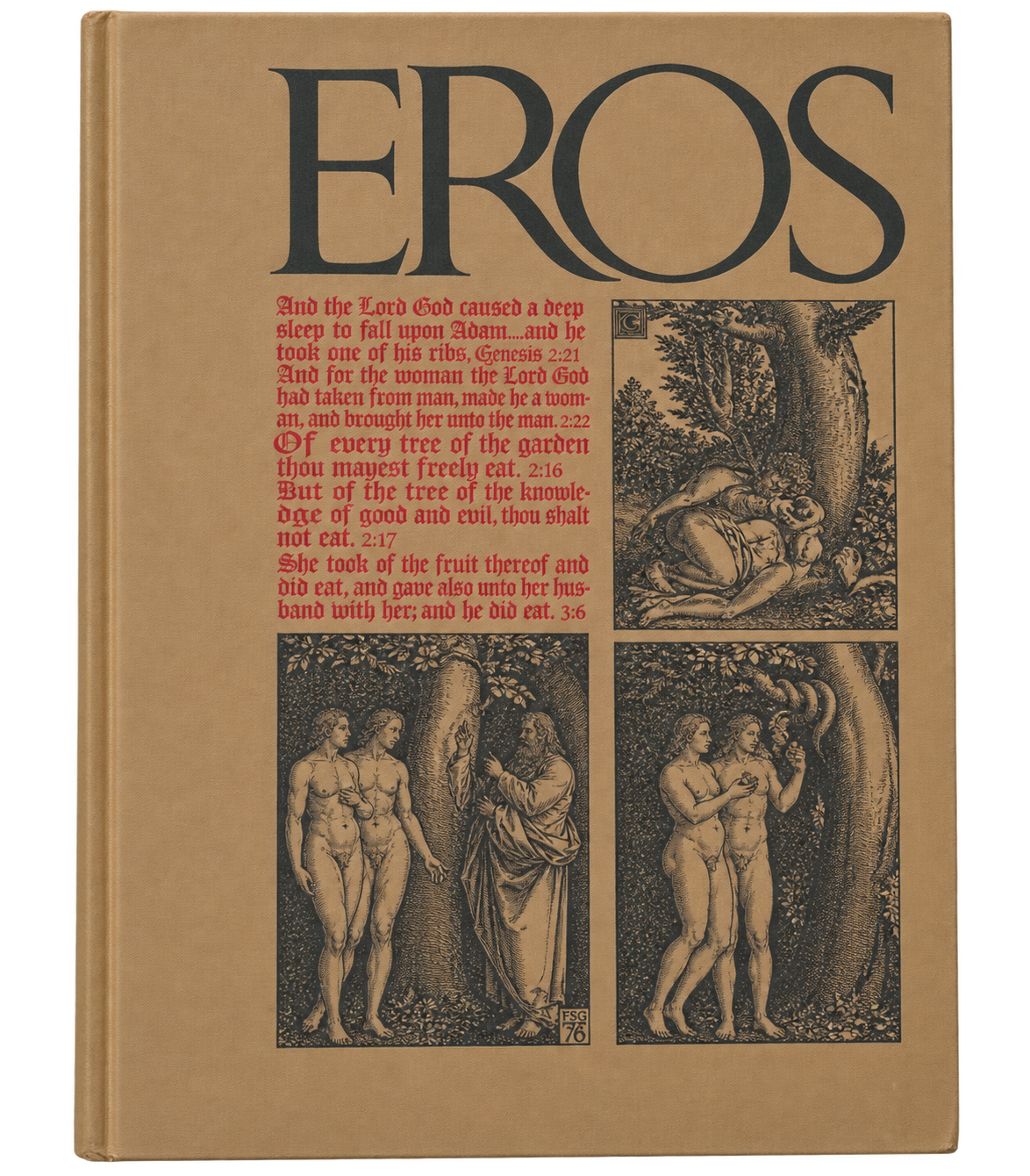
Ralph Ginzburg, Editor and Publisher
New York: EROS Magazine, Inc., 1962
First Editions · First Printings · Two-Volume Assembled Set (Nos. 1 & 4)
The Book:
An assembled publication-event set preserving the first and final issues of EROS: Volume 1, Number 1 (Spring 1962) and Volume 1, Number 4 (Winter 1962). Edited and published by Ralph Ginzburg and designed under the direction of Herb Lubalin, EROS was an unusually lavish quarterly devoted to the literary, artistic, historical, psychological, and cultural exploration of eroticism. Both volumes are original first editions and first printings in their publisher-issued printed hardcover bindings; EROS was issued without separate dust jackets. Only four issues of the magazine were ever published.
Condition:
Very Good+ overall. Volume 1, Number 1 is Very Good+, with clean boards, bright typography and interiors, and light exterior handling wear. Volume 1, Number 4 is Very Good, with moderate cover toning and localized abrasion to the lower spine edge but a clean, complete interior. Both bindings remain structurally sound and present attractively together.
Story Of The Book
Ralph Ginzburg wanted to prove that eroticism belonged in the same room as literature, art, history, and ideas. So he built a magazine beautiful enough to make the argument before anyone read a word.
EROS appeared in 1962 as something deliberately difficult to dismiss as pornography.
It was a hardcover quarterly. Its production was extravagant. Under Herb Lubalin’s design direction, photography, typography, visual art, historical documents, literature, and social criticism were assembled with the seriousness and physical elegance normally reserved for prestigious cultural publications.
That was part of the point.
Ginzburg rejected the boundary separating “respectable” culture from subjects that polite publishing considered forbidden. EROS placed sexuality beside art, scholarship, history, and literature and asked readers to treat erotic experience as part of civilization rather than something existing outside it.
The contributors and subjects reinforced that ambition. Across its brief run, EROS drew together contemporary writers, photographers, historical texts, and visual culture; the final issue alone included work associated with Nat Hentoff, Garry Winogrand, Aristophanes, and Ray Bradbury.
But EROS lasted only one year.
Four quarterly issues appeared between Spring and Winter 1962. The experiment ended, while Ginzburg went on to publish Fact and Avant Garde and became increasingly entangled in the legal battles over obscenity that would define his place in American publishing history.
That makes these two volumes particularly effective together.
The Spring issue captures the proposition:
Eroticism deserves to be treated seriously.
The Winter issue captures the end of the experiment.
Between them lies the complete lifespan of one of the most audacious publishing projects of its era.
Why It’s In The Collection
EROS belongs in Consigned to Darkness because censorship often begins long before the government bans anything.
It begins with categories.
Serious or obscene.
Art or pornography.
Literature or indecency.
Culture or something that must remain outside it.
Ginzburg challenged those categories by refusing to make the kind of publication people expected erotic material to inhabit. The physical form of EROS was therefore inseparable from its editorial argument. Its hardcover bindings, sophisticated design, ambitious contributors, photography, historical material, and literary content asserted that the subject itself did not determine whether a publication deserved intellectual respect.
The collection deliberately assembled Nos. 1 and 4 rather than treating them as unrelated issues. Together they preserve the beginning and conclusion of the magazine: the inaugural volume that announced Ginzburg’s editorial philosophy and the final volume that closed the four-issue experiment.
That arc also makes EROS an important precursor within the collection’s broader history of American obscenity and free expression. It records Ginzburg before the later legal controversies surrounding his publishing career came to define him—when his first argument was being made not principally in a courtroom, but through editorial judgment, typography, photography, literature, and the extraordinary physical object he placed in readers’ hands.
Before Ralph Ginzburg fought over what the law would permit Americans to read, EROS challenged the culture to reconsider what it was willing to call respectable.
Collection Categories: Free Expression · Censorship · Obscenity Law & Court History · Publication-Event Object · Literature · Sexuality & Culture · Magazine & Periodical History · Pornography
———
Authentication Evidence
• Volume 1, Number 1 title page identifies EROS — Spring 1962 — Volume One, Number One, edited and published by Ralph Ginzburg.
• Volume 1, Number 4 title page identifies EROS — Winter 1962 — Volume One, Number Four, likewise edited by Ralph Ginzburg.
• Both issues retain the original publisher's printed hardcover bindings characteristic of EROS.
• Publication data identifies EROS Magazine, Inc. with 1962 copyright information consistent with the original issues.
• Typography, layout, and graphic design correspond to Herb Lubalin's original production.
• Contents correspond exactly to the documented tables of contents for both issues, including Nat Hentoff, Garry Winogrand, Aristophanes, and Ray Bradbury in No. 4, and the inaugural issue's original contents in No. 1.
• Contemporary bibliographic descriptions confirm that EROS was issued as hardcover magazines without separate dust jackets.
• Edition evidence: Both issues are original first editions of their respective quarterly publications issued during 1962.
• Printing evidence: Each quarterly issue constitutes its original first printing as published by EROS Magazine, Inc.; no later printings of these individual issue states are indicated.
EROS (Nos. 1 & 4)
Ralph Ginzburg, Editor and Publisher
New York: EROS Magazine, Inc., 1962
First Editions · First Printings · Two-Volume Assembled Set (Nos. 1 & 4)
Before Ralph Ginzburg became America's most famous publisher prosecuted for obscenity, he attempted something far more ambitious: to persuade the public that eroticism deserved the same intellectual, artistic, and literary treatment as any other serious subject.
Published in 1962, EROS rejected the distinction between high culture and forbidden culture by placing Renaissance art beside contemporary photography, literature beside sexuality, and scholarship beside subjects routinely excluded from respectable publishing. The magazine's extraordinary production values reinforced its argument that erotic expression belonged within civilization rather than outside it. Although EROS survived only four issues before financial pressures and the legal controversies surrounding Ginzburg's later publications ended the experiment, it became one of the defining publication-events in the modern history of obscenity, censorship, and American publishing. This assembled set preserves both the inaugural issue that announced Ginzburg's editorial vision and the final issue completing the magazine's brief but influential existence.
Full Title: Suppressed: 7 Key Essays Publishers Dared Not Print
Dr. Albert Ellis
New Classics House · Chicago · 1965
First Edition · First Printing
The Book:
The First Edition · First Printing of Albert Ellis’s Suppressed, collecting seven essays presented as works other publishers had declined to print. Their subjects include sexual morality, homosexuality, masturbation, atheism, incest, psychology, and other questions capable of colliding with the social and religious orthodoxies of mid-century America. Ellis responded to rejection by making rejection itself the subject of the book: the title became Suppressed, the cover announced “7 Key Essays Publishers Dared Not Print,” and New Classics House issued the material as an inexpensive original paperback. 124 pp. Original New Classics House wrappers, publication number N173, and original 75¢ price retained.
Condition:
Very Good+. Original wrappers remain complete and firmly attached, with scattered spotting to the predominantly white front wrapper, light rubbing, minor handling and extremity wear, and pronounced but uniform toning to the text stock. Spine remains straight and fully legible; binding is tight. Interior is otherwise notably clean and unmarked. No significant ownership markings, rebinding, restoration, or replacement components documented.
Story Of The Book
Albert Ellis refused to let editorial rejection be the end of an argument.
By 1965, Ellis was already a prominent and deliberately provocative psychologist and sexologist, challenging conventional ideas about sexuality, religion, guilt, and morality.
In Suppressed, he gathered seven essays that, according to the book’s own premise, publishers had refused to print. The subjects were exactly the kind likely to make mid-century editors nervous: homosexuality, masturbation, incest, atheism, sexual morality, and psychological convention.
Ellis did not hide the rejection. He put it on the cover.
The book was called Suppressed. Its subtitle promised “7 Key Essays Publishers Dared Not Print.” An inexpensive 75¢ paperback became the vehicle through which ideas excluded elsewhere were deliberately returned to circulation.
The publishers who rejected the essays became part of the story—and the existence of the book became Ellis’s answer to them.
Why It’s In The Collection
Suppressed belongs in Consigned to Darkness because censorship does not always come from courts, police, or governments. Sometimes it begins with an editor deciding that an idea is too controversial to print.
There is no evidence that the state banned these essays. That distinction matters. What this book documents instead is private gatekeeping—and one author’s decision to route around it. Ellis gathered the rejected work, made its rejection visible, and published it anyway.
That makes the first edition especially meaningful as a publication-event object: it preserves not merely seven controversial essays, but the moment exclusion itself was transformed into a publishing strategy.
The essays were supposed to disappear in rejection. Ellis printed the rejection instead.
Collection Categories: Publication-Event Object · Free Expression · Censorship · Sexuality & Culture · Anti-Authoritarianism · Religion & Free Thought · Psychology · Religious Conscience
———
Authentication Evidence
Title page identifies the work as Suppressed by Dr. Albert Ellis.
Title page carries the subtitle “7 Key Essays Publishers Dared Not Print.”
Title page identifies the volume as a New Classics House Original.
Original 75¢ price is present.
Spine identifies Dr. Albert Ellis, Suppressed, and New Classics House publication number N173.
Copyright statement reads “Copyright: 1965 New Classics House, a division of Novel Books, Inc., 2715 N. Pulaski Rd., Chicago 39, Illinois.”
Copyright statement confirms that the volume was printed and bound in the United States.
The Albert Ellis Institute’s bibliography independently records Suppressed: Seven key essays publishers dare not print as Chicago: New Classics House, 1965.
Contemporary Journal of Sex Research evidence identifies the original publication as New Classics House, Chicago, 1965; 124 pages; paperback; 75¢, matching this copy’s publisher, year, pagination, format, and original price.
Independent library records identify the 1965 New Classics House publication as a softcover edition, supporting the paperback as the original publication format rather than a later paperback reissue.
No evidence of an earlier hardcover, cloth issue, or preceding edition has been identified.
Publisher advertising within the volume describes Suppressed as “the 5th New Classics House Original,” corroborating its position within the publisher’s original-paperback program.
Publisher advertising elsewhere in the volume distinguishes first and subsequent printings of other New Classics House titles, demonstrating that the publisher recognized separate impressions within the same program.
No alternative 1965 Suppressed printing, earlier wrapper state, different original price, or intervening impression preceding N173 has been identified.
No later-printing indicators are present.
Although the volume does not explicitly state “First Printing,” the original-paperback designation, contemporary bibliographic evidence, wrapper state, price, publication number, and absence of any earlier or intervening impression together support First Printing identification with very high confidence.
Original New Classics House wrappers remain present.
Physical collation comprises 124 numbered pages.
No evidence of facsimile manufacture, replacement wrappers, rebinding, or restoration is observed.
Observable physical and bibliographic evidence supports identification as the 1965 First Edition · First Printing.
Suppressed
Full Title: Suppressed: 7 Key Essays Publishers Dared Not Print
Dr. Albert Ellis
New Classics House · Chicago · 1965
First Edition · First Printing
Publishers wouldn't print Albert Ellis's most controversial arguments. So he turned their refusal into a book that practically dared America to read them.
By 1965, the provocative psychologist and sexologist had gathered seven essays that publishers reportedly refused to print, confronting some of mid-century America's deepest taboos: homosexuality, masturbation, incest, atheism, and sexual morality.
Rather than abandon them, Ellis turned their rejection into the book's defining provocation. The title became Suppressed. The cover declared “7 Key Essays Publishers Dared Not Print.” And for just 75¢, readers could purchase the very arguments that publishers had supposedly tried to keep out of their hands. This first edition preserves an extraordinary act of defiance: a book that turned the refusal to publish into the very reason it had to exist.
Full Title: Prostitutes: Portraits of People in the Sexploitation Business
Jeremy Sandford
Martin Secker & Warburg Limited · London · 1975
First Edition · First Printing
The Book:
The First Edition · First Printing of Jeremy Sandford’s documentary study of prostitution, built substantially from testimony and contributions by people with direct experience of the sex trade. Sandford examines street prostitution, brothels, massage parlours, male prostitution, pornography, pimping, policing, law, economics, and exploitation while shifting attention away from official authorities and toward the people whose lives those institutions regulated. 228 pp., followed by a Select Bibliography. Original red paper-covered boards with white spine lettering retained. No dust jacket present.
Condition:
Near Fine. Original red paper-covered boards remain exceptionally clean, with only very slight handling evidence, minor compression at the spine extremities, and a small unobtrusive mark to the rear board. Binding remains square and tight; interior is clean and bright. No ownership inscription, institutional marking, rebinding, or restoration observed. No dust jacket present.
Story Of The Book
Jeremy Sandford built his career by asking what happened when people usually discussed as social problems were allowed to speak for themselves.
After Cathy Come Home forced British audiences to confront homelessness and Gypsies documented another marginalized community, Sandford turned in 1975 to prostitution.
Prostitutes ranges across street work, brothels, massage parlours, male prostitution, pornography, pimps, policing, law, and the economics of selling sex. But its most important choice is who gets to speak. Much of the book draws upon testimony and contributions from people with direct experience rather than relying on police, courts, medicine, or reformers to explain their lives for them.
Sandford’s argument was provocative for its time: prostitution should not simply be treated as vice, pathology, or crime. Sex workers were people operating under laws, stigma, economic pressure, and police power—and they deserved a voice in determining the conditions governing their lives. He even advocated organization among sex workers, including a prostitutes’ union.
Instead of asking society what should be done about prostitutes, Sandford asked prostitutes what society was doing to them.
Why It’s In The Collection
Prostitutes belongs in Consigned to Darkness because power often begins with deciding who gets to describe someone else’s life.
Sex workers have historically been defined by institutions with authority over them: police classified them as offenders, courts as defendants, medicine as subjects, and newspapers as scandal. Sandford disrupted that arrangement by giving substantial space to the people being classified, prosecuted, stigmatized, and exploited.
The book did not remain isolated from public policy. Its arguments entered contemporary discussion of prostitution law and were later cited during a 1977 House of Lords debate over prostitution and street offences.
The people society had made into a “problem” became participants in defining the problem for themselves.
Collection Categories: Witness Literature · Investigative Journalism · Human Rights · LGBTQ+ History · Women’s History & Feminism · Labor & Economic Justice · Sexuality & Culture · Social Justice · Political History
———
Authentication Evidence
Title page identifies the work as Prostitutes: Portraits of People in the Sexploitation Business by Jeremy Sandford.
Title page identifies Secker & Warburg · London as publisher.
Copyright page explicitly states “First published in England 1975 by Martin Secker & Warburg Limited.”
Copyright page states “Copyright © Jeremy Sandford 1975.”
Copyright page gives ISBN 436 44134 9, corresponding to ISBN 0-436-44134-9 for the 1975 Secker & Warburg hardcover.
Copyright page identifies Morrison & Gibb Ltd., London and Edinburgh, as printer and binder.
Independent bibliographic records identify the 1975 Secker & Warburg hardcover as the First Edition.
Independent bibliographic records document a revised Sphere edition published in 1977, distinguishing the original 1975 text from the later revision.
Physical collation reaches page 228, followed by the Select Bibliography.
Original red paper-covered publisher’s boards remain present.
Spine retains the original white lettering identifying Jeremy Sandford, Prostitutes, and Secker & Warburg.
No later-impression notice appears in the original first-publication statement.
No evidence of the revised 1977 Sphere text or another subsequent issue is present.
No evidence of book-club manufacture, later publisher issue, rebinding, or restoration is observed.
Observable physical and bibliographic evidence supports identification as the 1975 First Edition · First Printing.
Prostitutes
Full Title: Prostitutes: Portraits of People in the Sexploitation Business
Jeremy Sandford
Martin Secker & Warburg Limited · London · 1975
First Edition · First Printing
Jeremy Sandford built his career by asking what happened when people usually discussed as social problems were allowed to speak for themselves.
After Cathy Come Home forced British audiences to confront homelessness and Gypsies documented another marginalized community, Sandford turned in 1975 to prostitution. Prostitutes ranges across street work, brothels, massage parlours, call girls, male prostitution, homosexuality, pornography, pimps, policing, and the economics of selling sex. Much of the book is constructed from testimony and contributions by people with direct experience rather than from official voices alone.
Sandford's central intervention was to treat prostitution not simply as vice or pathology but as work performed by people living under laws, stigma, economic pressures, and police power—and to argue that those people should have a greater voice in determining the conditions governing their lives. A contemporary review noted his view that prostitution should be recognized as an integral part of society, while another described his advocacy for a prostitutes' union.
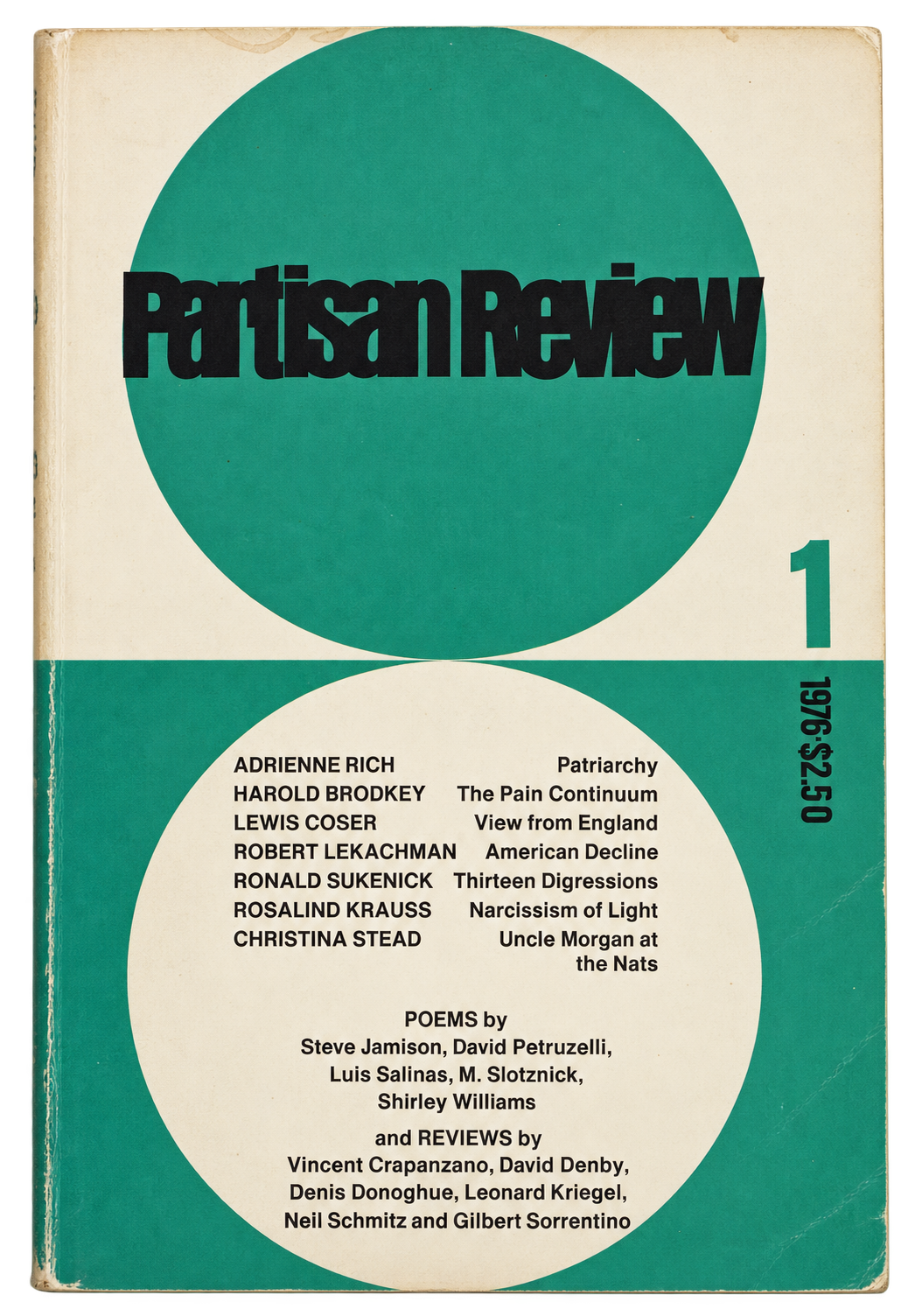
William Phillips, editor · Various Contributors
Partisan Review, Inc. · New York · 1976
First Edition · First Printing · Original Publication of Adrienne Rich’s “The Kingdom of the Fathers”
The Book:
The original 1976 First Edition · First Printing of Partisan Review, Volume XLIII, Number 1, containing the original publication of Adrienne Rich’s “The Kingdom of the Fathers” on pages 17–37. Later that year, Rich revised the essay into Chapter III of Of Woman Born: Motherhood as Experience and Institution, one of the defining feminist works of the decade. The issue also opens with William Phillips’s “Hannah Arendt and Lionel Trilling,” followed by reflections on Arendt from Hans Jonas and Frank Kermode, and includes work by Harold Brodkey, Lewis Coser, Robert Lekachman, Rosalind Krauss, Christina Stead, David Denby, Gilbert Sorrentino, and others. 160 pp. Original teal, black, and cream printed wrappers retain the $2.50 price.
Condition:
Near Fine. Original wrappers remain complete, flat, square, and firmly attached, with strong, unfaded teal and black printing. Cream portions of the front wrapper show noticeable age toning, particularly along the margins and lower central area, with light surface soiling, minor rubbing, and slight edge and corner wear. Spine remains straight, complete, and fully legible with minor extremity wear. Binding is tight and structurally sound. Interior remains notably clean and bright, with mild age toning and no significant foxing, staining, annotation, ownership marks, tears, or detached leaves observed.
Story Of The Book
Before Adrienne Rich’s argument about motherhood and patriarchy became part of one of the decade’s major feminist books, it appeared here.
In “The Kingdom of the Fathers,” Rich examines patriarchy as more than men exercising power over women. She traces a larger structure built through family, property, motherhood, economic dependence, religion, and ideas about what female power was allowed to look like.
Her question was not simply whether motherhood mattered. It was what happened when institutions took motherhood—a deeply human experience—and organized it around systems of authority and dependency.
Later in 1976, Rich published Of Woman Born: Motherhood as Experience and Institution. “The Kingdom of the Fathers,” revised and expanded, became its third chapter.
And Rich’s essay did not appear in isolation. This issue opens with William Phillips, Hans Jonas, and Frank Kermode reflecting on Hannah Arendt, placing Rich’s developing feminist critique inside a broader conversation about power, political thought, culture, and intellectual responsibility.
This is the argument before it became the book.
Why It’s In The Collection
Partisan Review, Vol. XLIII, No. 1 belongs in Consigned to Darkness because important ideas rarely arrive fully formed. Sometimes the publication event lets us see them being built.
Rich was examining how power can operate through institutions so familiar that they seem natural: family, property, motherhood, economic dependence, and inherited expectations about women’s roles.
That makes this issue particularly valuable to the collection. It preserves the argument before later revision gave it the permanence and visibility of Of Woman Born.
The surrounding journal strengthens the object further. Partisan Review was one of the major American forums in which literature, politics, criticism, and intellectual dissent met one another, and this issue places Rich’s feminist analysis beside serious consideration of Hannah Arendt and other questions of political and cultural power.
Before the chapter, there was the essay. Before the finished book, there was the argument still taking shape.
Collection Categories: Publication-Event Object · Feminist Classics · Women’s History & Feminism · Political Movements · Political History · Anti-Authoritarianism · Graphic & Literary Periodicals · Literature
———
Authentication Evidence
Front wrapper identifies the publication as Partisan Review, issue 1, dated 1976.
Front wrapper retains the original $2.50 price.
Interior contents page explicitly identifies the issue as “PR / 1976 – VOLUME XLIII NUMBER 1.”
Contents page identifies Adrienne Rich’s “The Kingdom of the Fathers” beginning on page 17.
The essay itself begins on page 17 under the heading “The Kingdom of the Fathers / Adrienne Rich.”
Adrienne Rich’s authoritative bibliography records “The Kingdom of the Fathers,” Partisan Review 43 (1976): 17–37.
Rich’s bibliography further records that, with revisions, the essay became Chapter III of Of Woman Born: Motherhood as Experience and Institution.
Of Woman Born was published by W. W. Norton later in 1976, establishing this periodical appearance as preceding the book.
Boston University’s digitized copy of Partisan Review, Vol. 43, No. 1 (1976) reproduces the same issue and corresponding contents.
Issue opens with William Phillips’s “Hannah Arendt and Lionel Trilling.”
Contributions concerning Hannah Arendt by Hans Jonas and Frank Kermode follow, corresponding to independent bibliographic documentation of this issue.
Additional contributors include Harold Brodkey, Lewis Coser, Robert Lekachman, Ronald Sukenick, Rosalind Krauss, Christina Stead, David Denby, Gilbert Sorrentino, and others.
Contemporary issue structure, typography, advertisements, pagination, contributor information, and wrapper price are internally consistent throughout the object.
Independent antiquarian bibliographic records identify the issue as Partisan Review, Volume 43, Number 1 (1976).
Physical collation comprises 160 pages, matching independently documented copies.
Original teal, black, and cream printed wrappers remain present.
The present copy corresponds to the original issue preserved in Boston University’s Partisan Review archive.
No evidence of a subsequent printing, alternate impression, facsimile issue, replacement wrappers, or reconstructed components has been identified.
Observable physical and bibliographic evidence supports identification as the 1976 First Edition · First Printing · Original Publication of Adrienne Rich’s “The Kingdom of the Fathers.”
Partisan Review — Vol. 43, No. 1
William Phillips, editor · Various Contributors
Partisan Review, Inc. · New York · 1976
First Edition · First Printing · Original Publication of Adrienne Rich’s “The Kingdom of the Fathers”
For centuries, men claimed the authority to decide what women should do with their bodies, their lives, and their futures. Adrienne Rich challenged the very foundations of that authority.
In 1976, Rich confronted a society that celebrated motherhood as a woman's highest calling while denying women meaningful control over the conditions under which they became mothers. In “The Kingdom of the Fathers,” she argued that marriage, religion, property, and economic dependency had transformed motherhood from a human experience into an institution through which patriarchal power perpetuated itself. First published in this original issue of Partisan Review, the essay was later revised into a chapter of Rich's landmark feminist book Of Woman Born. This issue therefore preserves an important stage in the development of an argument that challenged centuries of accepted authority: motherhood could not truly be celebrated as a woman's choice while the power to define and govern it remained in someone else's hands.
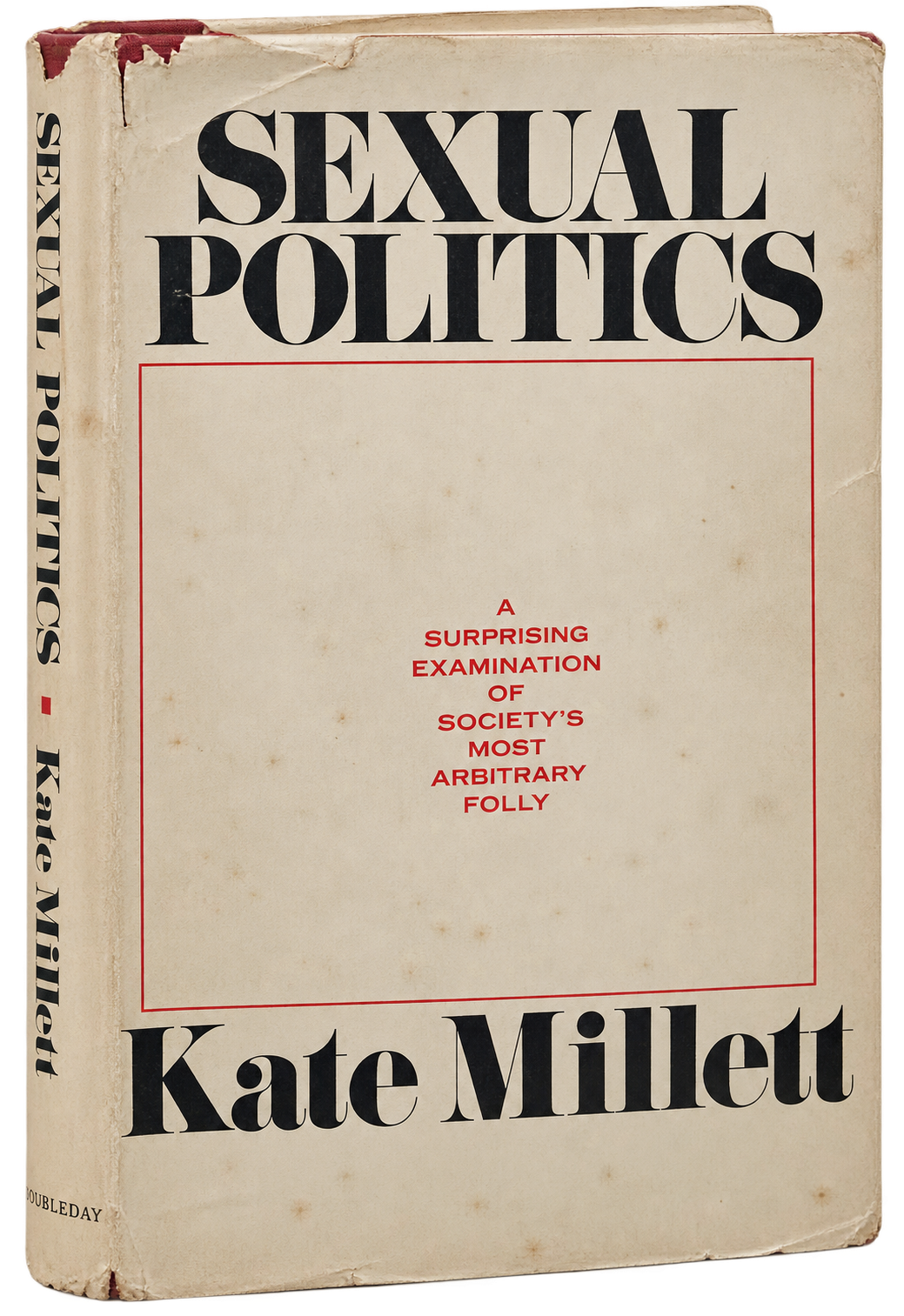
Kate Millett
Doubleday & Company, Inc. · Garden City, New York · 1970
First Edition · First Printing
The Book:
The first edition, first printing of Kate Millett’s Sexual Politics, published by Doubleday in 1970. The copyright page states “FIRST EDITION IN THE UNITED STATES OF AMERICA,” with no later-printing statement present. Developed from Millett’s doctoral dissertation at Columbia University, the book appeared at a pivotal moment in second-wave feminism and quickly became one of the movement’s defining intellectual texts.
Condition:
Near Fine in a Very Good+ original dust jacket. The book remains square and tight with a clean interior and only minor handling wear. The original jacket remains bright and complete, showing light rubbing and modest edge wear. No restoration, rebinding, or replacement components are observed.
Story Of The Book
Kate Millett argued that politics did not stop at the doors of Congress, the courthouse, or the voting booth. It followed people home.
Published in 1970, Sexual Politics challenged the idea that relationships between men and women belonged primarily to the private sphere. Millett argued instead that patriarchy constituted a political system—one reproduced through family life, sexuality, education, culture, and literature as surely as other forms of authority operated through formal institutions.
Her method was deliberately provocative. Millett subjected celebrated male writers including D. H. Lawrence, Henry Miller, Norman Mailer, and Jean Genet to political analysis, asking what their depictions of sex and gender revealed about assumptions concerning domination and submission. Literature, in her account, was not isolated from power; it could help normalize it.
The book appeared as the women’s liberation movement was rapidly expanding and carried ideas developing within feminist organizing into mainstream American intellectual life. Millett’s radical proposition was that some of society’s most powerful hierarchies were precisely the ones it had learned to call private.
Why It’s In The Collection
Sexual Politics belongs in Consigned to Darkness because it expanded the territory on which power could be recognized and challenged.
Where many objects in the collection document visible authority—governments, police, censors, or political institutions—Millett examined power operating through intimate relationships, cultural expectations, sexual norms, and assumptions about whose dominance should be considered natural.
This first printing matters because it captures that argument at the moment it entered the culture. Sexual Politics did not retrospectively explain second-wave feminism; it became one of the books through which the movement articulated itself to a mass audience.
Collection Categories: Feminist Classics · Literature · Social Criticism · Gender & Sexuality · Political Movements · Publication-Event Object · Women's History & Feminism
———
Authentication Evidence
Copyright page states “FIRST EDITION IN THE UNITED STATES OF AMERICA,” consistent with the first edition.
No later-printing statement is present, consistent with first-printing status.
Title page identifies Doubleday & Company, Inc., Garden City, New York, consistent with the 1970 first edition.
Title page is dated 1970, consistent with the original publication.
Original publisher’s binding is present.
Original dust jacket is retained.
Jacket design, typography, publisher information, and flap text are consistent with documented first-edition jackets.
No book-club indicators are observed.
No evidence of rebinding, facsimile jacket, or replacement components is observed.
Observable bibliographic evidence supports identification as the 1970 Doubleday first edition, first printing.
Sexual Politics
Kate Millett
Doubleday & Company, Inc. · New York · 1970
First Edition · First Printing
Few books have transformed public debate as profoundly as Sexual Politics.
Published in 1970 at the height of second-wave feminism, Kate Millett's groundbreaking study argued that relationships between men and women were fundamentally political because they reflected systems of institutional power rather than merely personal differences. Drawing upon literature, psychology, history, and social theory, Millett challenged longstanding assumptions about gender, sexuality, and authority while introducing concepts that reshaped feminist scholarship for decades. The book became an intellectual cornerstone of the women's liberation movement, helping to redefine questions of equality, culture, and power for a new generation.