
 Image 1 of 2
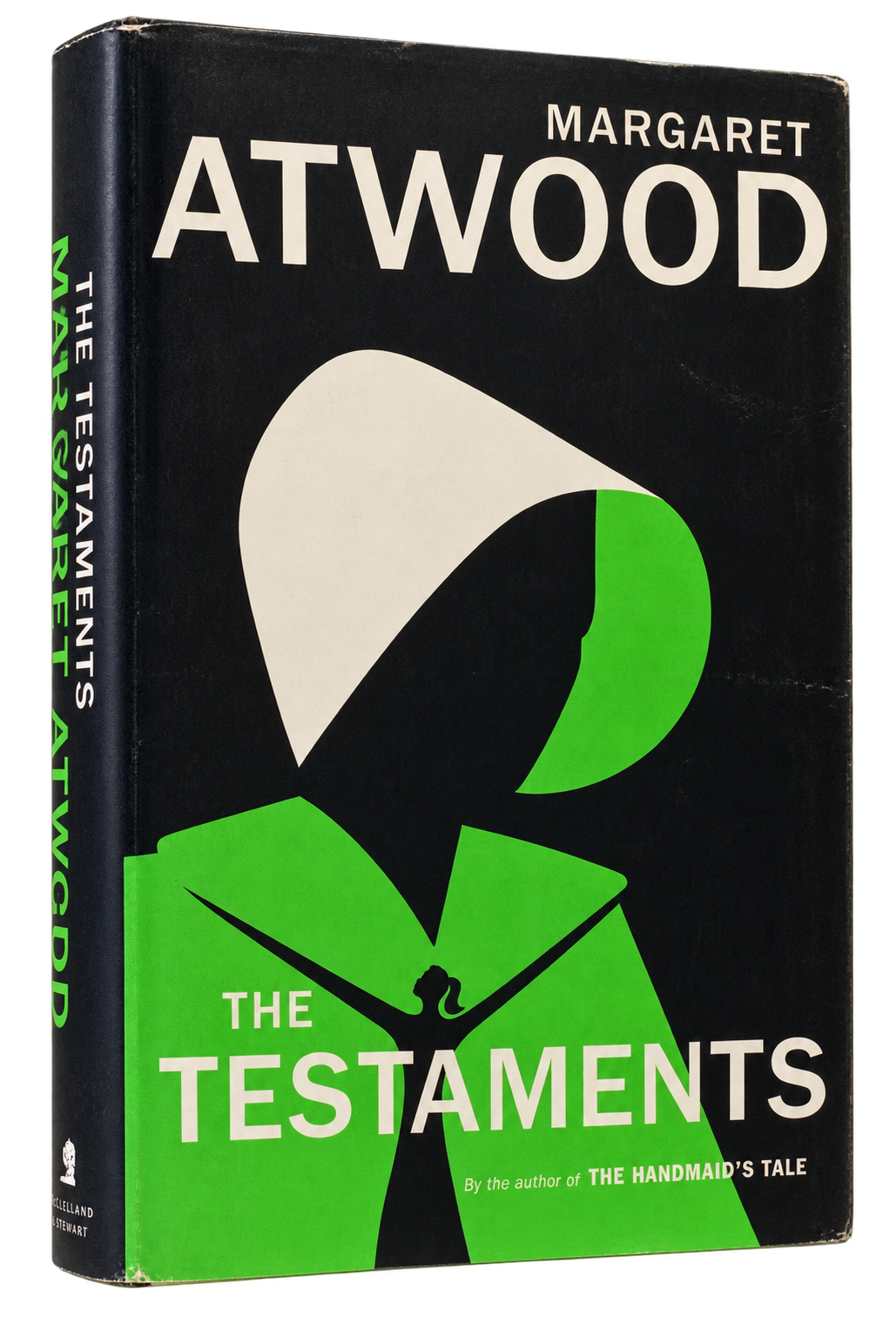 Image 2 of 2
The Handmaid’s Set — Margaret Atwood
The Warning & The Return to Gilead
Margaret Atwood
Boston · London · 1986–2019
First American Edition · First UK Edition
First Printings
Curated Two-Volume Publication-Event Set
The Set:
A curated pairing of two first-printing Margaret Atwood novels separated by thirty-three years: the 1986 Houghton Mifflin First American Edition · First Printing of The Handmaid’s Tale and the 2019 Chatto & Windus First UK Edition · First Printing of The Testaments. The first introduced American readers to Gilead, a theocratic dictatorship built through the systematic destruction of women’s autonomy. The second returned to that world more than three decades later, shifting the question from how authoritarianism takes hold to how it survives, fractures, and can be resisted from within. Together, the two books preserve Atwood’s original warning and her return to it after a generation of cultural life.
Included Titles:
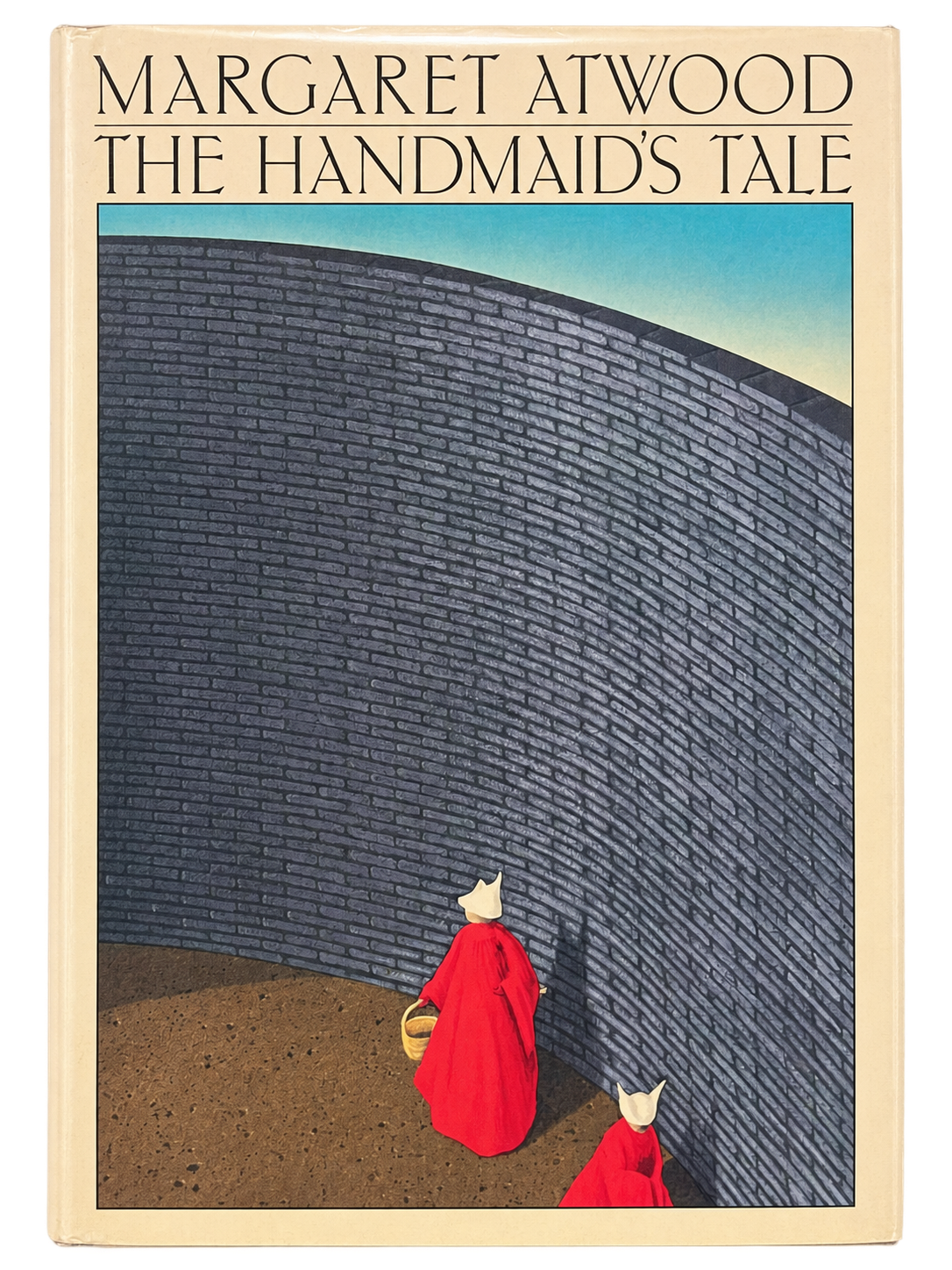
The Handmaid’s Tale — Margaret Atwood
Houghton Mifflin Company · Boston · 1986
First American Edition · First Printing
Original quarter-cloth binding · Original unclipped $16.95 dust jacketThe Testaments — Margaret Atwood
Chatto & Windus · London · 2019
First UK Edition · First Printing
Original publisher’s boards · Original dust jacket
Condition:
Very Good+ to Fine overall. The Handmaid’s Tale grades Very Good+ in a Very Good- original dust jacket, retaining its original unclipped $16.95 price. The Testaments grades Fine in a Fine original dust jacket. Both volumes retain their original publisher-issued bindings and jackets.
Story Of The Set
In 1986, Margaret Atwood imagined how a society could make the loss of women’s freedom feel inevitable. Thirty-three years later, she returned to ask whether such a society could ever be permanent.
The Handmaid’s Tale introduced Gilead through Offred, a woman stripped of her name, family, property, independence, and control over her own body. Atwood’s warning was not built around dictatorship appearing fully formed. Gilead emerges through fear, political crisis, religious certainty, institutional cooperation, and the gradual normalization of what would once have seemed impossible.
The novel became one of modern literature’s defining anti-authoritarian works, but Atwood left its regime suspended between apparent permanence and eventual historical collapse.
In 2019, The Testaments returned to Gilead from multiple perspectives inside and outside its structure. The focus had shifted. The question was no longer only how freedom is taken, but how people compromise with power, survive within it, undermine it, and help bring it down.
By then, The Handmaid’s Tale had spent more than three decades moving through literature and public culture. Atwood was not simply revisiting a fictional world. She was returning to a warning that readers had spent a generation interpreting against their own politics, fears, and institutions.
The first book imagines the making of Gilead. The second imagines the beginning of its undoing.
Why It’s In The Collection
The Handmaid’s Set belongs in Consigned to Darkness because warnings have histories of their own.
The 1986 First American Edition preserves the moment American readers first encountered Atwood’s vision of a society converting ideology, fear, and religious authority into political control over ordinary life—especially the lives and bodies of women.
The Testaments gives the collection something more unusual than a conventional sequel. Atwood returned to the same authoritarian system thirty-three years later and approached power from the other direction: its compromises, internal contradictions, hidden dissenters, and vulnerability to the people forced to live inside it.
Preserved together in first-printing editions, the two books document not only Gilead’s imagined history, but the life of an anti-authoritarian warning across a generation.
One book asks how freedom can disappear. The other asks what it takes to make freedom possible again.
Collection Categories: Women’s History & Feminism · Anti-Authoritarianism · Anti-Totalitarianism · Political Dissent · Religious Conscience · Human Rights · Literature · Publication-Event Object
———
Authentication Evidence
The Handmaid’s Tale title page identifies Houghton Mifflin Company, Boston, consistent with the 1986 First American Edition.
Copyright page carries the complete first-printing number line “V 10 9 8 7 6 5 4 3 2 1,” confirming first-printing status.
Original publisher’s quarter-cloth over paper-covered boards remain present.
Original dust jacket remains present.
Original dust jacket is unclipped and retains the $16.95 price.
Observed bibliographic and physical evidence supports identification of The Handmaid’s Tale as the 1986 First American Edition · First Printing.
The Testaments title page identifies Chatto & Windus, London, establishing the UK publication.
Copyright page identifies the original 2019 publication and carries the complete first-printing number line ending in 1, confirming first-printing status.
Original publisher’s hardcover binding remains present.
Original dust jacket remains present.
Observed bibliographic evidence supports identification of The Testaments as the 2019 First UK Edition · First Printing.
No evidence of book-club manufacture, remainder marks, facsimile components, replacement jackets, or rebinding is observed.
Original publisher-issued formats are retained throughout both volumes.
The two books are curatorially assembled; no claim is made that these copies were originally issued or marketed together as a publisher-issued set.