
 Image 1 of 1
The 42nd Parallel — John Dos Passos
John Dos Passos
Harper & Brothers Publishers, New York & London · 1930
First Edition · First Printing
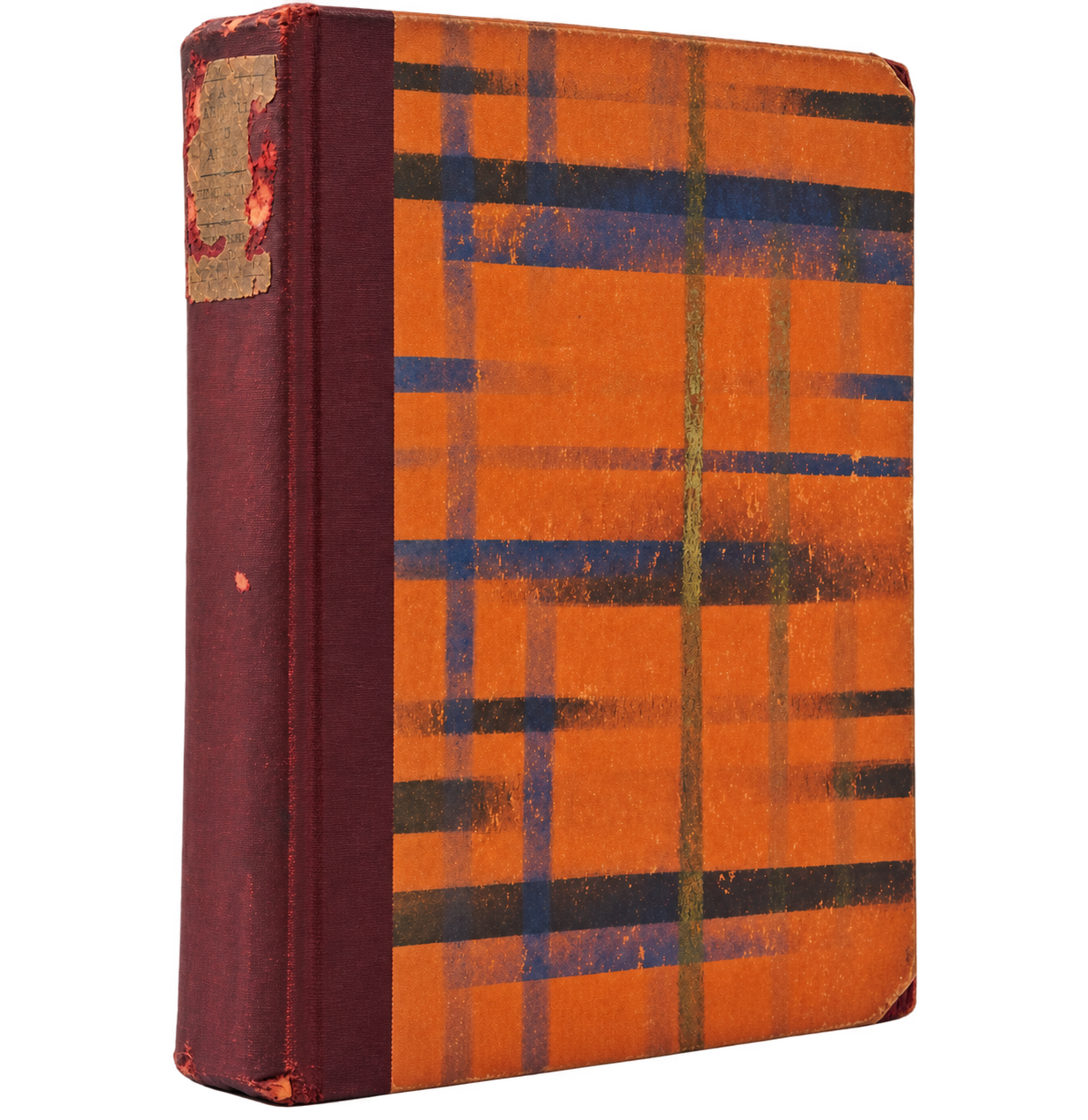
The Book: True first edition, first printing of John Dos Passos’s The 42nd Parallel. The title page bears the correct Harper & Brothers Publishers, New York and London, 1930 imprint, while the copyright page carries the publisher’s A–E code, the recognized first-printing identifier for this edition. Original patterned paper-covered boards with maroon cloth spine and original paper spine label. No later-printing statement or revised-issue notation is present, and all observed bibliographic characteristics are consistent with the original 1930 first edition, first printing. This copy is without dust jacket.
Condition: Very Good+. The binding remains square and tight with a clean interior, light uniform age toning, and no ownership inscriptions or structural defects observed. The patterned boards exhibit moderate rubbing and minor corner wear, with expected wear to the original paper spine label. Despite lacking the dust jacket, the book remains an attractive and structurally sound example of the first printing.
Story Of The Book
John Dos Passos rejected the idea that history belongs only to presidents, industrialists, and generals.
Published in 1930 as the opening volume of his U.S.A. Trilogy, The 42nd Parallel attempts something much larger than the story of a single protagonist. Dos Passos constructs a portrait of the United States from intersecting lives—workers, immigrants, entrepreneurs, organizers, drifters, reformers, and ordinary people moving through a country being transformed by industrial capitalism.
The form was as radical as the perspective. Conventional narrative is interrupted by “Newsreel” sections assembled from headlines and popular culture, autobiographical “Camera Eye” passages, and short biographies of historical figures. Fiction, journalism, memory, advertising, politics, and public language collide on the page, creating a fragmented national portrait rather than a single authoritative version of events.
That structure allowed Dos Passos to expose the distance between America’s democratic ideals and the realities experienced by people living beneath concentrations of economic and political power. Individuals rise, fail, organize, compromise, work, and disappear while larger institutions continue around them.
The result was not simply a novel about America. Dos Passos attempted to make America itself the novel’s central character.
Why It’s In The Collection
The 42nd Parallel belongs in the collection because it asks whose lives become part of the historical record—and whose are usually left outside it.
Political history is often organized around institutions and the people who control them. Dos Passos reverses the perspective. Industrialization, labor conflict, migration, wealth, and political change are experienced from ground level, through people whose lives are shaped by forces far larger than themselves. The novel therefore makes systems of power visible by showing their consequences rather than merely describing their structures.
Its formal experimentation strengthens that argument. Newspapers, advertising, biography, private memory, and fictional lives all compete to define reality. There is no single authoritative narrator telling readers what America means. Instead, meaning emerges from the collision of voices—an unusually democratic literary structure for a novel deeply skeptical of how democratic American life actually was.
This first printing is important because it preserves the publication through which Dos Passos first introduced the experimental architecture that would define the U.S.A. Trilogy and exert substantial influence on later documentary fiction and socially engaged literature.
Within the collection, The 42nd Parallel demonstrates that literature can challenge power without depicting a dictator or a prison. It can expose the quieter authority exercised by money, institutions, class, media, and the stories a society chooses to tell about itself.
Collection Categories: Literature · Labor & Economic Justice · Political Dissent · Political History · Publication-Event Object
———
Authentication Evidence
• Title page correctly identifies the work as The 42nd Parallel by John Dos Passos.
• Title page bears the correct Harper & Brothers Publishers, New York and London, 1930 imprint.
• Copyright page bears the correct 1930 copyright.
• Copyright page includes the publisher's code A–E, consistent with the first printing.
• First Edition evidence: The 1930 Harper & Brothers publication represents the book's first published edition.
• First Printing evidence: The presence of the A–E publisher code on the copyright page is the recognized Harper & Brothers first-printing identifier for this title.
• Original publisher's patterned paper-covered boards with maroon cloth spine correspond to the first edition binding.
• The absence of any later printing statement or revised issue notation is consistent with the original 1930 issue.
• All observed bibliographical characteristics support identification as a true first edition, first printing.