
 Image 1 of 1
Inadmissible Evidence — John Osborne
John Osborne
Faber and Faber · London · 1965
First Edition · First Printing
The Book:
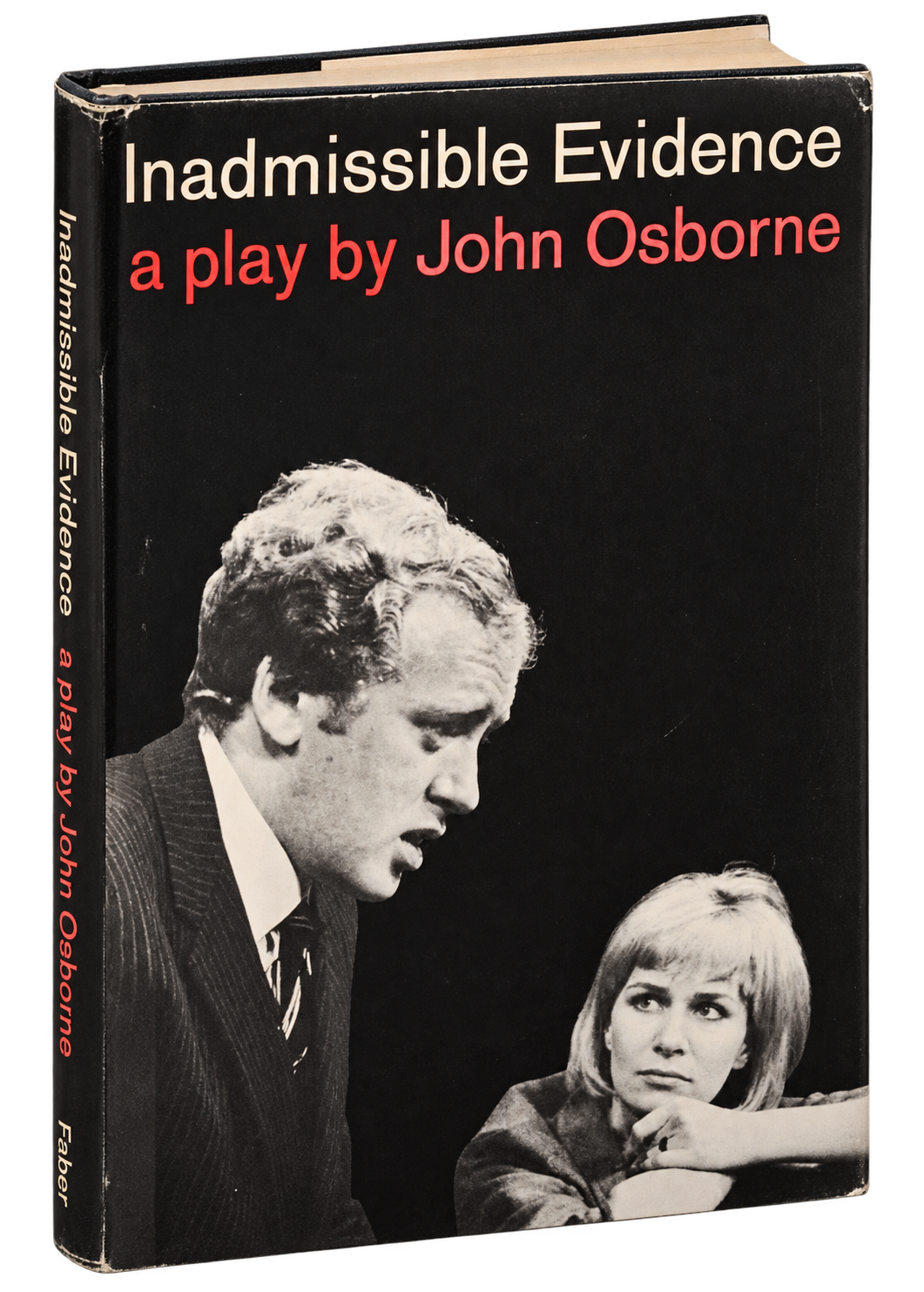
The first edition, first printing of John Osborne’s Inadmissible Evidence, published by Faber and Faber in 1965 following the play’s 1964 premiere at London’s Royal Court Theatre. This copy retains its original publisher’s binding and original unclipped dust jacket. Written by the playwright whose Look Back in Anger helped transform postwar British theatre, Inadmissible Evidence turns from public rebellion toward the private collapse of a man confronting the consequences of his own behavior.
Condition:
Near Fine in a Very Good+ original dust jacket. The book remains square, tight, and clean, with only minor age-related wear. The original jacket remains complete and attractive, showing light rubbing, modest toning, and minor edge wear. No restoration, rebinding, or replacement components are observed.
Story Of The Book
Bill Maitland is a solicitor accustomed to speaking for other people. Osborne built a play around the moment he can no longer make a convincing case for himself.
Over the course of a collapsing day, Maitland confronts the damage produced by his drinking, infidelity, professional failures, and treatment of the women around him. The courtroom language surrounding him becomes increasingly ironic: a man trained to organize evidence and construct arguments finds his own life producing evidence he cannot explain away.
The play extended Osborne’s assault on postwar British respectability into a darker and more intimate territory. Authority here is not a government or political ideology but the social and professional structures through which men like Maitland exercise power while avoiding accountability for its consequences.
The evidence against him is everywhere. What becomes inadmissible is the story he has been telling himself.
Why It’s In The Collection
Inadmissible Evidence belongs in Consigned to Darkness because it examines power at the level of ordinary institutions and personal relationships.
Maitland possesses professional status, economic authority, and the advantages of a social order built largely around men like him. Osborne strips those protections away and asks what remains when authority can no longer disguise exploitation, selfishness, or failure.
This 1965 first printing preserves the play near the moment of its original theatrical impact, as Osborne continued challenging the assumptions of class, masculinity, respectability, and institutional authority that had shaped postwar British culture.
Collection Categories: Literature · Social Criticism · Institutional Power · Theatre & Drama · Publication-Event Object
———
Authentication Evidence
Title page identifies Inadmissible Evidence by John Osborne and Faber and Faber, London, consistent with the first edition.
Copyright page is dated 1965, consistent with the first book publication.
No later-printing or subsequent-impression statement is present, consistent with first-printing status.
Original publisher’s binding is present.
Original dust jacket is retained.
Jacket typography, publisher information, and design correspond to documented Faber first-edition copies.
No evidence of book-club manufacture, rebinding, facsimile dust jacket, or replacement components is observed.
Observable bibliographic evidence supports identification as the 1965 Faber and Faber first edition, first printing.