
 Image 1 of 2
Image 2 of 2
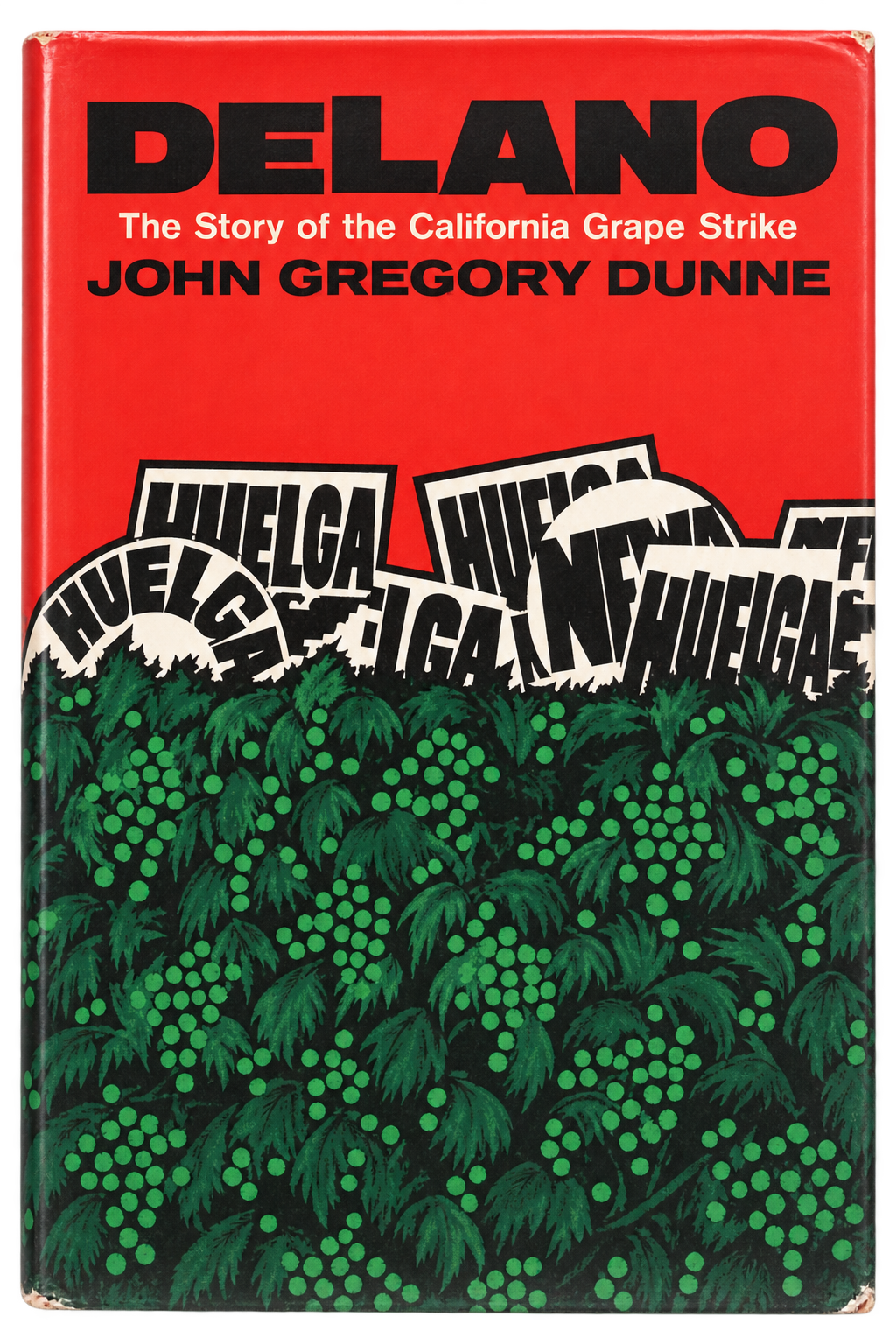
Delano: The Story of the California Grape Strike — John Gregory Dunne
John Gregory Dunne
New York: Farrar, Straus & Giroux, 1967
First Edition · First Printing
The Book:
The first edition, first printing of John Gregory Dunne’s contemporary account of the California grape strike, illustrated throughout with documentary photographs by Ted Streshinsky. Published in 1967—only two years after the strike began and while it was still underway—the book documents César Chávez, the United Farm Workers, growers, organizers, and agricultural workers before the struggle's outcome was known. This copy retains its original unclipped $4.95 dust jacket.
Condition:
Near Fine in a Very Good+ dust jacket. A clean, square copy with bright black-and-green cloth, sharp spine lettering, and a sound text block. The original jacket retains excellent color with only light rubbing and minor edge wear and is now housed in an archival protector. An institutional ownership stamp from the Foundation for Voluntary Service appears on the title page, and a small vintage Doubleday inventory label remains on the rear jacket panel; there is no evidence of library processing or circulation.
Story Of The Book
Before César Chávez became an icon, the outcome of his fight was still uncertain.
In 1965, agricultural workers in California's Delano region began a strike against grape growers that grew into a national struggle over wages, working conditions, organizing, race, and economic power. César Chávez and the United Farm Workers would eventually become inseparable from the history of American labor and civil rights.
But Delano was published in 1967. The strike wasn't history yet.
John Gregory Dunne reported on the movement while it was happening, combining extensive reporting and interviews with Ted Streshinsky's photographs to document the people on both sides of a conflict still being fought. The result was one of the earliest major book-length accounts of the grape strike and the emerging Mexican-American labor movement.
That timing matters. Books written after movements succeed tend to inherit the clarity of hindsight: the famous leaders are already famous, the victories have already become milestones, and the messy uncertainty of the original struggle begins to disappear.
This book preserves something different.
It records a civil-rights movement before anyone knew whether it would win.
Why It’s In The Collection
Delano belongs in Consigned to Darkness because power does not exist only between citizens and governments. It can also exist between employers and workers, institutions and individuals, and people whose economic security gives them radically different abilities to make themselves heard.
The farmworkers documented here were challenging an entrenched agricultural system through organizing, strikes, boycotts, and public persuasion. Dunne's book became part of that historical moment by carrying a regional labor struggle beyond California's fields and putting its people, arguments, and conflicts before a wider reading public.
That is also why this edition matters. The collection deliberately sought the first edition, first printing rather than a later history of Chávez or the United Farm Workers. Published while the strike remained unresolved, it is not simply a book about a movement. It is a printed object produced while that movement was still attempting to change the balance of power.
The history books tell us what the movement became. Delano preserves the moment when it was still fighting to become anything at all.
Collection Categories: Civil Rights · Labor & Economic Justice · Political Movements · Witness Literature · Free Expression · Political History · Publication-Event Object
———
Authentication Evidence
• Copyright page states "Copyright © 1967" and explicitly includes "First printing, 1967," directly identifying the printing.
• Title page identifies Delano: The Story of the California Grape Strike by John Gregory Dunne, published by Farrar, Straus & Giroux.
• Copyright page contains no indication of later printings or subsequent editions.
• Original unclipped dust jacket retains the printed publisher's price of $4.95, consistent with the first issue.
• Jacket design, typography, and Farrar, Straus & Giroux imprint are consistent with documented first-edition examples.
• The book retains its original publisher's cloth binding with no evidence of rebinding or later library binding.
• The observable bibliographic evidence supports identification as the first edition, first printing.