
 Image 1 of 2
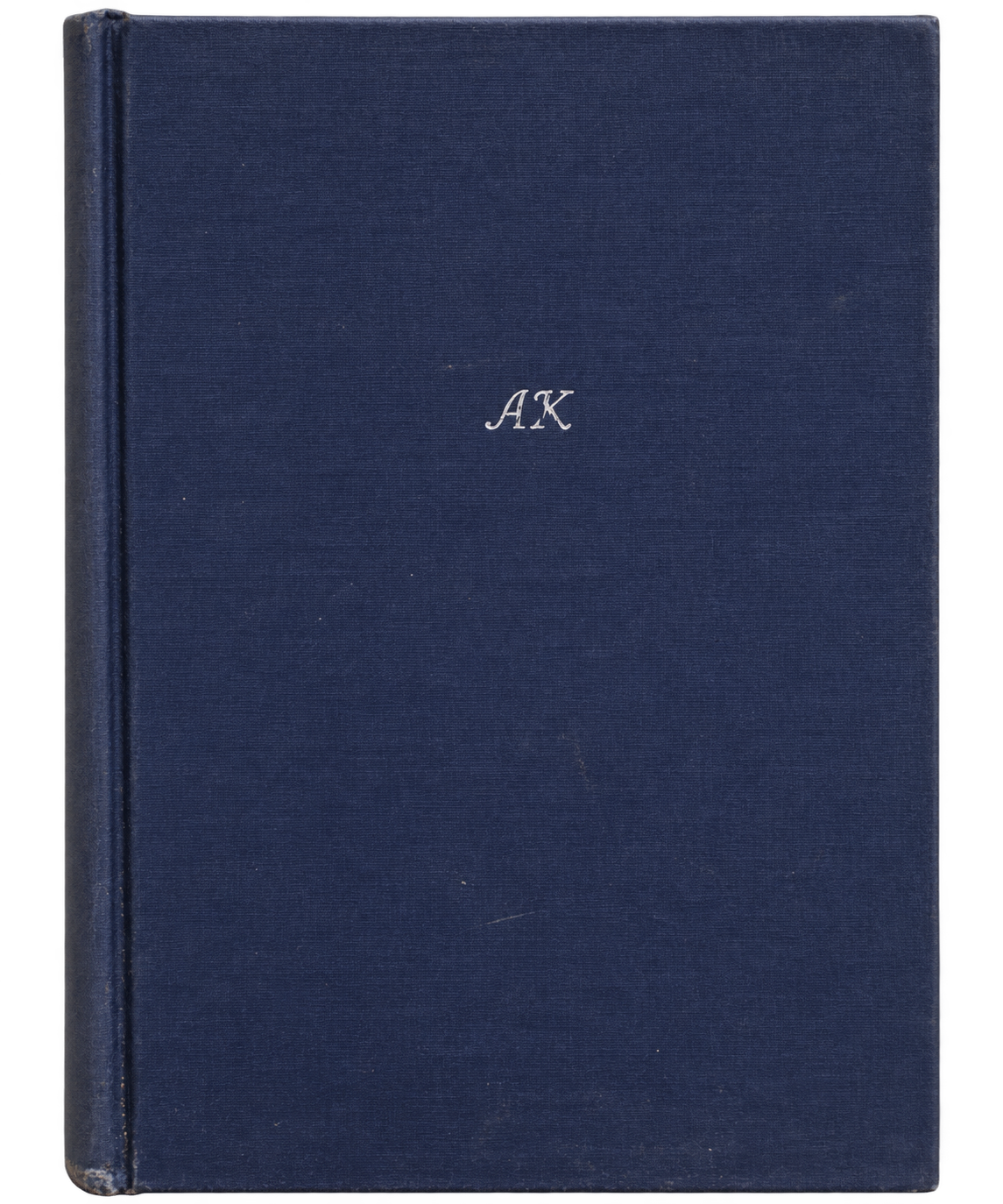 Image 2 of 2
Darkness at Noon — Arthur Koestler
Arthur Koestler
Translated by Daphne Hardy
New York: The Macmillan Company, 1941
First American Edition · Early Printing
The Book:
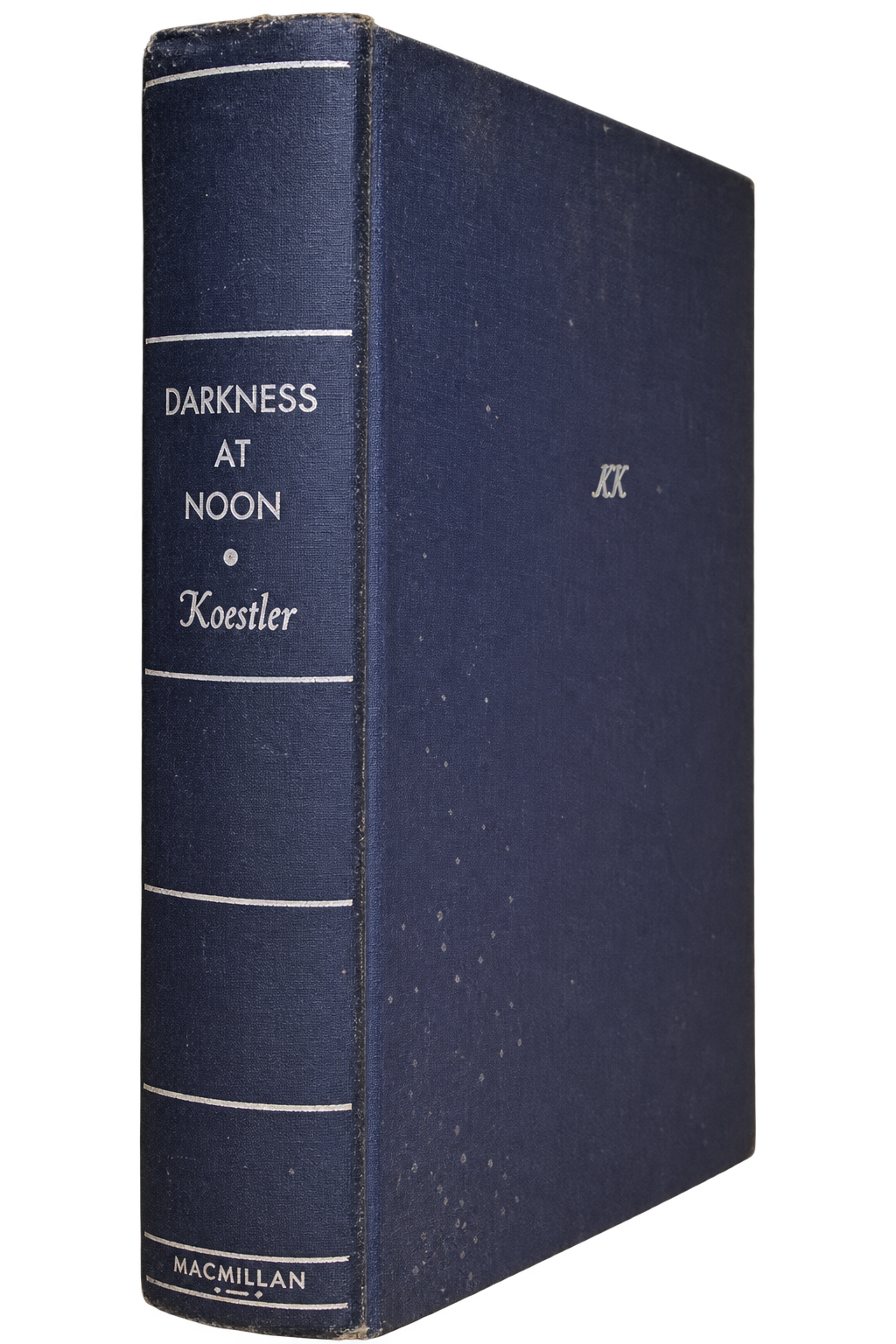
The first American edition and early printing of Arthur Koestler’s Darkness at Noon, published by The Macmillan Company in 1941. The title and copyright pages carry the correct 1941 Macmillan imprint; the copyright page includes “Set up and printed,” the H. Wolff printer statement, and no later-printing designation. This copy retains its original blue cloth with silver AK monogram on the front board and silver spine lettering. The original dust jacket is no longer present.
Condition:
Near Fine. The original blue cloth remains well preserved, with a clean, sound binding, light rubbing at the extremities, modest page-edge toning, and no significant structural defects documented. No evidence of book-club manufacture or later rebinding is present. The original dust jacket is absent, and no significant ownership provenance is recorded.
Story Of The Book
The original manuscript disappeared when France fell to the Nazis. Its warning survived.
Arthur Koestler wrote Darkness at Noon in exile in France as Europe was being consumed by totalitarianism from both directions. His subject was Stalinism and, more specifically, the political logic exposed by the Moscow Show Trials: a revolutionary system capable of forcing its own former leaders to confess publicly to crimes they had not committed and then destroying them in the name of the ideology they had helped build.
At the center of the novel is Rubashov, an aging revolutionary imprisoned by the regime he once served. Through interrogation, memory, ideological argument, and the gradual destruction of his certainty, Koestler examines one of totalitarianism’s most disturbing achievements: its ability to make political victims participate intellectually in the justification of their own destruction. The novel is therefore not simply about imprisonment. It is about what happens when an ideology claims authority over truth, morality, memory, and ultimately the individual conscience.
The publication history makes the book’s survival almost as extraordinary as its subject. Koestler’s original German typescript disappeared amid the collapse of France in 1940 and was believed lost for decades. Fortunately, Daphne Hardy had already translated the novel into English. Her translation became the form through which Darkness at Noon first reached readers and through which much of the world came to know Koestler’s indictment of Stalinist terror. This 1941 Macmillan edition brought that text to American readers during the Second World War.
The manuscript was lost. The warning wasn’t.
Why It’s In The Collection
Darkness at Noon is nearly a perfect expression of the thesis behind Consigned to Darkness: a book about revolutionary power turning against the individual, written by an exile while authoritarian regimes were consuming Europe, whose own manuscript nearly disappeared in the process.
Koestler’s target is particularly important to the collection because the novel refuses the comforting assumption that oppression belongs only to obviously reactionary regimes. Rubashov is destroyed by a political system built from ideas he once believed would liberate humanity. The book therefore examines one of the collection’s recurring questions: what happens when resistance becomes authority, and revolutionary conviction becomes justification for coercion?
This first American edition also belongs to the historical moment rather than looking backward at it. Published in 1941, it introduced American readers to Koestler’s warning while Stalin remained in power, the Soviet system remained largely opaque to outsiders, and the consequences of twentieth-century ideological totalitarianism were still unfolding. The inventory accordingly gives the book perfect scores for both thesis fit and story strength.
The missing dust jacket limits the copy’s conventional collector value, but the book underneath is the historically important object: an early American manifestation of the English text that survived when Koestler’s original manuscript apparently did not.
A totalitarian system tried to erase the individual inside the novel. War nearly erased the novel itself. Both survived long enough for the warning to reach us.
Collection Categories: Literature · Anti-Authoritarianism · Anti-Totalitarianism · Political Imprisonment · Political Fiction · Political Dissent · Exile & Refugees
———
Authentication Evidence
• Correct Macmillan Company title page, confirming first American edition
• Title page dated 1941, consistent with first American edition
• Copyright page dated 1941 by The Macmillan Company
• Translation credited to Daphne Hardy, consistent with the first American edition
• Copyright page includes "Set up and printed."
• H. Wolff printer statement present
• Original blue cloth binding with silver AK monogram present
• Silver spine lettering present
• No book club edition indicators observed
• First American edition characteristics consistent throughout