
 Image 1 of 1
Animal Farm — George Orwell
George Orwell
Harcourt, Brace and Company · New York · 1946
First US Edition · First Printing
The Book:
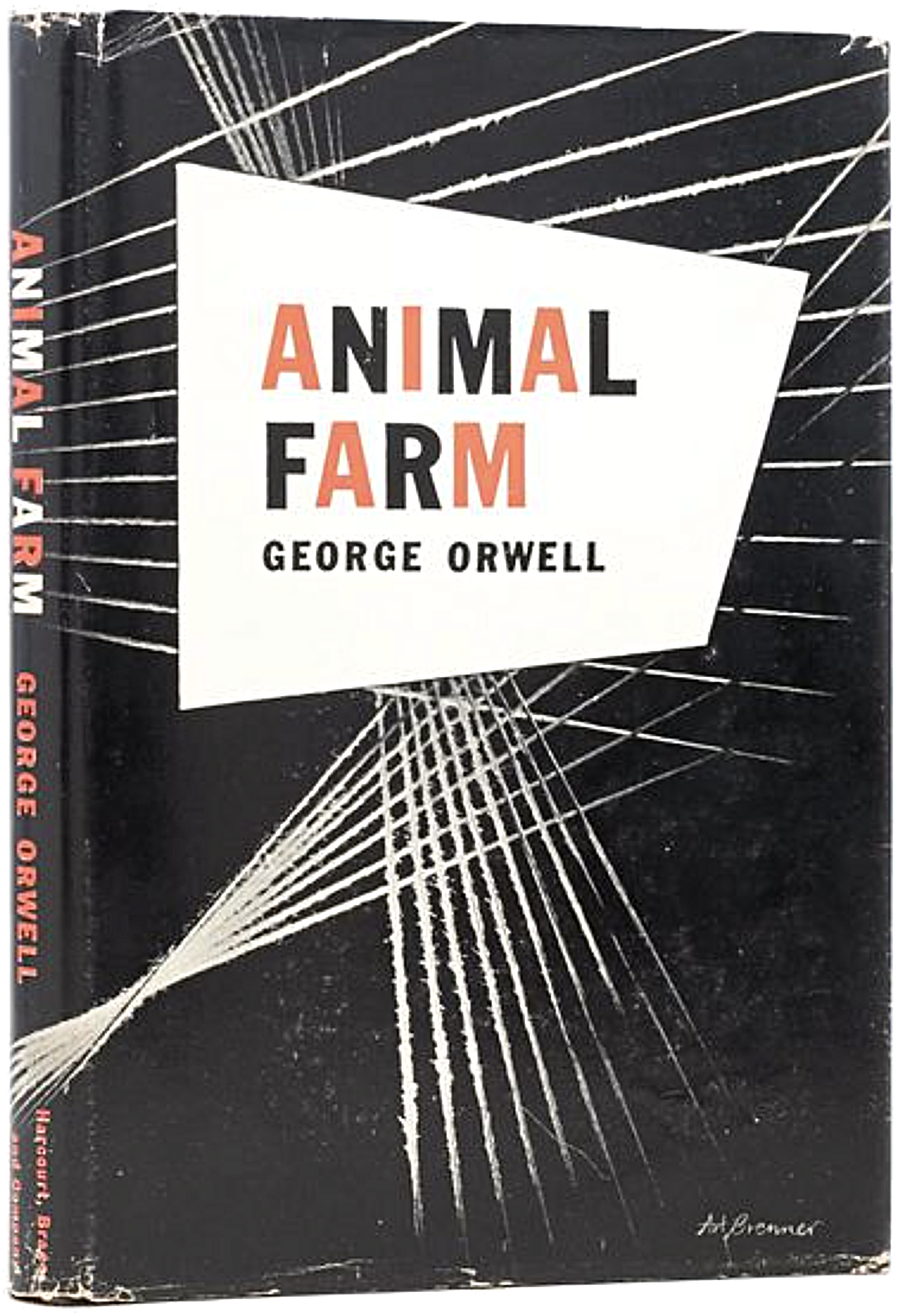
The first American edition, first printing of George Orwell’s Animal Farm, published by Harcourt, Brace in 1946. The copyright page explicitly states “first American edition,” and this copy retains its original black publisher’s cloth with gilt spine lettering and original dust jacket. The jacket is price-clipped, preventing authentication of the original $1.75 price.
Condition:
Near Fine in a Good+ original dust jacket. The book remains clean and sound with bright gilt spine lettering, light shelf wear, and a contemporary gift inscription on the front free endpaper. The jacket shows moderate rubbing and edge wear, several small chips, and short closed tears, with the heaviest wear at the spine ends and folds. No restoration or rebinding is observed.
Story Of The Book
George Orwell turned the history of a revolution into a farmyard fable—and produced one of the twentieth century’s most enduring warnings about political power.
The animals of Manor Farm overthrow their human owner in the hope of building an equal society. What follows is the gradual corruption of that revolution: language is manipulated, history rewritten, enemies invented, and privileges quietly restored until the distinction between liberators and oppressors disappears.
Published after the wartime alliance with the Soviet Union had made Orwell’s anti-Stalinist argument politically uncomfortable, Animal Farm showed how authoritarianism could emerge not only through force but through control over memory and language. Its warning reaches beyond the regime it originally satirized: those who control the story of the past acquire extraordinary power over what others believe is possible in the present.
Why It’s In The Collection
Animal Farm belongs at the center of Consigned to Darkness because it explains one of authoritarianism’s most powerful tools: the ability to make truth itself politically contingent.
Orwell understood that domination requires more than coercion. The pigs maintain power by changing words, rewriting history, controlling information, and persuading others to distrust their own memories. The book therefore connects directly to the collection’s broader concern with censorship, propaganda, and the relationship between expression and authority.
This 1946 first American printing preserves the moment Orwell’s warning first reached American readers, before Animal Farm became one of the defining political allegories of the modern era.
Collection Categories: Anti-Totalitarianism · Anti-Authoritarianism · Political Philosophy · Literature · Censorship · Free Expression · Publication-Event Object
———
Authentication Evidence
Title page identifies Harcourt, Brace and Company, New York, consistent with the first American edition.
Copyright page explicitly states “First American Edition,” confirming first American edition status.
No later-printing statement is present, consistent with first-printing status.
Copyright page states “Printed in the United States of America,” consistent with documented first-printing copies.
Original black publisher’s cloth binding with gilt spine lettering is present, matching documented first American first-printing copies.
Original first-issue dust jacket is retained.
Front jacket flap is price-clipped, so the original $1.75 publisher’s price cannot be authenticated directly from this copy.
Rear jacket flap lacks the statement “Printed in the USA,” independently consistent with the first-issue dust jacket; later jacket states carry that statement.
Jacket design by Art Brenner, typography, publisher imprint, and panel configuration are consistent with documented first-issue jackets.
Collation of [iv], 118 pages is consistent with documented first American copies.
No evidence of book-club manufacture, rebinding, facsimile dust jacket, or replacement components is observed.
Observable bibliographic evidence supports identification as the 1946 Harcourt, Brace first American edition, first printing, in the original first-issue dust jacket.